Discover 15 backyard playground mulch ideas for safer play that cushion falls, reduce injuries, and keep kids protected on every landing.
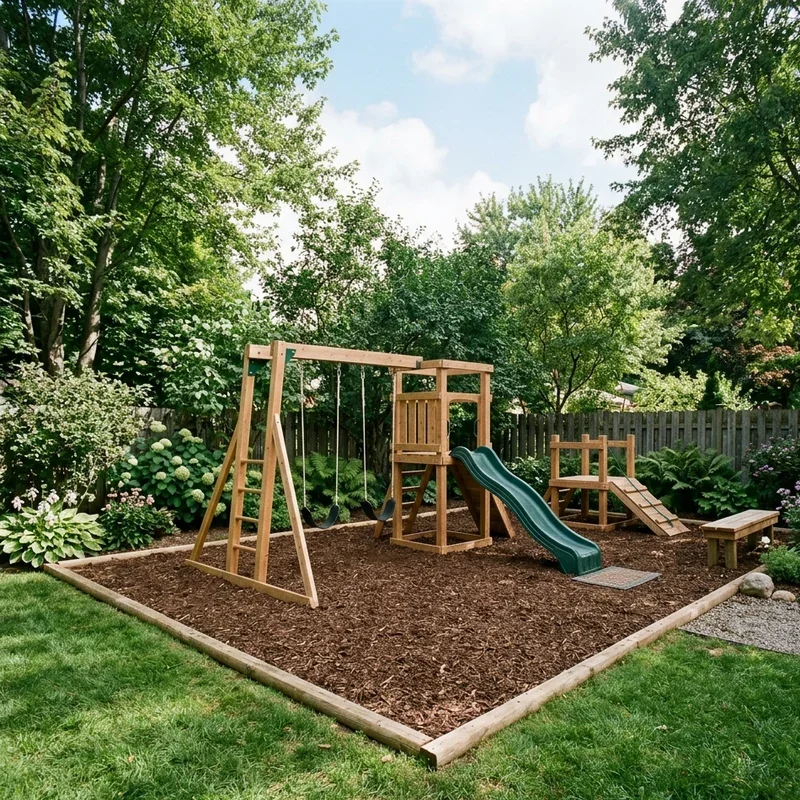
Playground mulch sits beneath every swing, slide, and climbing structure as the invisible safety net that cushions falls and prevents the serious injuries that hard ground surfaces deliver without mercy when small bodies tumble from height during enthusiastic outdoor play. Have you ever watched your child launch from a swing at peak arc and felt your heart stop wondering what their landing surface would do to absorb that impact? That parental anxiety drives smart playground surfacing choices, where the right material beneath the equipment matters just as much as the equipment quality itself. Think of playground mulch like a mattress for your backyard, where proper depth and material selection turn dangerous falls into gentle landings that let kids bounce up and keep playing. Let's explore fifteen options.
1. Engineered Wood Fiber Mulch
Engineered wood fiber mulch delivers the gold standard in playground surfacing, where specially processed wood fibers knit together into a shock-absorbing carpet that cushions falls from heights up to twelve feet when installed at proper nine-to-twelve-inch depth. Choose ASTM-certified engineered wood fiber, since the precisely manufactured particle size and moisture content create interlocking compression that standard wood chips cannot achieve through random, unprocessed shapes. Spread the material evenly across the entire fall zone, extending at least six feet beyond the equipment perimeter in every direction, because landing zones need generous coverage that tight, equipment-edge borders dangerously restrict. Rake and top off the surface annually, since settling and decomposition gradually reduce the protective depth over time. Think of engineered fiber like professional-grade landing padding. Your playground gains certified fall protection.
2. Rubber Mulch Chips
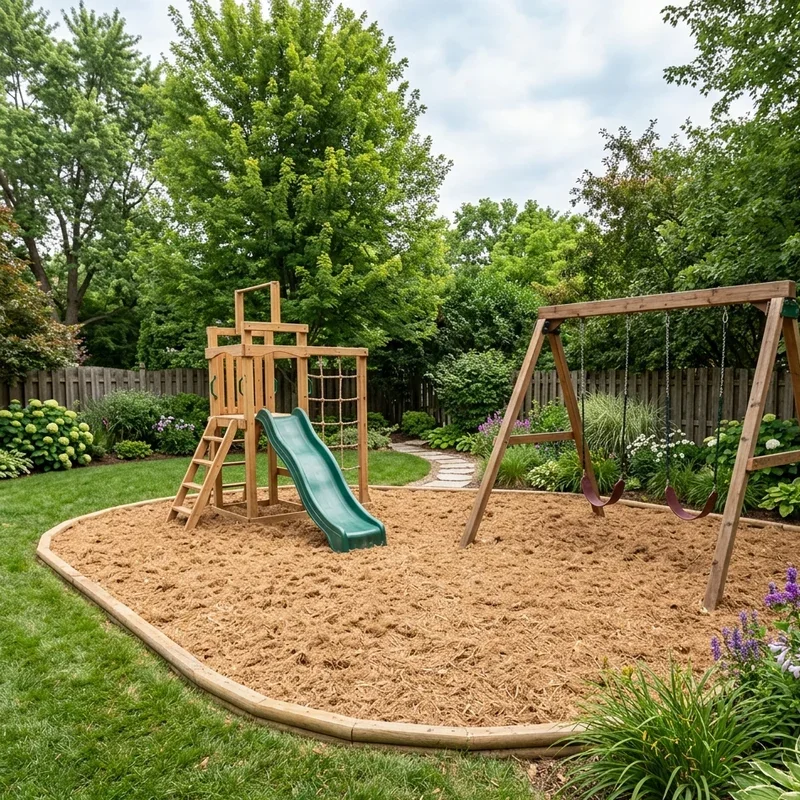
Rubber mulch chips bounce back from compression instantly, providing superior shock absorption that never decomposes, never attracts insects, and never needs the annual replacement that organic alternatives demand throughout their shorter service lives. Choose rubber mulch made from recycled tires, since the repurposed material provides excellent cushioning while diverting waste from landfills into functional playground surfacing. Expect rubber mulch to last significantly longer than wood products, because the synthetic material resists moisture, decay, and UV degradation that organic mulches succumb to within two to three seasons of outdoor exposure. Install at a depth of three to six inches. Choose non-toxic, certified products. Think of rubber mulch like cushioned trampolines spread beneath your equipment. Your playground gains long-lasting, bounce-back fall protection.
3. Pea Gravel Surface
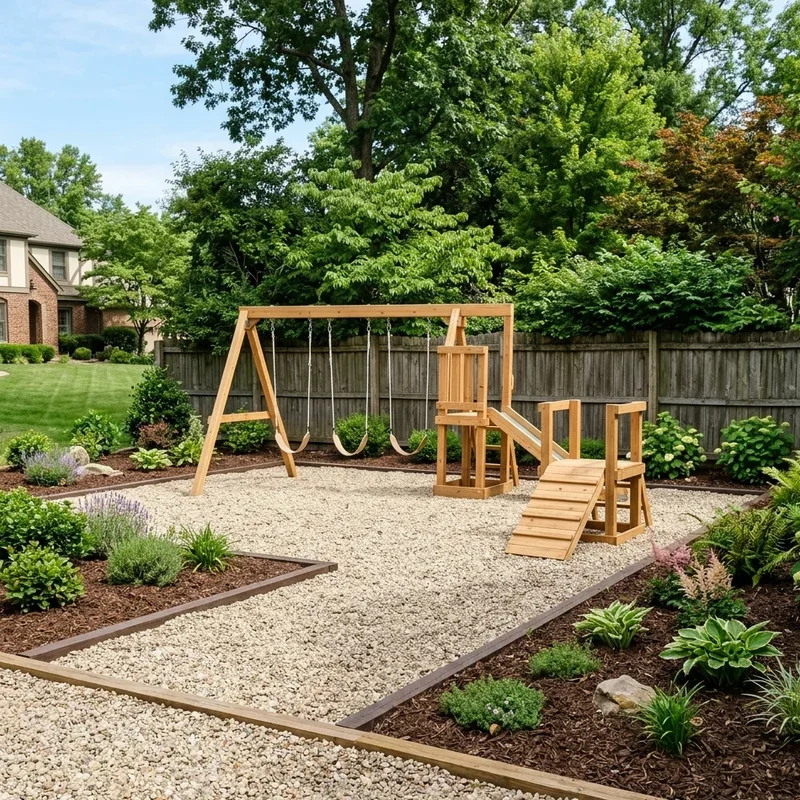
Pea gravel spreads small, rounded stones across your playground zone, creating a drainage-friendly, low-maintenance surface that shifts and compresses under impact to absorb fall energy, though less effectively than rubber or wood fiber alternatives from greater heights. Choose washed, rounded pea gravel rather than angular crushed stone, since smooth edges prevent the cutting injuries that sharp-edged rocks inflict on bare knees and palms during inevitable playground tumbles. Install at a depth of nine to twelve inches, because the loose stone needs sufficient depth to compress adequately under fall impact. Contain the gravel within a bordered edging system, since small stones migrate beyond boundaries without retaining walls holding them in place. Think of pea gravel like tiny stone cushions. Your playground gains affordable, permanent surfacing.
4. Shredded Bark Mulch
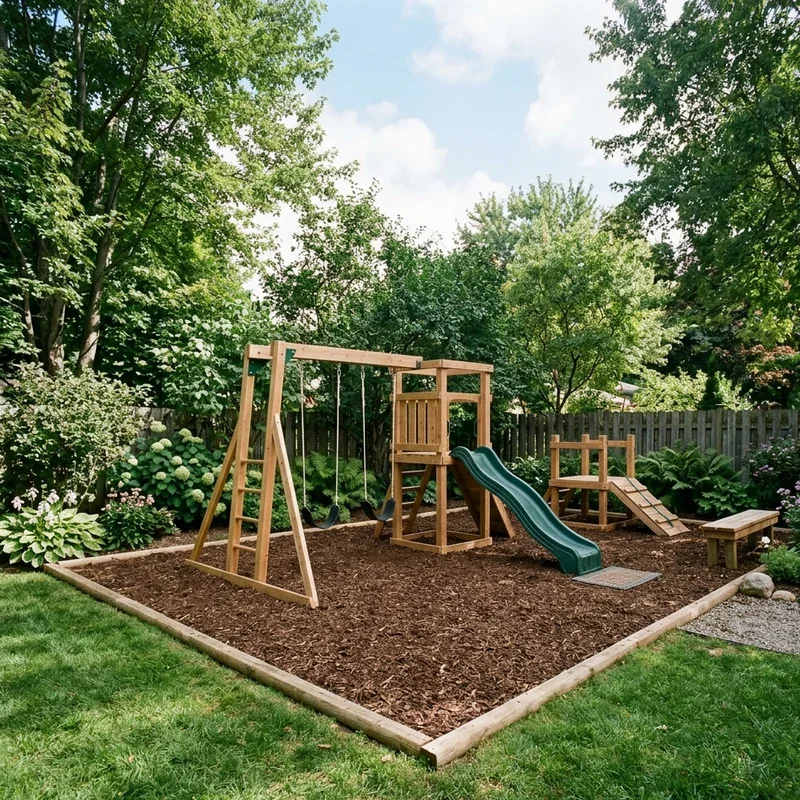
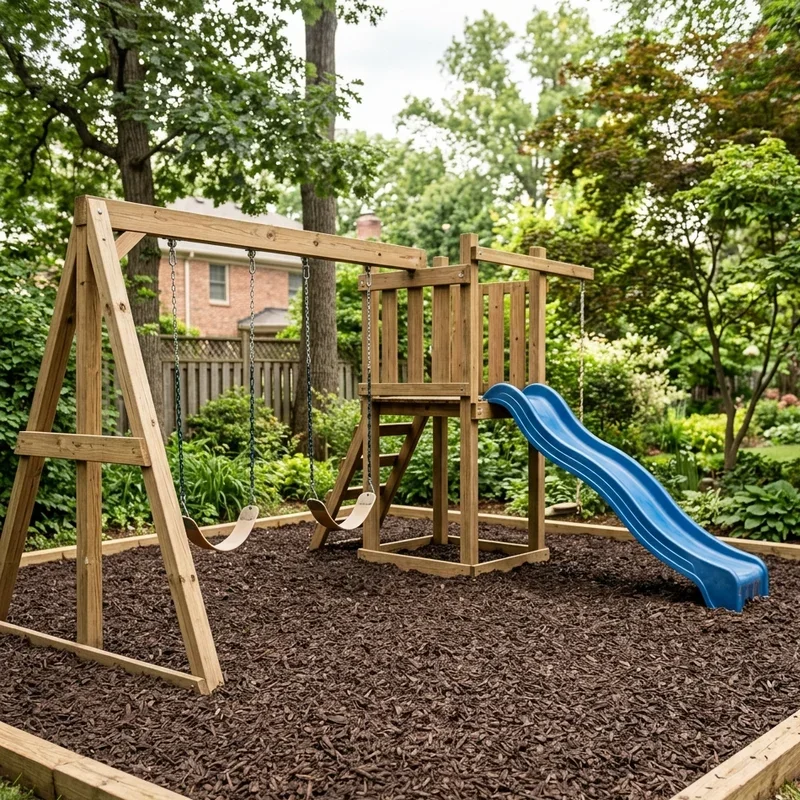
Shredded bark mulch covers your playground zone in natural, affordable material that provides moderate fall protection while adding organic, garden-like aesthetics that complement backyard landscaping more naturally than synthetic rubber alternatives blend into residential settings. Choose double-shredded hardwood bark, since the fibrous texture knits together better than single-ground chips that scatter easily under foot traffic and weather exposure. Install at nine to twelve inches minimum depth, because bark mulch compresses significantly under impact, requiring generous initial depth to maintain protective cushioning as the material settles and decomposes throughout the season. Replenish annually, since organic decomposition gradually reduces the protective layer that fresh installation provides initially. Avoid bark from treated or chemically processed wood. Think of bark mulch like natural forest floor. Your playground gains affordable organic protection.
5. Interlocking Rubber Tiles
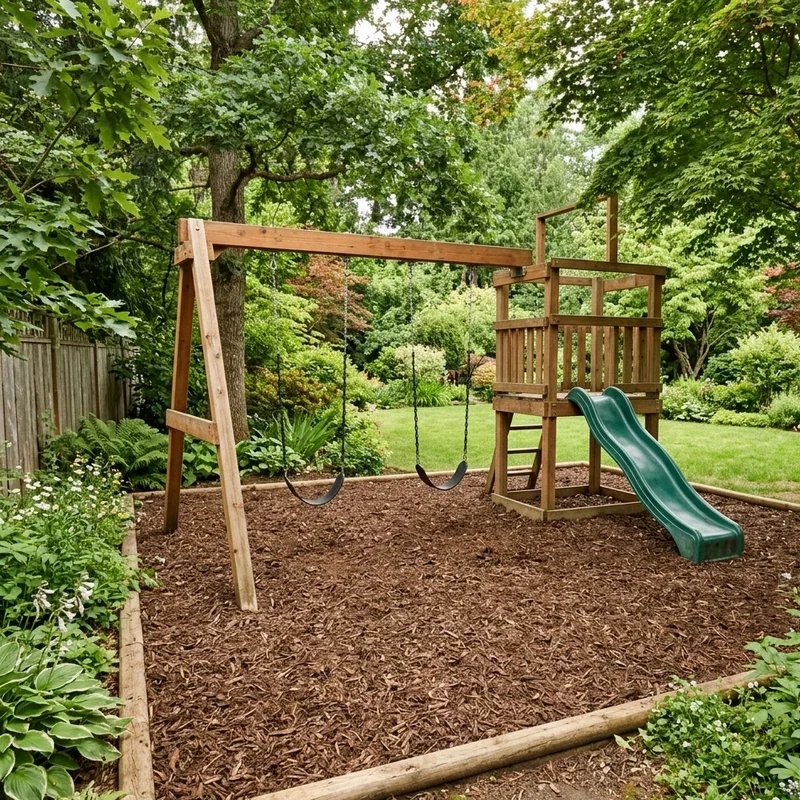
Interlocking rubber tiles snap together across your playground surface, creating a uniform, cushioned floor that maintains consistent thickness and shock absorption across every square foot without the shifting, scattering, and depth variations that loose-fill materials constantly battle throughout active use. Choose tiles rated for your equipment's maximum fall height, since tile thickness determines the impact absorption capacity that certification standards measure for playground safety compliance. Install the tiles on a level, compacted base, because uneven ground beneath creates rocking tiles that trip running children rather than protecting them during falls. Choose tiles with drainage channels underneath, since water buildup beneath impermeable rubber creates standing moisture problems. Interlock firmly. Think of rubber tiles like puzzle-piece padding for your playground. Your surface stays uniformly protective.
6. Poured-in-Place Rubber Surface
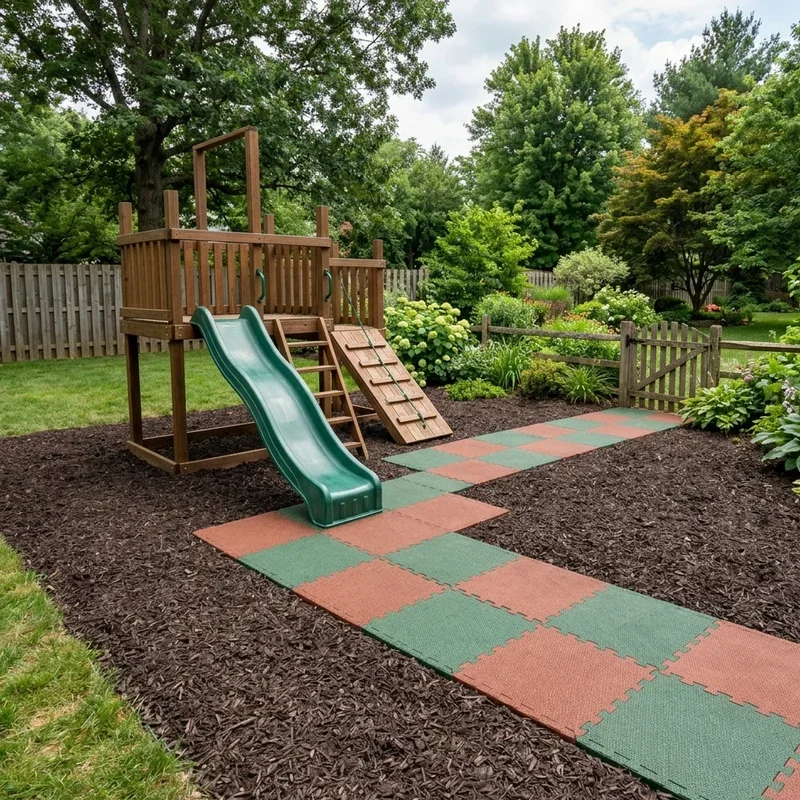
Poured-in-place rubber creates a seamless, continuous cushioned surface that bonds directly to your playground base, eliminating the gaps, shifts, and maintenance that tile and loose-fill systems require through their segmented or granular construction. Hire a professional installer, since the two-layer system requires a thick base cushion layer topped by a smooth, colored wear layer that demands precise mixing, pouring, and curing techniques beyond typical DIY capability. Choose this premium option for the cleanest, most accessible, wheelchair-friendly playground surface available, because the seamless, level finish accommodates mobility devices that loose mulch and uneven tiles obstruct. Select custom colors matching your backyard aesthetic. Think of poured rubber like continuous, cushioned flooring installed outdoors. Your playground gains the highest-grade surface available.
7. Sand Play Surface
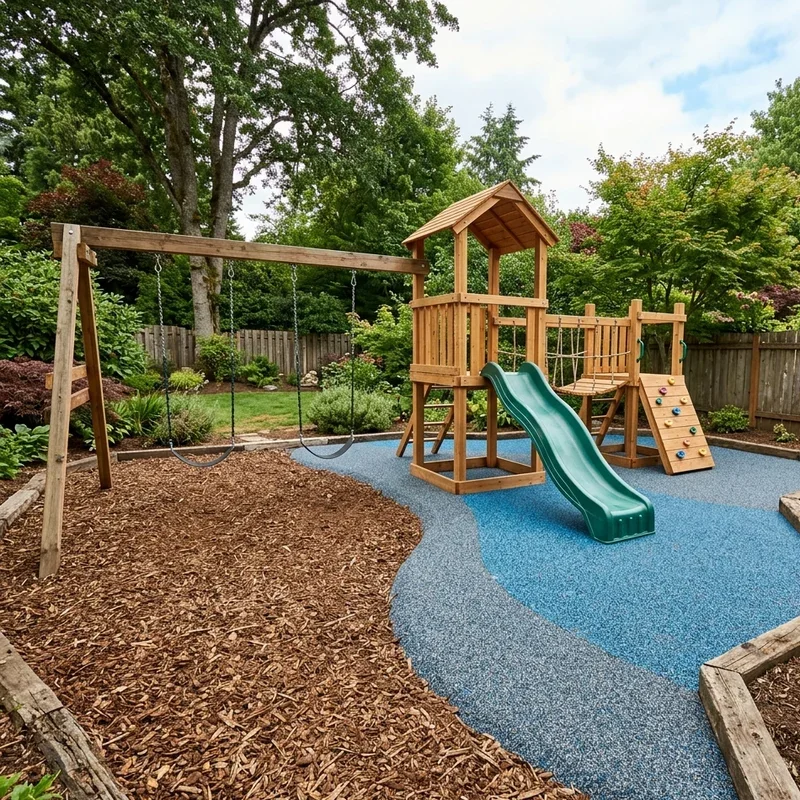
Sand covers your playground zone in a classic, familiar material that children love digging, building, and playing within while the loose granular surface absorbs moderate fall impact through compression and displacement beneath landing bodies. Choose washed play sand free from clay, silt, and contaminants, since clean, uniform grain size provides better drainage and safer, splinter-free contact against bare skin. Install at a minimum depth of twelve inches, because sand requires significant depth to absorb falls adequately compared to engineered materials that perform better at shallower installations. Contain sand within a bordered perimeter, since rain, wind, and enthusiastic digging scatter loose material beyond unbounded areas constantly. Cover when not in use to prevent animal contamination. Think of sand like beach landings for your backyard. Your playground doubles as a sandbox.
8. Artificial Turf Playground
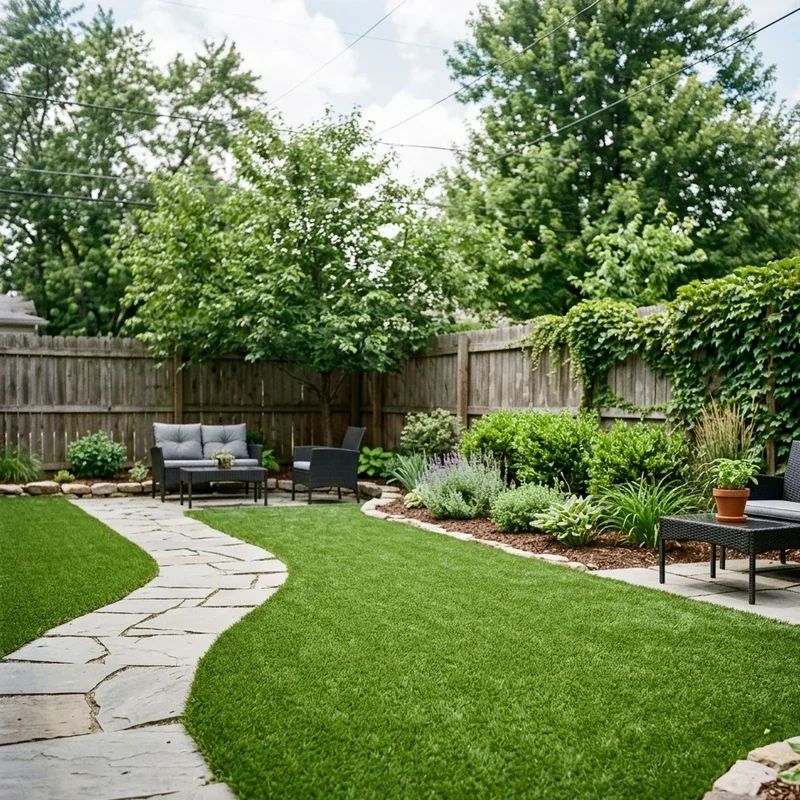
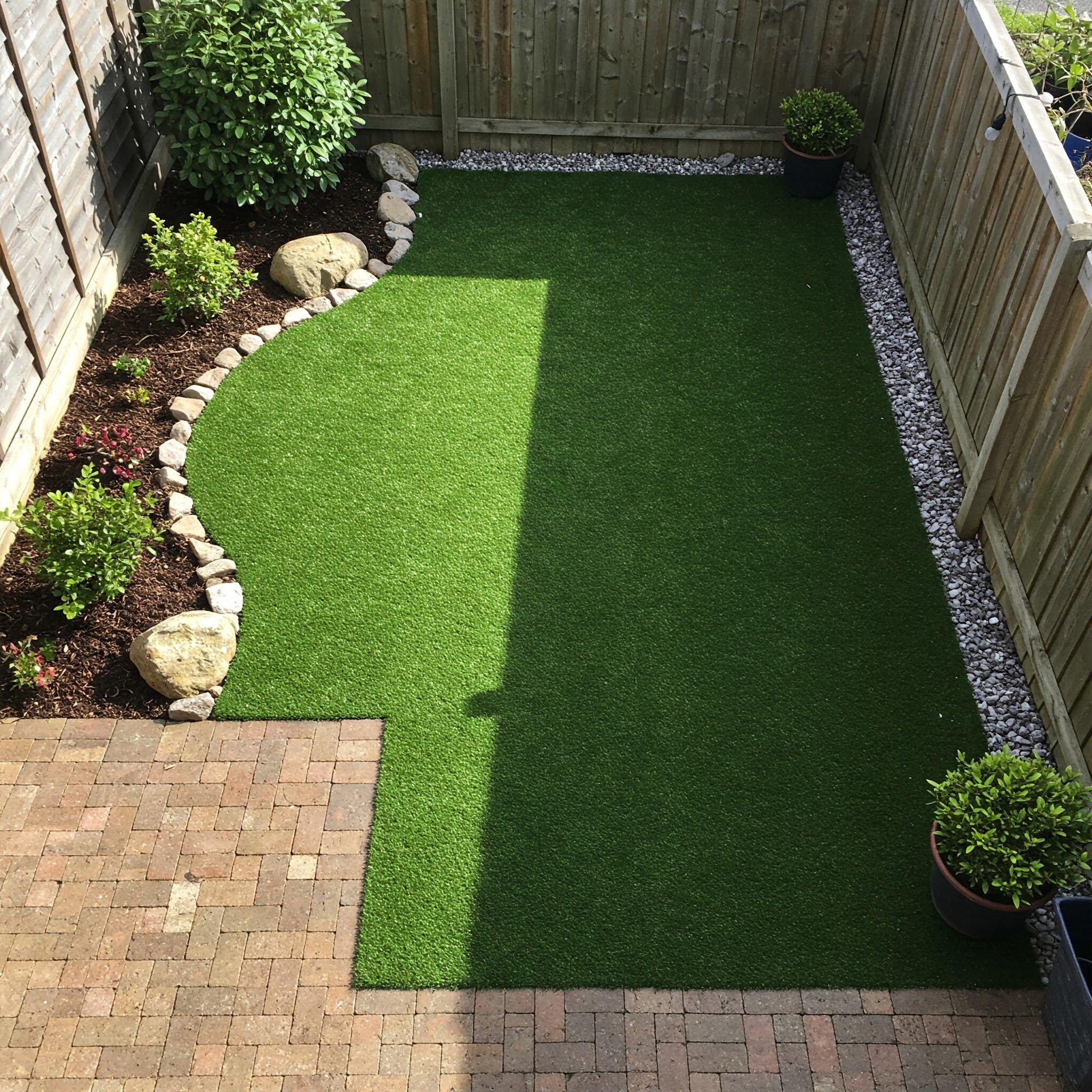
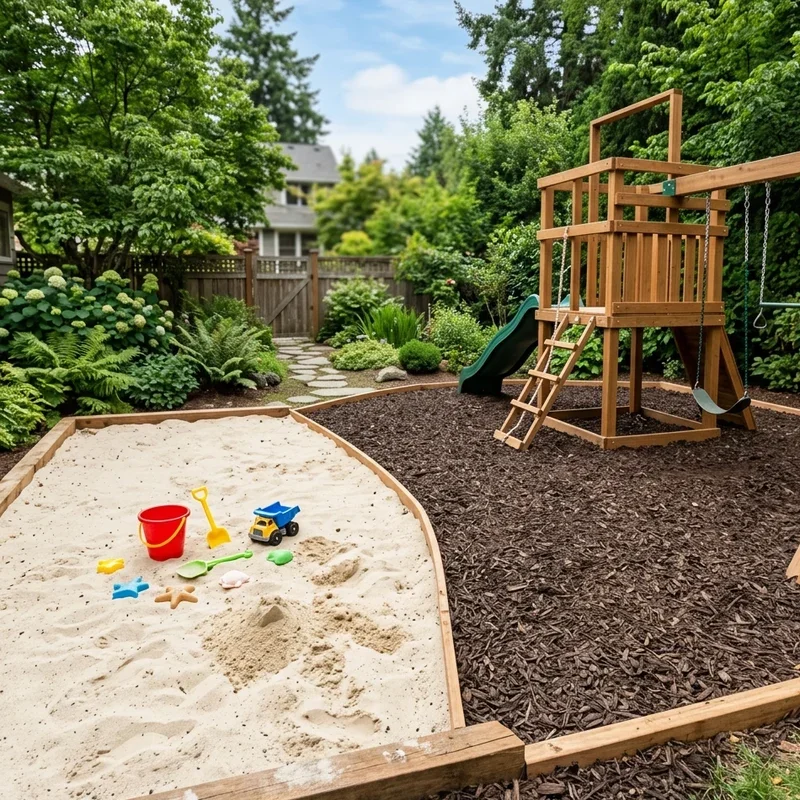
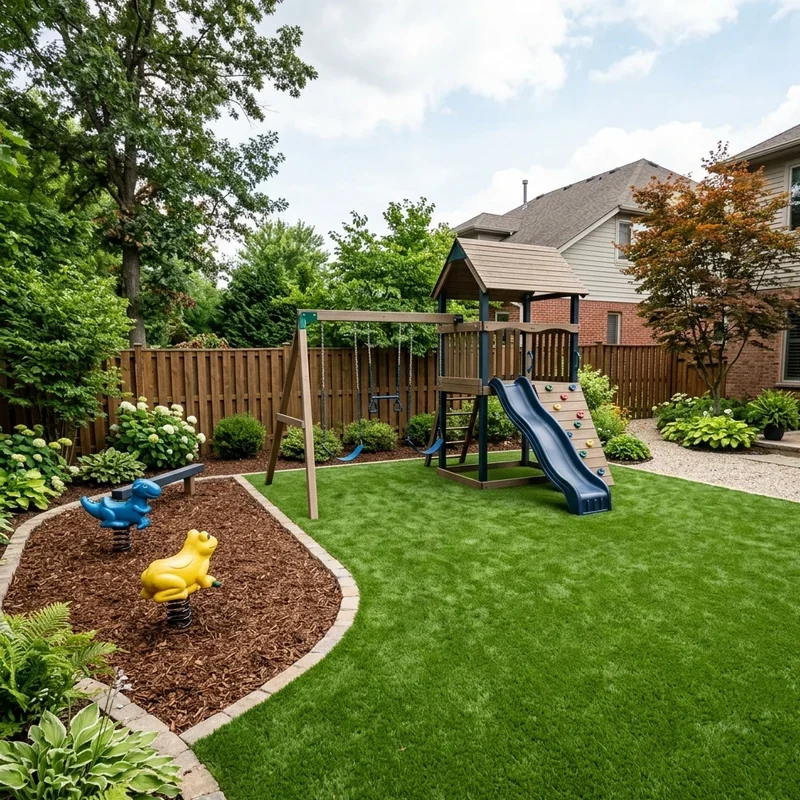
Artificial turf covers your playground zone in synthetic grass installed over a shock-absorbing pad, creating a clean, green surface that looks like a manicured lawn while providing cushioned fall protection that natural grass cannot maintain under the wear and compaction active play equipment creates. Choose playground-specific turf with built-in padding underneath, since the combination of synthetic blades and foam underlayment provides the dual benefit of attractive appearance and genuine impact absorption. Install professional-grade infill for proper drainage and blade support, because turf without adequate infill compresses flat, losing the cushioning that makes the surface protective rather than merely decorative. Rinse periodically for cleanliness. Think of artificial turf like permanent green carpet with hidden padding underneath. Your playground stays green and protective.
9. Coconut Coir Fiber Mulch
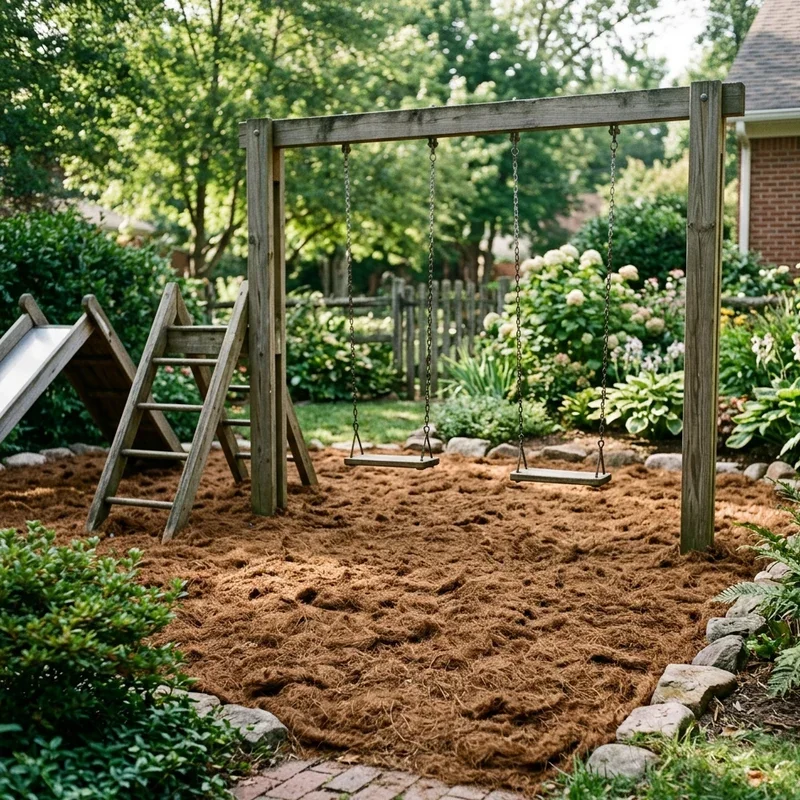
Coconut coir fiber mulch spreads natural, sustainable coconut husk material across your playground, creating an organic cushioning surface that decomposes slowly while resisting the moisture problems and insect attraction that some wood-based alternatives experience more aggressively. Choose processed coir fiber specifically rated for playground use, since the coarse, fibrous texture creates interlocking compression similar to engineered wood fiber while the natural material resists mold and fungal growth better than many organic competitors. Install at nine to twelve inches depth, because proper thickness ensures adequate fall absorption throughout the season before natural settling reduces the protective layer. Replenish as needed. Choose sustainably sourced coir. Think of coconut fiber like tropical cushioning imported for your playground. Your surface gains eco-friendly organic protection.
10. Recycled Rubber Crumb Fill
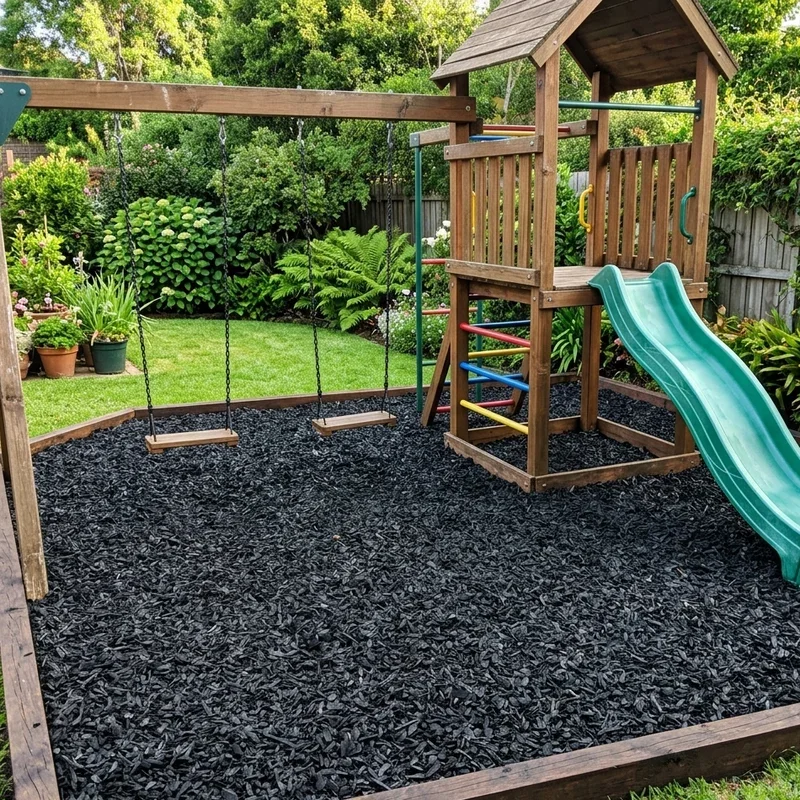
Recycled rubber crumb fill spreads fine, granular rubber particles across your playground zone, creating a loose-fill surface that combines the impact absorption of rubber mulch with the raked, level finish that larger rubber chips sometimes struggle to maintain evenly across active play areas. Choose IPEMA-certified crumb rubber, since the certification confirms the material meets playground safety standards for impact attenuation at specified depths and fall heights. Install at three to six inches depth, because the dense rubber particles absorb energy more efficiently per inch than organic alternatives requiring greater depth for equivalent protection. Contain within bordered edging. Choose non-toxic products tested for heavy metals. Think of rubber crumb like fine-grain safety padding. Your playground gains dense, effective cushioning.
11. Pine Straw Mulch
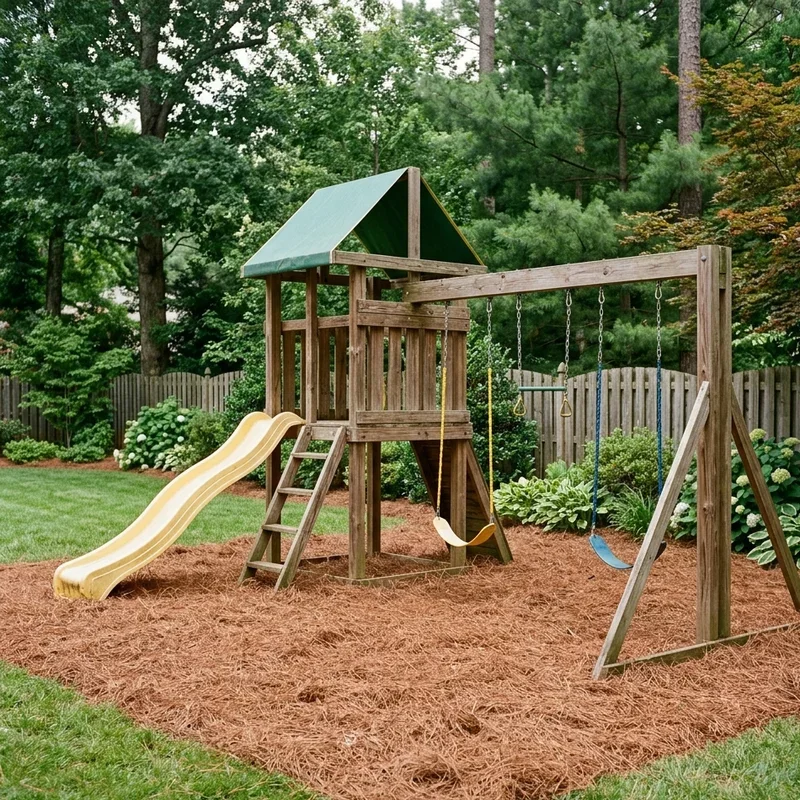
Pine straw mulch covers your playground in lightweight, interlocking needles that create a natural, affordable surface staying in place better than many loose-fill alternatives because the individual needles tangle together rather than rolling apart under foot traffic the way round chips and gravel migrate. Choose long-needle pine straw, since the extended fibers interlock more effectively than short-needle varieties that scatter and compress into flat, non-protective mats under playground use pressure. Install at nine to twelve inches of loose depth, because pine straw compresses significantly under impact and needs generous initial volume to maintain protective cushioning as settling occurs naturally over weeks of active use. Replace seasonally. Think of pine straw like woven needle mats cushioning landings naturally. Your playground gains affordable, interlocking organic surface.
12. Natural Wood Chip Mulch
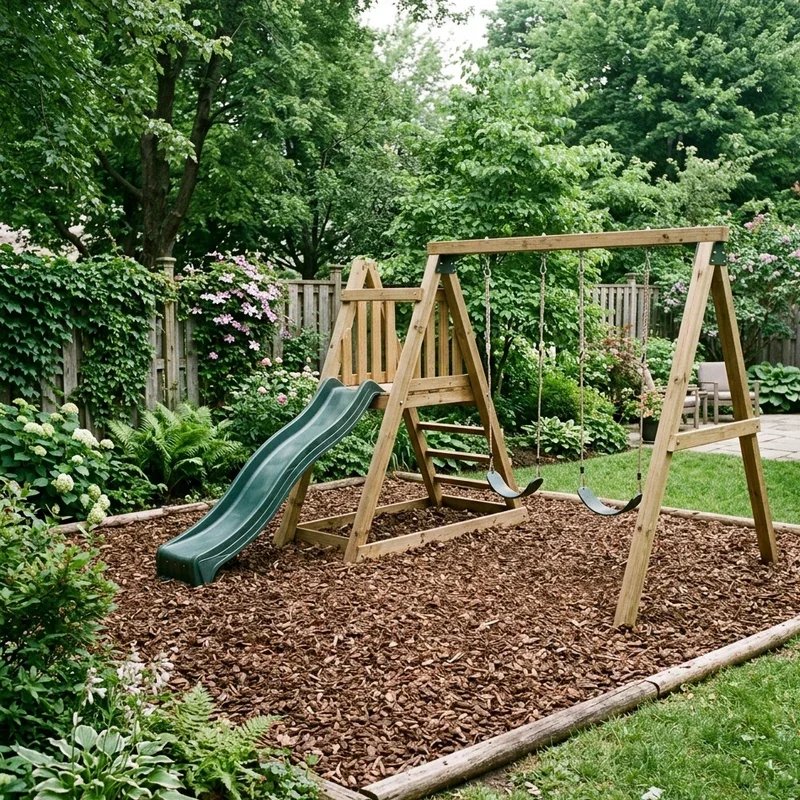
Natural wood chip mulch spreads chunky, unprocessed wood pieces across your playground, providing affordable, widely available fall protection that most homeowners can source from local tree services, arborists, or municipal recycling programs often delivering the material free of charge. Choose hardwood chips over softwood, since denser hardwood pieces compress less under impact while resisting decomposition longer than softer species that break down rapidly under moisture exposure. Install at nine to twelve inches minimum depth, because unprocessed wood chips lack the engineered interlocking properties that certified playground fiber achieves, requiring greater depth to compensate for the less efficient energy absorption. Rake the surface regularly to maintain even depth. Inspect for sharp sticks. Think of wood chips like chunky forest floor cushioning. Your playground gains the most affordable organic option.
13. Rubber Mat Padding
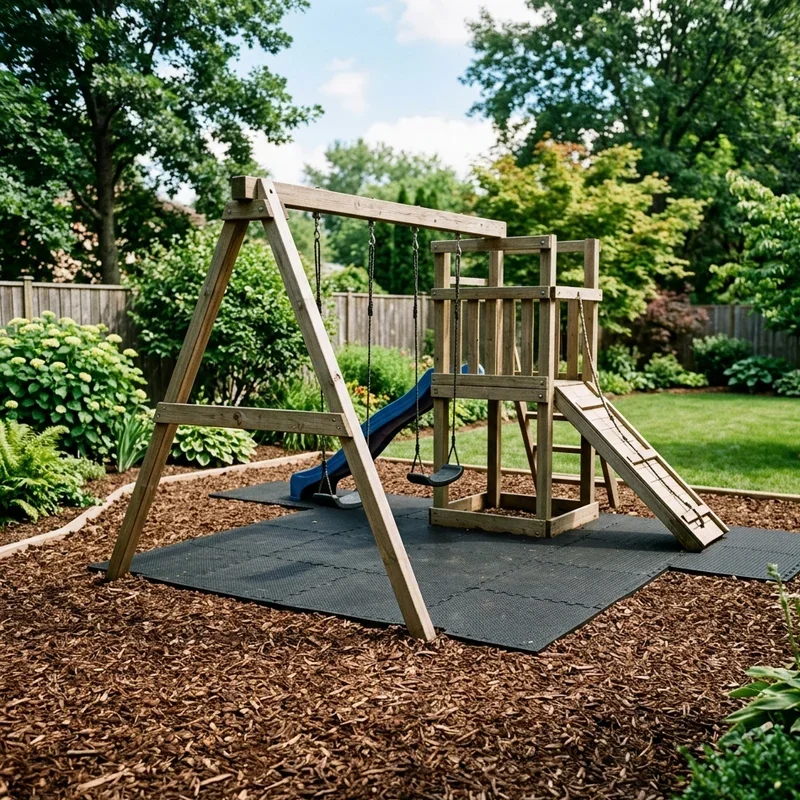
Rubber mat padding lays flat, heavy-duty rubber sheets beneath and around playground equipment, creating durable, low-maintenance impact zones that never shift, scatter, or require the replenishment that all loose-fill surfacing materials demand periodically throughout their service life. Choose thick rubber mats rated for your equipment's fall height, since mat thickness directly determines the maximum fall distance the surface safely absorbs without transmitting dangerous impact force to the body underneath. Secure mats to the ground using stakes or adhesive, because unsecured rubber slides under running feet, creating tripping hazards that stationary, anchored mats eliminate completely. Choose perforated mats for drainage. Stack mats for increased protection. Think of rubber mats like permanent landing pads positioned beneath every danger zone. Your playground gains reliable, maintenance-free cushioning.
14. Foam Interlocking Tiles
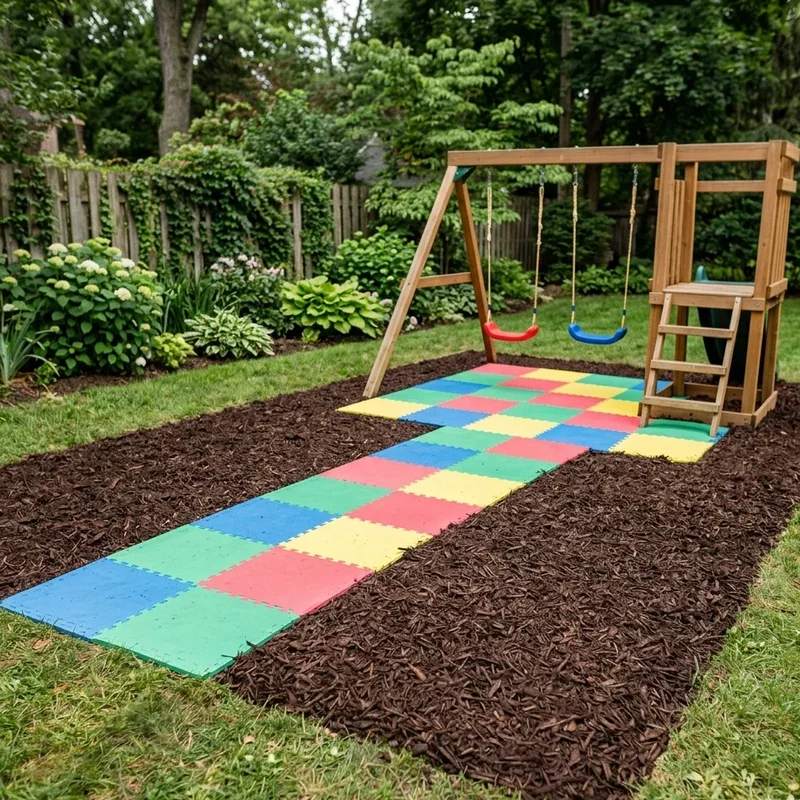
Foam interlocking tiles provide the softest, most cushioned playground surface available, where closed-cell EVA foam snaps together into a continuous padded floor that absorbs impact with the gentle give that harder rubber alternatives approach but never quite match in sheer softness. Choose outdoor-rated foam tiles with UV protection, since standard indoor foam degrades rapidly under direct sunlight that outdoor playground exposure delivers relentlessly throughout summer months. Install on flat, well-drained surfaces, because standing water beneath foam tiles traps moisture that breeds mold and breaks down the material from underneath over time. Bring tiles indoors during harsh winter months. Inspect for wear regularly. Think of foam tiles like gym floor padding relocated to your backyard. Your playground gains extremely soft landing surfaces.
15. Hybrid Mulch and Rubber Blend
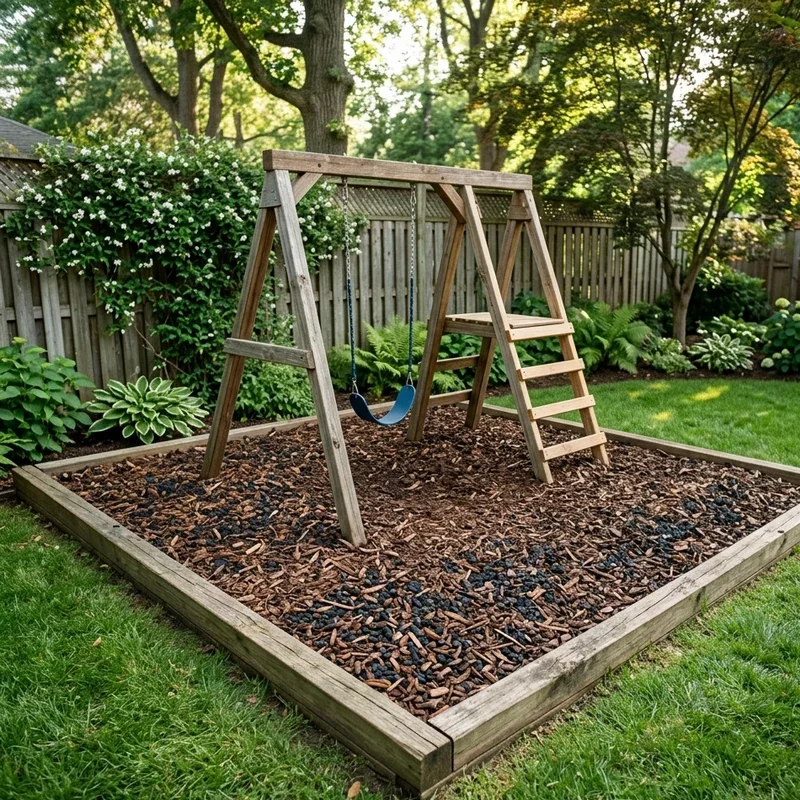
A hybrid mulch and rubber blend mixes organic wood fiber with recycled rubber pieces, combining natural aesthetics with enhanced impact absorption for a compromise surface that delivers better fall protection than pure wood while looking more organic than solid rubber alternatives. Mix engineered wood fiber with rubber mulch at a ratio favoring your aesthetic or safety preference, since heavier rubber concentration increases impact absorption while more wood content preserves the natural appearance that residential backyards generally prefer over industrial-looking rubber-only surfaces. Install the blended material at six to nine inches depth, because the rubber component's superior absorption allows slightly reduced depth compared to pure organic alternatives. Blend materials thoroughly before spreading. Think of hybrid surfaces like the best of both worlds combined. Your playground gains balanced protection.
Conclusion
Backyard playground mulch ideas prove that the surface beneath your children's equipment matters as much as the equipment itself, where the right material transforms dangerous hard ground into cushioned landing zones that let kids play freely without the injury risk that unprotected surfaces present beneath every fall. These fifteen options span engineered wood fiber to hybrid rubber blends, matching every budget, maintenance preference, and safety standard with genuine protective capability. Whether you spread pea gravel or install poured-in-place rubber, proper depth and coverage protect your children during every climb, swing, and jump. Start building your safer playground surface today.
Frequently Asked Questions
Q1: How deep should playground mulch be for safe fall protection?
A: Most materials need nine to twelve inches of depth for adequate impact absorption beneath standard equipment.
Q2: What playground mulch material lasts the longest?
A: Rubber mulch and rubber tiles last the longest, often exceeding ten years without significant replacement needs.
Q3: Is rubber mulch safe for children to play on?
A: IPEMA-certified rubber mulch meets safety standards, though some parents prefer organic alternatives for chemical-free play.
Q4: How far should playground mulch extend beyond the equipment?
A: Extend mulch at least six feet beyond the equipment perimeter in all directions for adequate fall zone coverage.
Q5: How often should I replace organic playground mulch?
A: Replenish wood-based mulch annually and completely replace it every two to three years as decomposition reduces depth.
Stay up to date with our latest ideas!