15 Front Yard Concrete Patio Ideas to Elevate Outdoor Style
Discover 15 stunning front yard concrete patio ideas to elevate your outdoor style. From stamped designs to modern slabs, transform your curb appeal.
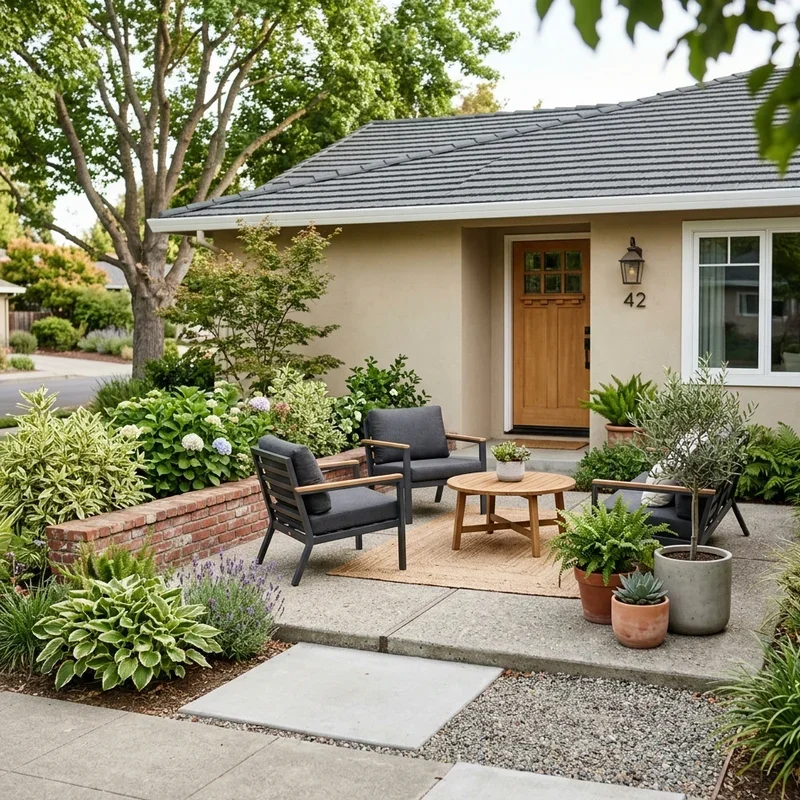
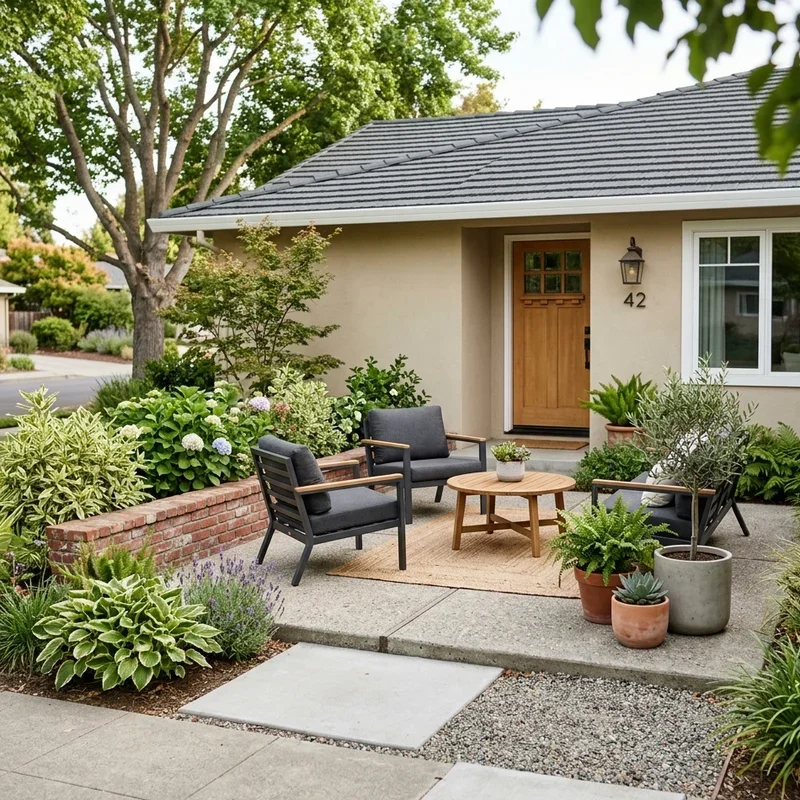
Your front yard is basically your home's handshake with the world. It is the first thing people notice, and a boring slab of gray concrete does not exactly scream personality. But here is the good news: concrete patios have evolved far beyond plain sidewalks and dull driveways. Today's options include stamped patterns, stained finishes, exposed aggregate textures, and designs that rival natural stone at a fraction of the cost. A well-designed front yard patio creates a welcoming space where you can sit with morning coffee, chat with neighbors, or simply enjoy the fresh air. It also adds real value to your property. Ready to ditch the dull and embrace something extraordinary? These 15 concrete patio ideas will show you exactly how to make your front yard the talk of the street.
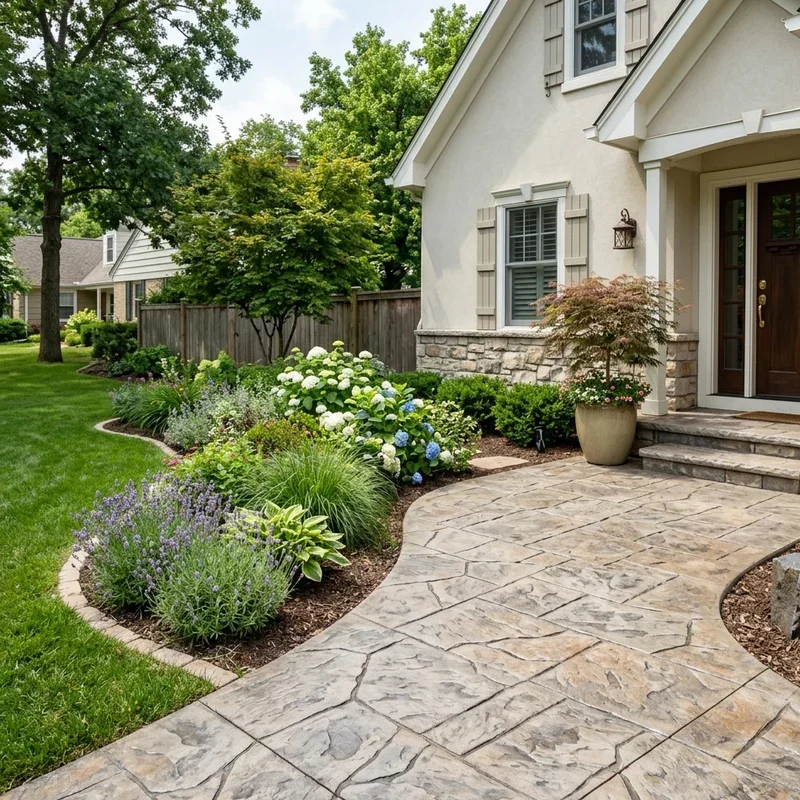
1. Stamped Concrete With a Natural Stone Pattern
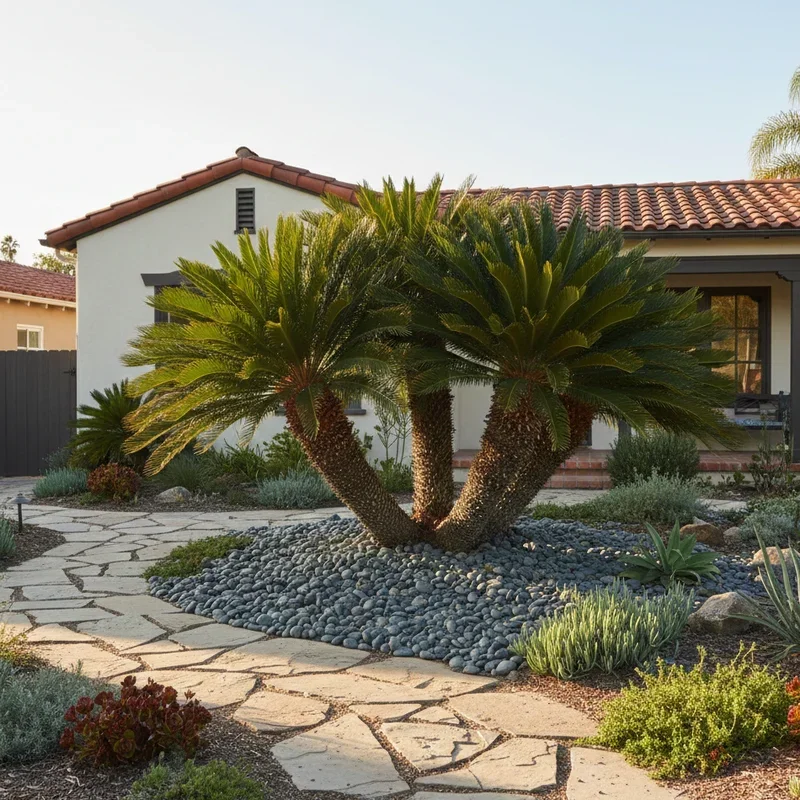
Stamped concrete is the great pretender of the patio world, and we mean that as a compliment. It mimics the look of flagstone, slate, cobblestone, or brick at roughly half the price of the real materials. Contractors press textured mats into wet concrete to create patterns that fool even experienced eyes. You get the visual richness of natural stone with the durability and low maintenance that only concrete delivers. Popular front yard patterns include Ashlar slate for a formal look and random flagstone for something more relaxed. Add a release agent in a contrasting color during stamping, and the grooves between the "stones" take on a naturally weathered appearance. Your front yard gains instant elegance without the premium price tag that genuine stone demands.
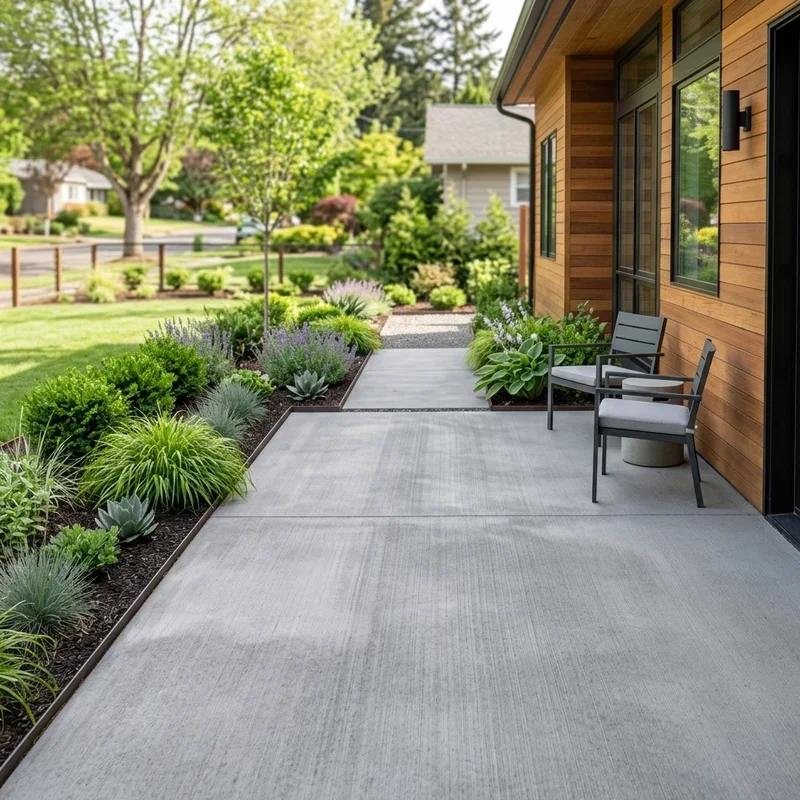
2. Brushed Finish Concrete for a Clean Modern Look
Sometimes simplicity wins the day, and brushed finish concrete proves that point beautifully. A contractor drags a broom across the surface while the concrete remains wet, creating fine parallel lines that provide grip and subtle visual texture. The result looks clean, intentional, and perfectly suited for modern and contemporary homes. This finish costs less than stamped or stained options because it requires no special tools or materials beyond a quality broom. It handles foot traffic brilliantly and offers excellent slip resistance when wet, which matters for front yard patios exposed to rain and morning dew. Pair a brushed finish with crisp square edges and narrow expansion joints for a look that screams modern sophistication. It is proof that restraint can be its own form of luxury.
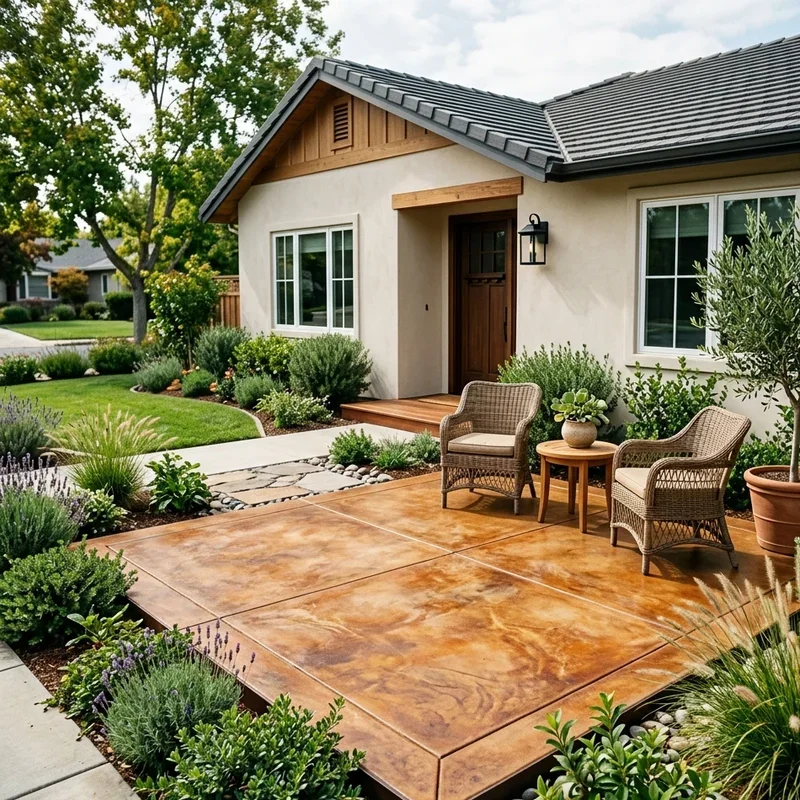
3. Stained Concrete in Warm Earthy Tones
Stained concrete transforms a plain gray slab into something that looks like it belongs in an art gallery courtyard. Acid-based stains react chemically with the concrete surface, producing rich, translucent colors with natural variation that no two slabs share. Think terracotta, amber, walnut brown, and sandy beige. These warm earthy tones blend seamlessly with landscaping, brick facades, and natural wood accents around your front entry. Water-based stains offer even more color options with easier application, though they sit on the surface rather than penetrating it. You can combine multiple stain colors to create marbled effects or use borders in a deeper shade to frame the patio. A quality sealer on top protects the color and adds a subtle sheen that catches sunlight gorgeously.
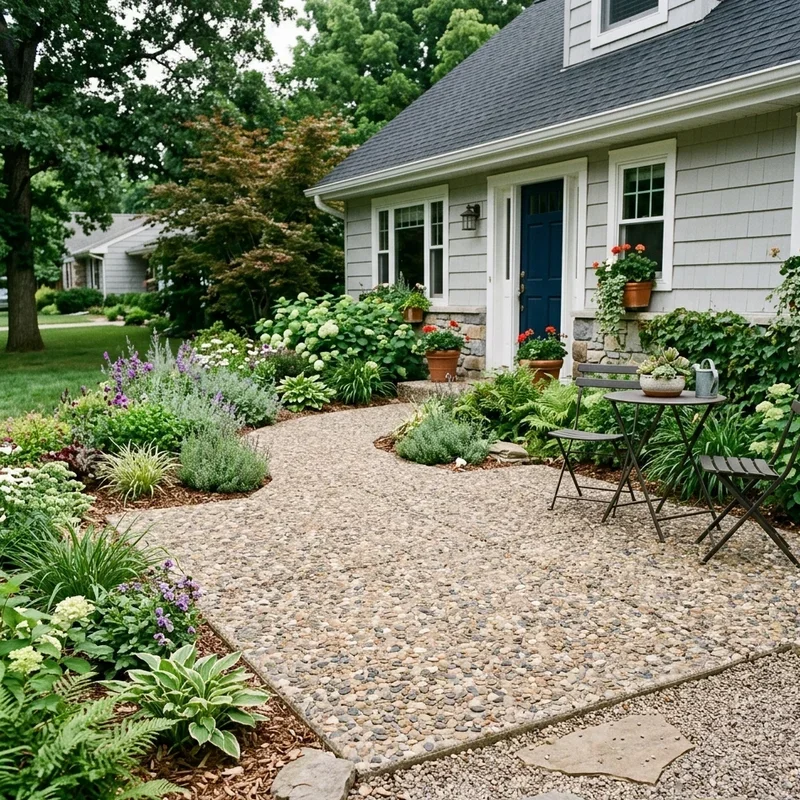
4. Exposed Aggregate Patio With Pebble Texture
Exposed aggregate gives your patio a rugged, organic texture that feels like a riverbed smoothed by centuries of flowing water. The technique involves pouring concrete mixed with decorative stones, then washing away the top layer of cement paste to reveal the pebbles beneath. You end up with a surface full of natural color and tactile interest that plain concrete simply cannot offer. Choose river rock for rounded, earthy tones or opt for crushed granite and quartz for sparkle and shimmer. The textured surface provides exceptional traction, making it a smart safety choice for front walkways. Exposed aggregate also hides minor imperfections and stains better than smooth finishes, which means less maintenance stress for you over the years ahead.
5. Geometric Slab Layout With Grass Joints
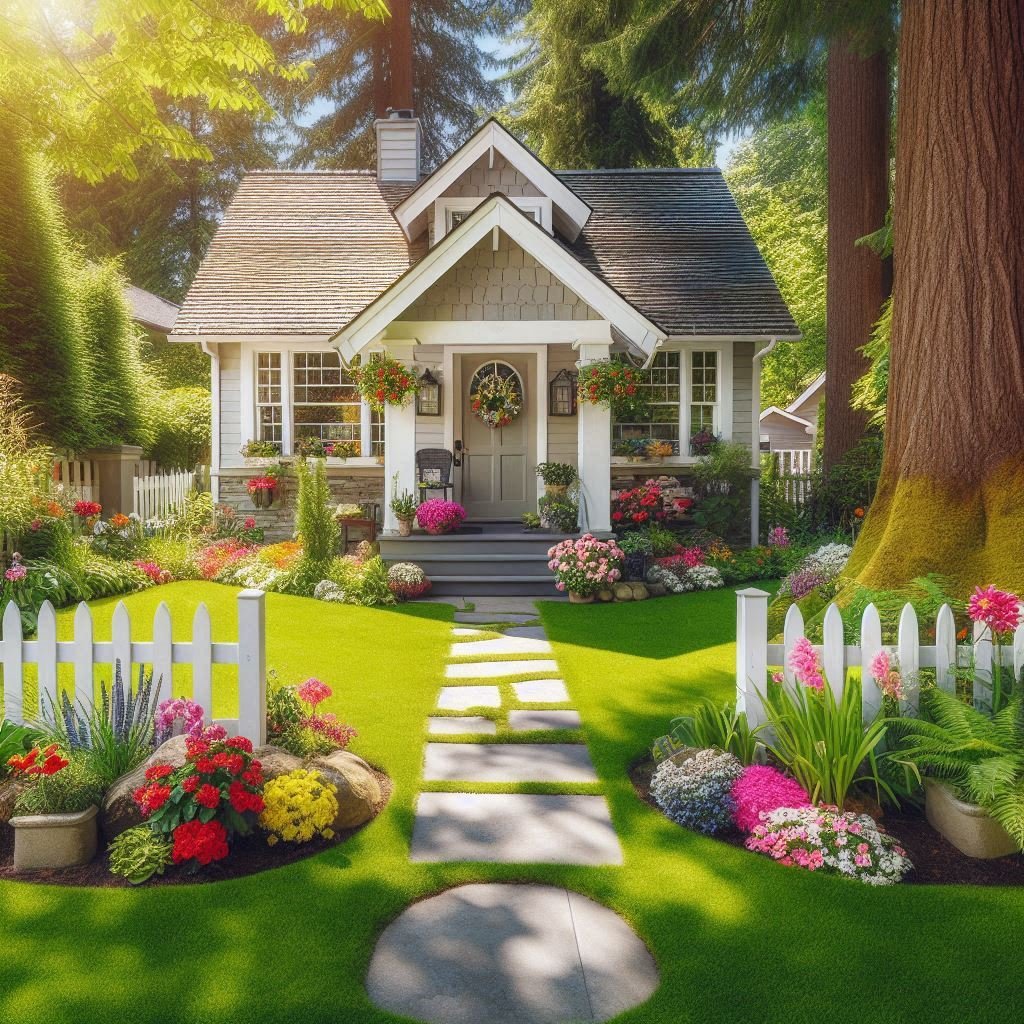
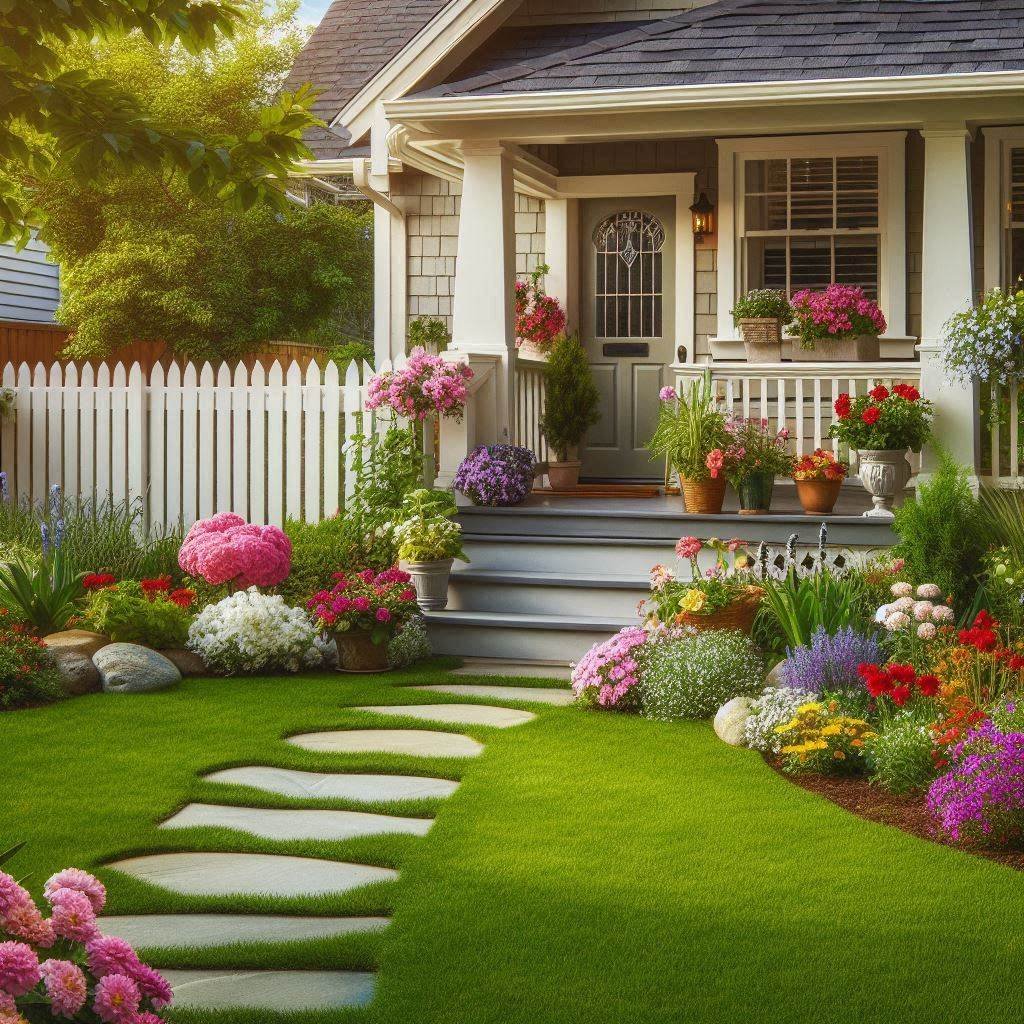
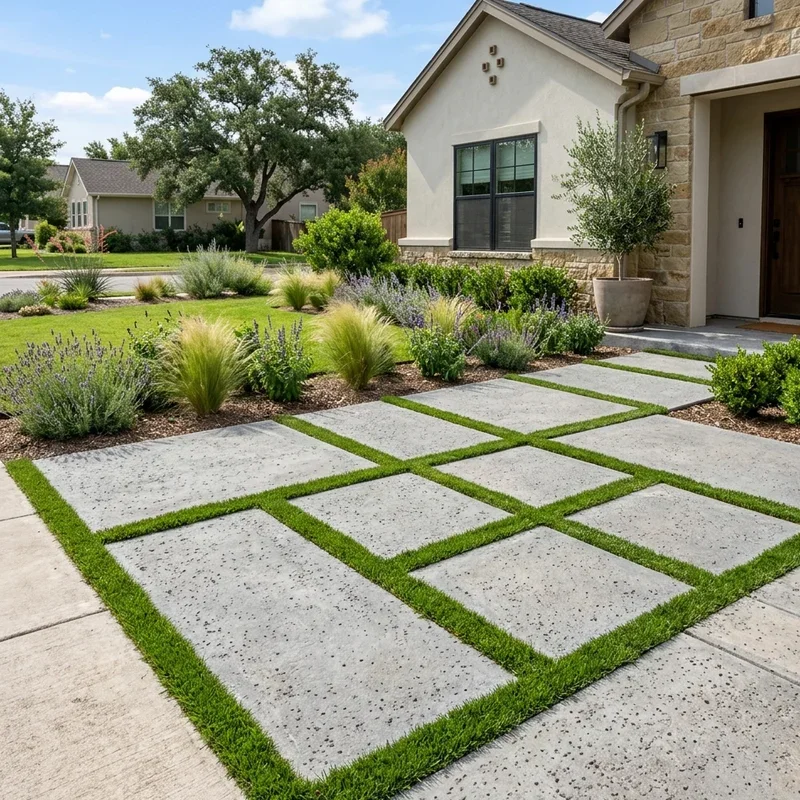
Here is where concrete meets landscape design in the most satisfying way possible. Instead of pouring one continuous slab, you lay individual concrete squares or rectangles with deliberate gaps between them, then plant grass or ground cover in those joints. The result looks like a modern mosaic where hardscape and softscape dance together in perfect balance. This design breaks up the visual weight of a large concrete area and keeps your front yard feeling green and alive. Creeping thyme, dwarf mondo grass, and Irish moss all work beautifully in the joints. The grass strips also help with drainage by giving rainwater natural channels to absorb into the soil below. It is architecture and gardening holding hands.
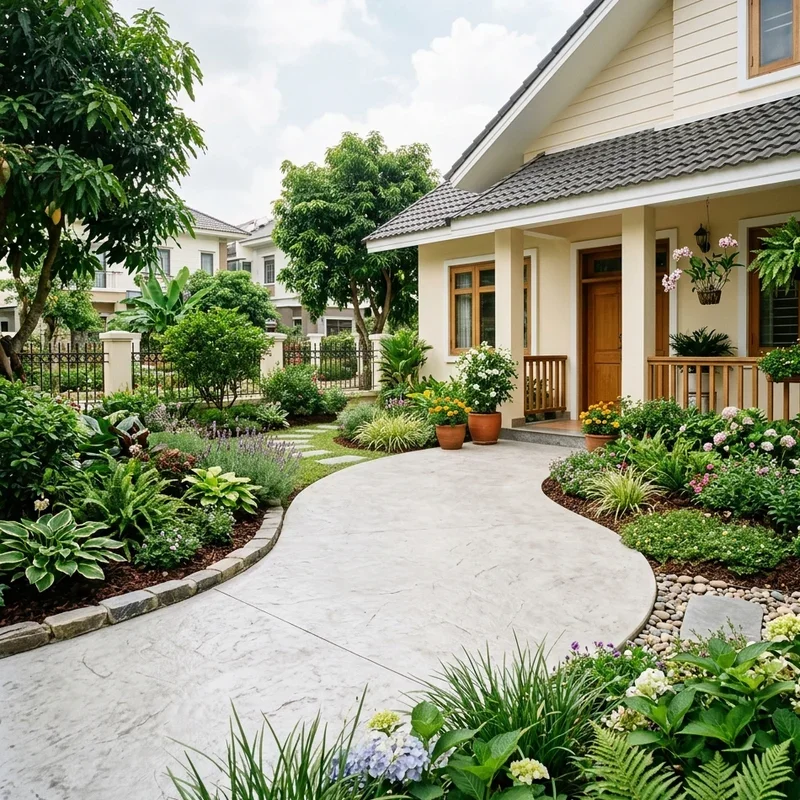
6. Curved Concrete Patio With Garden Borders
Straight edges dominate most concrete work, so a curved patio immediately stands out from every other house on your block. Curved forms follow the natural flow of your landscaping, wrapping around garden beds, trees, and flower borders with an organic grace that rigid geometry cannot achieve. Think of it as giving your front yard a flowing river instead of a canal. The curves soften the visual impact of concrete and make the entire space feel more welcoming and relaxed. Contractors use flexible form boards to shape these curves during the pour. Pair your curved patio with rounded planter beds filled with ornamental grasses or flowering shrubs, and the whole composition feels like it grew naturally from the landscape rather than being imposed upon it.
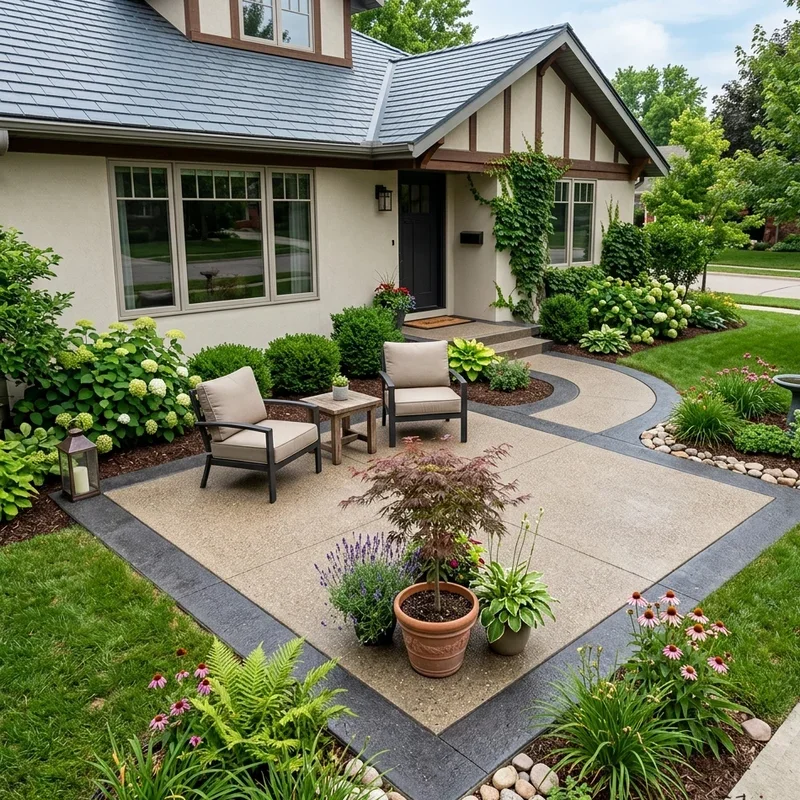
7. Two Tone Concrete With Contrasting Borders
Why settle for one color when two can tell a much better story? Two-tone concrete patios use a primary color for the main field and a contrasting shade for the border or accent bands. Imagine a sandy tan center framed by a rich chocolate brown edge, or a cool gray field with charcoal borders defining the perimeter. This technique creates visual structure and makes your patio look like it was designed by a professional architect. You can achieve the contrast through integral color added to the concrete mix, surface-applied stains, or even combining stamped borders with a smooth center field. The border acts like a picture frame, drawing the eye inward and giving the entire patio a finished, polished appearance that plain single-color slabs simply lack.
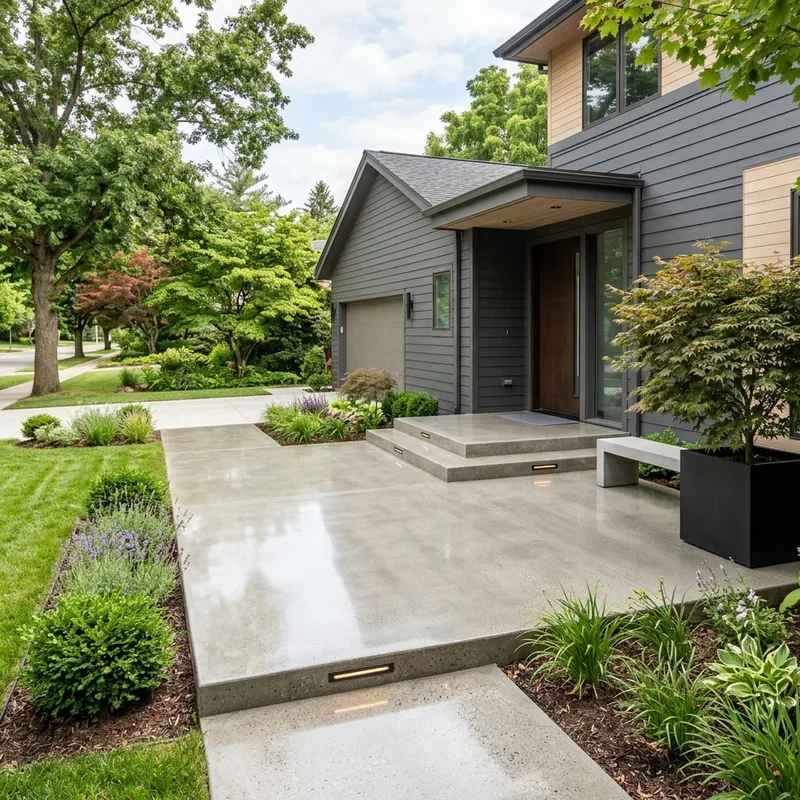
8. Polished Concrete Patio for a Sleek Entrance
Polished concrete brings an interior design aesthetic straight into your front yard. The surface gets ground down with progressively finer diamond pads until it achieves a smooth, reflective finish that almost looks like natural stone tile. The sheen catches light beautifully and gives your front entrance a high-end, gallery-like quality. Polished concrete works best under covered porches or semi-sheltered front patios where the surface stays partially protected from heavy rain. When wet, polished surfaces can become slippery, so consider adding a non-slip sealer or keeping this finish in areas with overhead coverage. The maintenance is minimal because the dense, closed surface resists staining and repels moisture. For homeowners who want their front yard to feel like an extension of a modern living room, polished concrete nails that vision.
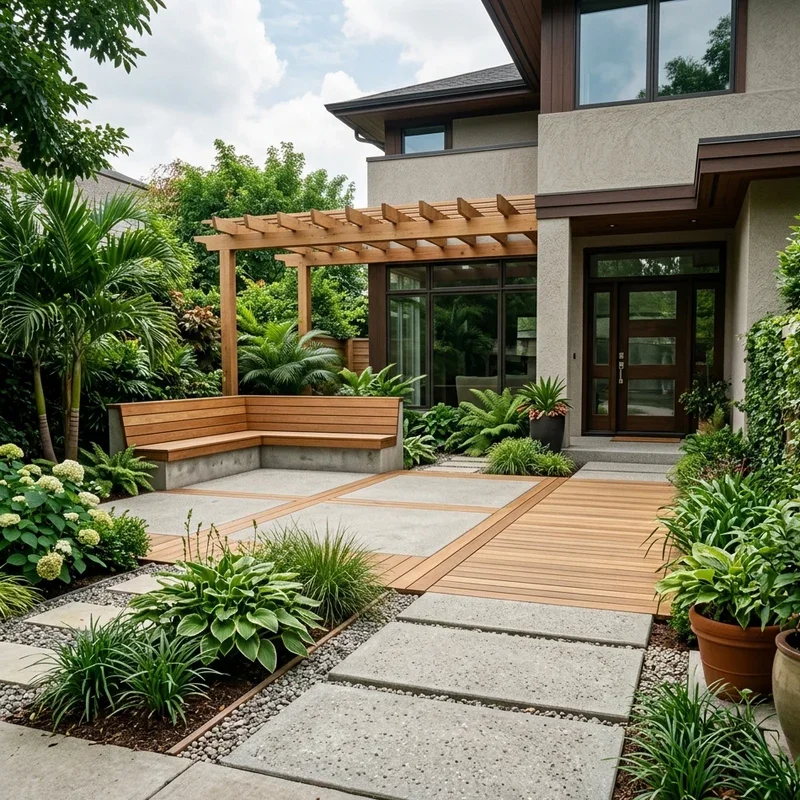
9. Concrete and Wood Plank Combination Design
Mixing concrete with wood planks creates a warm, inviting contrast that neither material achieves alone. Set timber sleepers or treated wood planks into the concrete layout as accent strips, dividers, or alternating rows. The cool, hard surface of concrete next to the warm grain of natural wood produces a textural conversation that feels both modern and rustic at once. Think of it as a duet where each instrument makes the other sound better. Use hardwoods like ipe or treated pine that handle outdoor moisture without rotting quickly. You can also use concrete wood plank molds to stamp realistic wood grain patterns directly into the concrete, getting the look without any actual timber maintenance. Either approach gives your front yard serious design credibility.
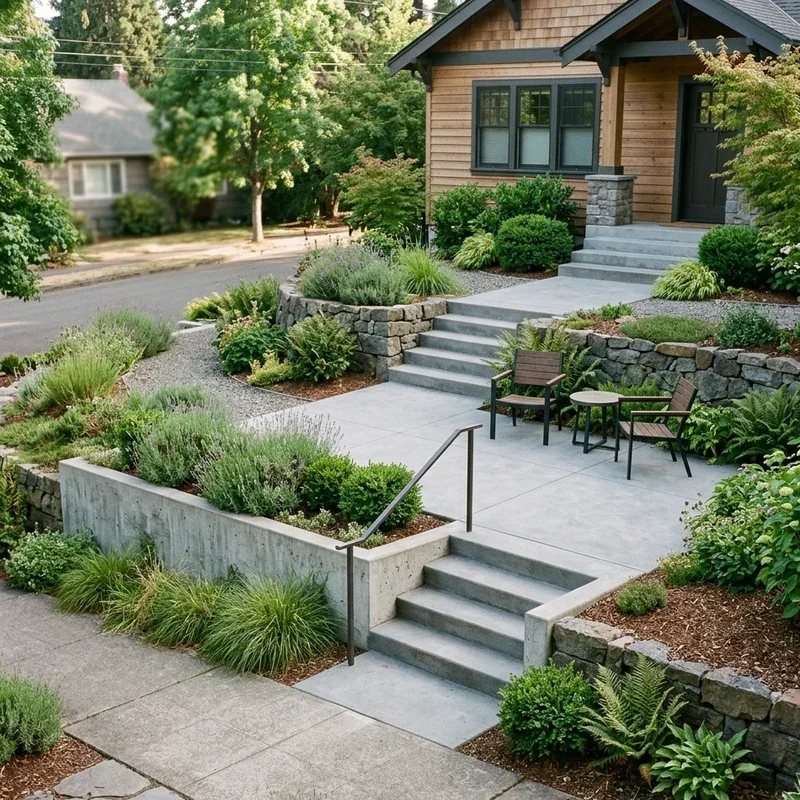
10. Tiered Concrete Patio on a Sloped Front Yard
Sloped front yards challenge most homeowners, but tiered concrete patios turn that slope into a genuine advantage. Instead of fighting the grade with one flat surface, you build multiple levels connected by short steps or gentle ramps. Each tier becomes its own zone for seating, planters, or decorative displays. The effect resembles terraced hillside gardens you see in Mediterranean villages, layered and intentional and full of character. Retaining walls between tiers can match the concrete finish or contrast with stone or brick facing for added visual interest. Low-voltage step lights along the risers add both safety and drama after dark. A sloped yard that once felt like a problem suddenly becomes the most interesting front yard on the entire street.
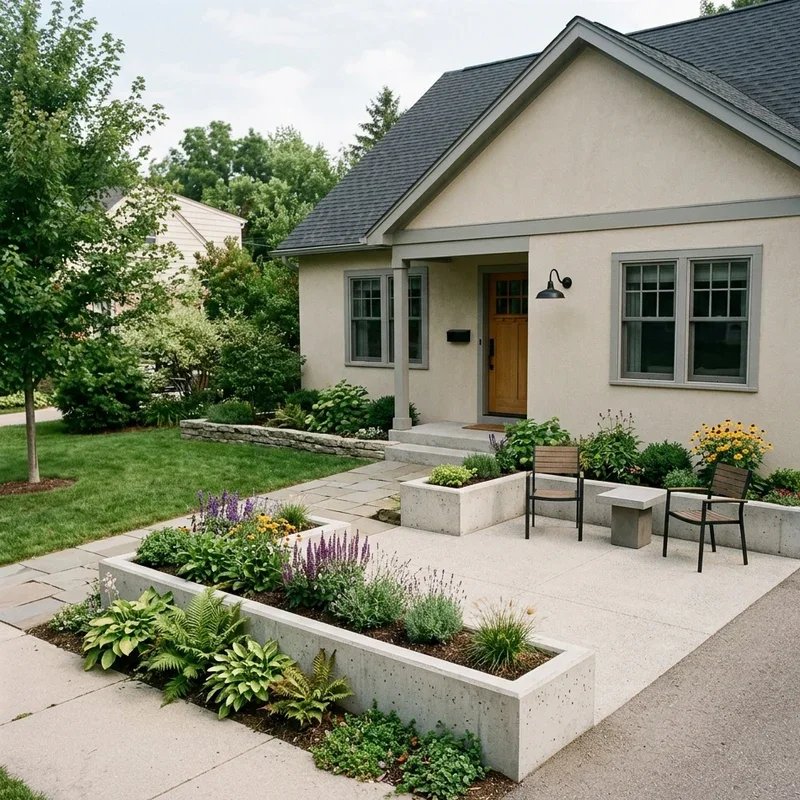
11. Concrete Patio With Built In Planter Boxes
Built-in planter boxes turn your concrete patio into a living, breathing space rather than a sterile slab. You form the planters right into the concrete during the pour, creating raised beds that share the same material and color as the patio surface. The cohesive look feels intentional and architectural rather than afterthought-ish. Fill them with seasonal flowers, ornamental grasses, succulents, or even small shrubs that frame your front entrance with natural beauty. The planters also define the patio edges gracefully, eliminating the need for separate borders or edging materials. Drainage holes in the planter base prevent water from pooling and damaging the concrete over time. It is functional landscaping baked directly into your hardscape, literally.
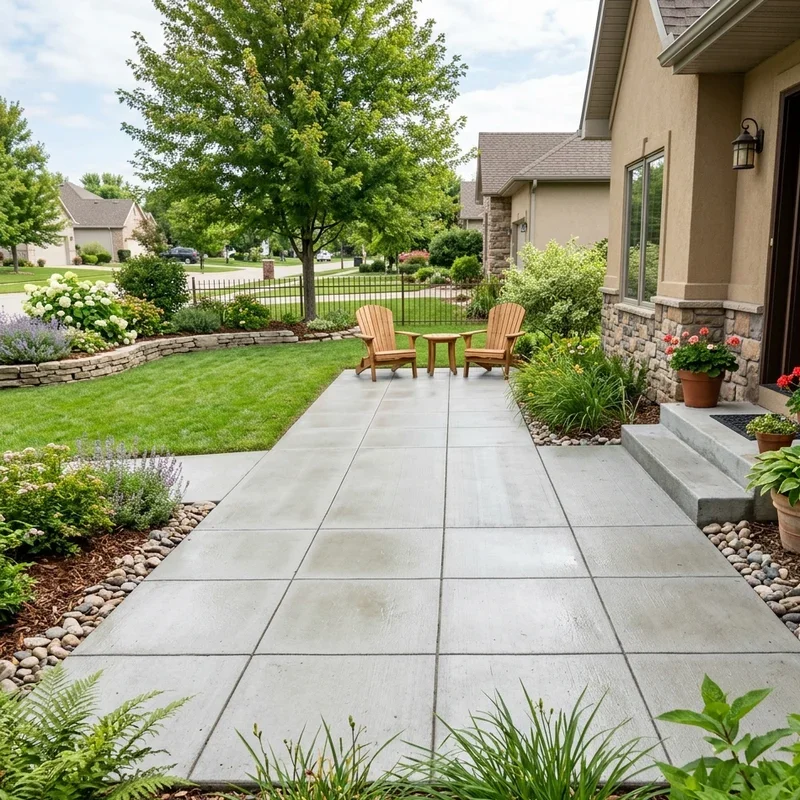
12. Scored Concrete With Custom Grid Patterns
Scoring is one of the easiest ways to add visual interest to a plain concrete patio without spending big money. Contractors use specialized tools to cut shallow grooves into the surface, creating geometric patterns like grids, diamonds, or even custom designs. The score lines catch shadows throughout the day, giving the surface depth and movement that flat concrete lacks entirely. You can score the concrete while it is still fresh or cut into cured slabs using a concrete saw. Combining scored lines with different stain colors in each section creates a tile-like effect at a fraction of the cost. Think of scoring as giving your concrete patio a tailored suit instead of leaving it in plain clothes. Small details make massive differences.
13. Colored Concrete With Bold Statement Hues
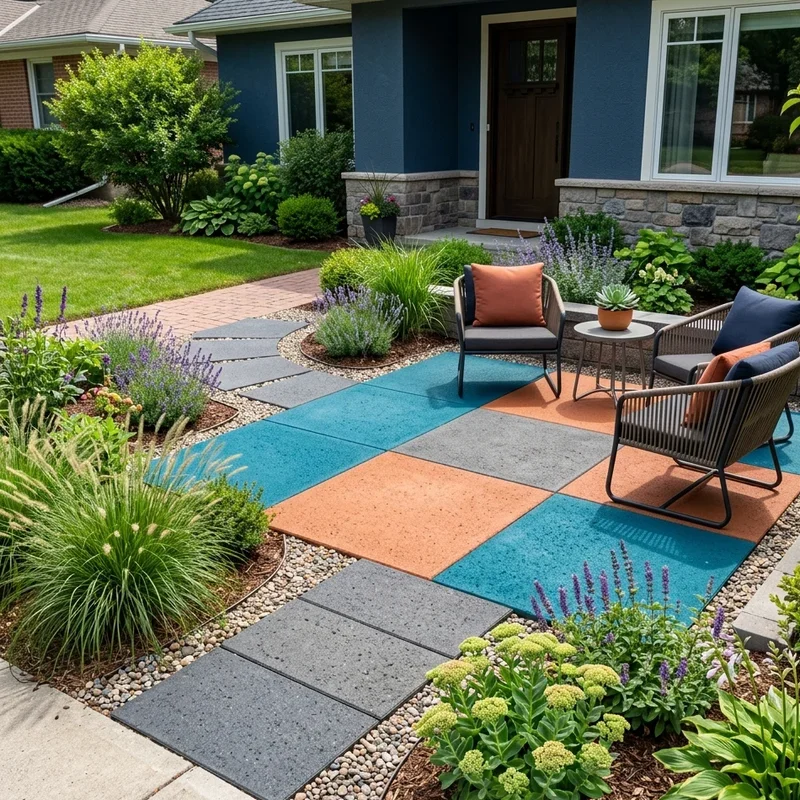
Most people think concrete only comes in gray, but integral color pigments blow that assumption wide open. You can pour concrete in terracotta red, forest green, deep blue, desert gold, or even charcoal black. Bold colors transform a front yard patio from background element to main character in your outdoor design story. The pigment mixes directly into the concrete before pouring, so the color runs through the entire depth of the slab and never peels or flakes. Pair a bold patio color with neutral house siding for contrast, or coordinate it with your front door and shutters for a unified palette. Colored concrete does cost slightly more than standard gray, but the visual impact per dollar spent is enormous. Your front yard deserves a personality.
14. Concrete Paver Style Patio With Herringbone Layout
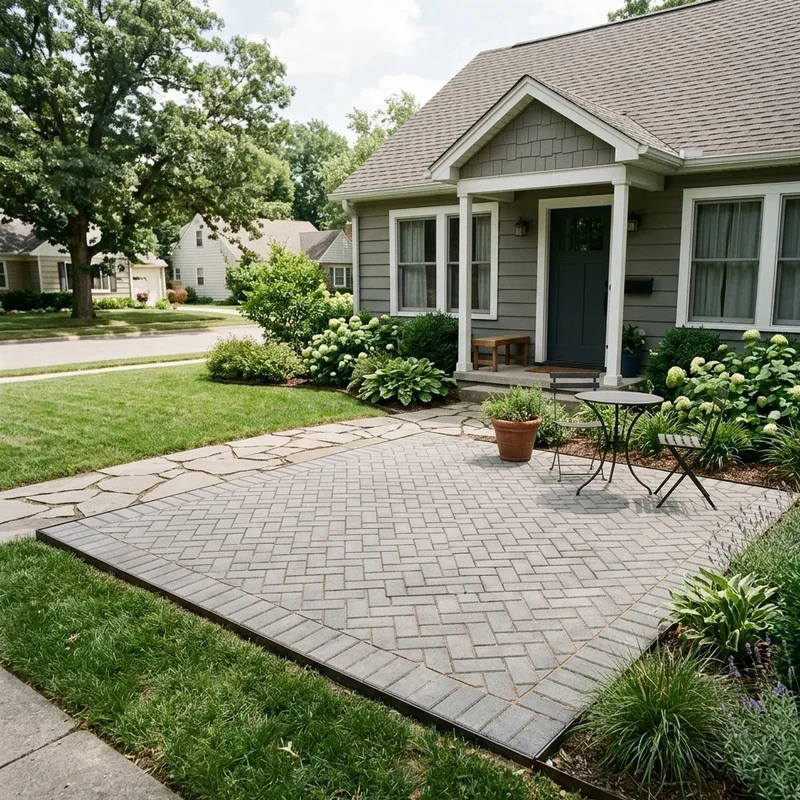
Herringbone patterns have decorated floors and walkways for centuries, and they look just as striking in concrete. You can achieve this classic zigzag layout using individual concrete pavers or by stamping the herringbone pattern into a poured slab. The interlocking angles create a sense of movement and direction that draws visitors naturally toward your front door. Herringbone also distributes weight across the surface more evenly than straight grid patterns, which helps prevent cracking and shifting over time. Choose a single color for understated elegance or alternate two complementary shades for a bolder visual rhythm. This pattern works with traditional homes, colonial architecture, and even modern farmhouse styles. It is one of those rare designs that never goes out of fashion regardless of trends.
15. Minimalist Floating Concrete Slab Patio
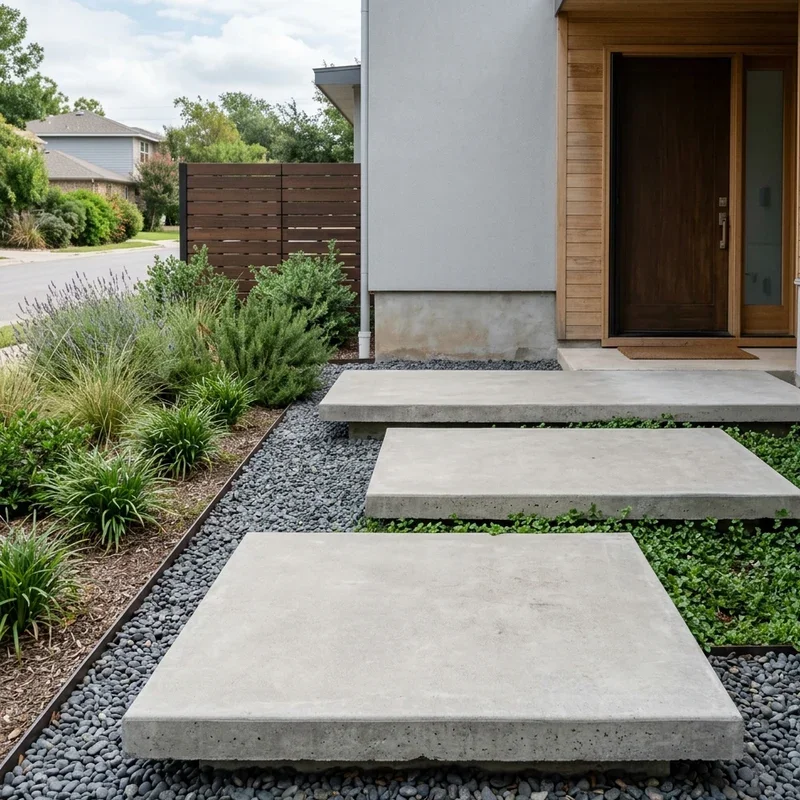
For homeowners who worship at the altar of clean design, floating concrete slabs deliver maximum impact through maximum restraint. Large, smooth concrete panels sit slightly raised above a gravel or grass base, creating the illusion that they hover above the ground. The negative space between slabs becomes part of the design itself, just like silence between musical notes gives rhythm its meaning. This minimalist approach works best with contemporary architecture where clean lines and open space define the aesthetic. Keep the concrete smooth and light gray or opt for a subtle white pigment for an even more striking effect. Floating slabs also promote excellent drainage because water flows through the gaps naturally. Less truly becomes more when every element earns its place intentionally.
Conclusion
Your front yard concrete patio does not have to be boring, and these 15 ideas prove that concrete is one of the most versatile materials in outdoor design. Whether you lean toward stamped stone patterns, bold colored slabs, or minimalist floating panels, there is an approach here that matches your home and your personality. Start with one concept that excites you and build from there. Great curb appeal starts right at your feet. The best front yard patios blend function with beauty, creating spaces that welcome guests and make you proud every time you pull into your driveway.
Read next: 15 Step Down Patio Ideas to Elevate Your Backyard Design
Frequently Asked Questions
Q1: How much does a front yard concrete patio typically cost to install?
A: Expect to pay between six and fifteen dollars per square foot depending on finish.
Q2: How long does a properly maintained concrete patio last in a front yard?
A: A well-maintained concrete patio can easily last twenty-five to thirty years or longer.
Q3: Can I pour a concrete patio myself or should I hire a professional?
A: Small simple patios suit DIY projects, but stamped or stained finishes need professional skills.
Q4: What is the best concrete finish for a front yard with heavy foot traffic?
A: Brushed or exposed aggregate finishes offer the best traction for high foot traffic areas.
Q5: Do I need a permit to build a concrete patio in my front yard?
A: Most municipalities require permits for patios exceeding a certain size, so always check locally.
Stay up to date with our latest ideas!