How Fiberglass Front Doors Perform in Arizona’s Desert Climate
Learn why fiberglass front doors are a practical choice for Phoenix homes, including durability, insulation, low maintenance, security, and curb appeal.

A front door has to do more than look good. It helps protect the home, supports insulation, improves curb appeal, and creates the first impression for visitors. In Arizona, that door also has to handle a demanding desert climate with intense sun, long periods of heat, dry air, dust, and seasonal storms.
Because of these conditions, choosing the right entry door material matters. A door that performs well in a mild climate may not be the best fit for a Phoenix-area home. Homeowners need an option that can handle daily use while staying durable, attractive, and energy-conscious over time.
Fiberglass front doors are a popular choice because they combine strength, design flexibility, insulation, and lower maintenance. For Arizona homeowners comparing entry door materials, fiberglass is often worth considering.
Why Arizona Weather Is Hard on Exterior Doors
Phoenix-area homes experience conditions that can put exterior doors under constant stress.
The most common factors include:
Direct sunlight
High summer temperatures
Dry air
Dust and wind
Monsoon moisture
Temperature changes between day and night
Heavy daily use
Exposure around uncovered entryways
Over time, these conditions can affect how a door looks and performs. Some doors may fade, crack, warp, dent, rust, swell, or lose their seal. Others may become difficult to open and close if the frame, slab, threshold, or hardware shifts.
A good entry door should be selected with these conditions in mind, not only by appearance.
What Makes Fiberglass Different?
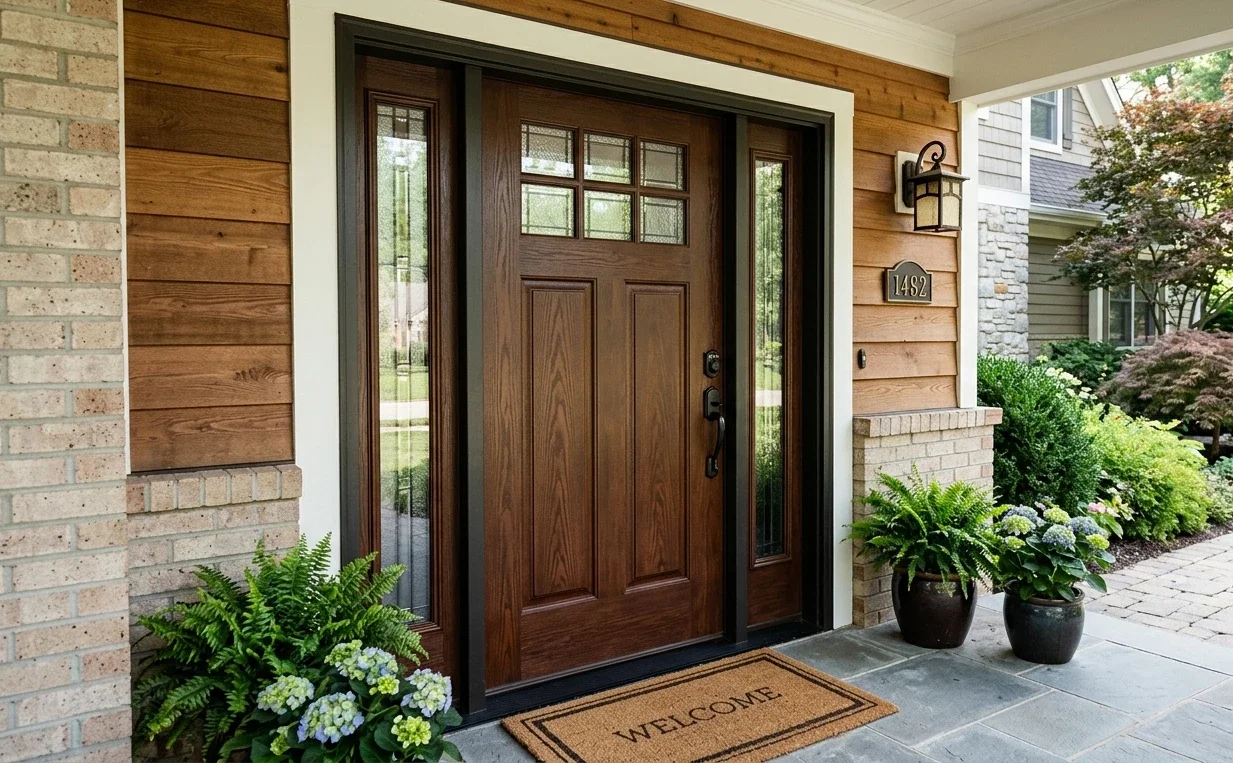
Fiberglass entry doors are designed to offer the look of a traditional door with improved resistance to common wear issues. Many fiberglass doors can mimic the appearance of wood grain while requiring less maintenance than a real wood door.
They are often chosen because they can provide:
Strong durability
Good insulation
Resistance to warping
Resistance to dents
Lower maintenance needs
Multiple design options
A clean, updated appearance
Better performance in harsh climates
For homeowners who like the style of wood but do not want frequent refinishing or weather-related concerns, fiberglass can be a practical alternative.
Fiberglass vs. Wood Entry Doors
Wood doors have a classic look and can add warmth to a home’s entrance. However, Arizona’s dry heat and direct sun can make wood more demanding to maintain.
Wood may require regular sealing, painting, or refinishing. If it is not protected properly, it may crack, dry out, fade, or warp. This does not mean wood is a poor choice in every case, but it does mean homeowners should understand the maintenance commitment.
Fiberglass doors can offer a similar visual style with less upkeep. They are less likely to warp, split, or absorb moisture the way natural wood can. For many homeowners, this balance of appearance and practicality is the main reason fiberglass is appealing.
Fiberglass vs. Steel Entry Doors
Steel doors are known for strength and security. They can be a good fit for some homes, but they also have potential drawbacks.
Steel may dent from impact, and scratches can expose the surface to rust if not repaired. Steel can also transfer heat depending on the design and insulation quality.
Fiberglass doors are generally more resistant to dents and surface damage from everyday use. They can also provide strong insulation when designed with an insulated core. For Arizona homes, that can be valuable because the front door is part of the home’s overall thermal barrier.
Energy Efficiency and Indoor Comfort
A front door is one of the points where outdoor heat can affect indoor comfort. If a door does not seal well, hot air, dust, and drafts can enter the home.
A quality fiberglass entry door can help improve comfort when paired with proper installation, weatherstripping, and a tight threshold. The door material matters, but installation is just as important.
Common signs of poor door performance include:
Warm air near the entryway
Visible light around the door edge
Dust near the threshold
Difficulty keeping nearby rooms comfortable
Worn or cracked weatherstripping
A loose or uneven seal
Replacing an older door with a properly installed fiberglass option may help improve comfort and reduce air leakage around the entry.
Maintenance Expectations in a Desert Climate
One of the biggest advantages of fiberglass is lower maintenance.
Arizona homeowners already have many exterior maintenance concerns, including paint, roofing, landscaping, stucco, windows, and outdoor surfaces. A front door that requires less frequent attention can be a practical benefit.
Fiberglass doors usually need basic care such as:
Regular cleaning
Checking weatherstripping
Inspecting the threshold
Keeping hinges and locks working smoothly
Touching up finish if needed
Watching for gaps around the frame
This is much simpler than the more intensive refinishing that some wood doors may require.
Design Options for Front Entries
A front door should match the architecture and style of the home. Fiberglass doors are available in many designs, which makes them suitable for both traditional and modern properties.
Design considerations may include:
Door color
Panel style
Glass inserts
Privacy glass
Decorative hardware
Sidelights
Double-door configurations
Wood-grain appearance
Smooth finishes
Compatibility with existing trim
A door replacement project is also an opportunity to improve curb appeal. The right front door can make the entry feel brighter, cleaner, and more updated without requiring a full exterior remodel.
Security Considerations
A strong entry door contributes to home security, but the door slab is only one part of the system.
Security also depends on:
Frame condition
Lock quality
Strike plate installation
Hinge strength
Glass placement
Proper alignment
Professional installation
Fiberglass doors can be a strong option, especially when combined with quality hardware and a properly installed frame. If an older door has a weak frame, loose lock, or poor alignment, simply replacing the lock may not be enough.
A full entry door replacement can help address the entire opening, not just the visible door panel.
When It May Be Time to Replace an Entry Door
Homeowners may consider replacement when the current door no longer performs well.
Common signs include:
The door sticks or drags
The lock no longer aligns properly
Heat or dust enters around the door
The door is cracked, warped, or damaged
The finish is badly faded
The threshold is worn
The frame is damaged
The door feels less secure
Maintenance is becoming too frequent
The style no longer fits the home
A front door that has several of these issues may be costing more in comfort, security, and appearance than homeowners realize.
Why Installation Quality Matters
Even a high-quality fiberglass door can perform poorly if it is not installed correctly.
Proper installation helps ensure:
The door sits square in the opening
The frame is aligned
The threshold seals correctly
The lock works smoothly
Weatherstripping makes consistent contact
Gaps are properly sealed
The door opens and closes without stress
This is especially important in Phoenix, where heat and dust can reveal weaknesses around poorly sealed openings.
When comparing fiberglass front doors for Arizona homes, homeowners should consider both the product and the installation team. The best results come from choosing the right door and making sure it is installed correctly.
Choosing the Right Fiberglass Entry Door
The best fiberglass entry door depends on the home’s layout, exposure, design style, and performance needs.
Before choosing a door, homeowners should consider:
How much direct sun the entry receives
Whether the doorway is covered
How much privacy is needed
Whether glass inserts are desired
The home’s exterior color palette
Security expectations
Energy-efficiency goals
Hardware preferences
Whether sidelights or double doors are needed
Long-term maintenance expectations
A door that looks good in a showroom may not be the best fit for every entry. The climate, orientation, and daily use should all influence the final choice.
Fiberglass Doors Can Be a Practical Arizona Upgrade
For many Phoenix-area homes, fiberglass entry doors offer a strong balance of durability, insulation, design flexibility, and lower maintenance. They can help refresh the appearance of the home while improving the way the entry performs in a desert climate.
A well-selected fiberglass door can provide the look homeowners want without the same level of upkeep required by some traditional materials. When properly installed, it can also help create a tighter, more comfortable, and more secure entry.
AZ Valley Windows provides fiberglass entry doors in Phoenix, with options designed for durability, style, security, and Phoenix-area homes. Their fiberglass entry door page highlights available colors and styles, step-by-step installation guidance, rot-resistant bottom rails, and insulated polyurethane cores.
For homeowners dealing with an outdated, drafty, damaged, or hard-to-maintain front door, fiberglass can be a smart material to consider for long-term performance in Arizona’s desert climate.
Stay up to date with our latest ideas!