EPDM vs TPO Flat Roofing in New Jersey: A Real-World Comparison Based on Performance, Not Marketing
Comparing TPO & EPDM flat roofing for your NJ property. Expert installation in Princeton, Hamilton & Ewing. Get a FREE estimate and guaranteed cleanliness.
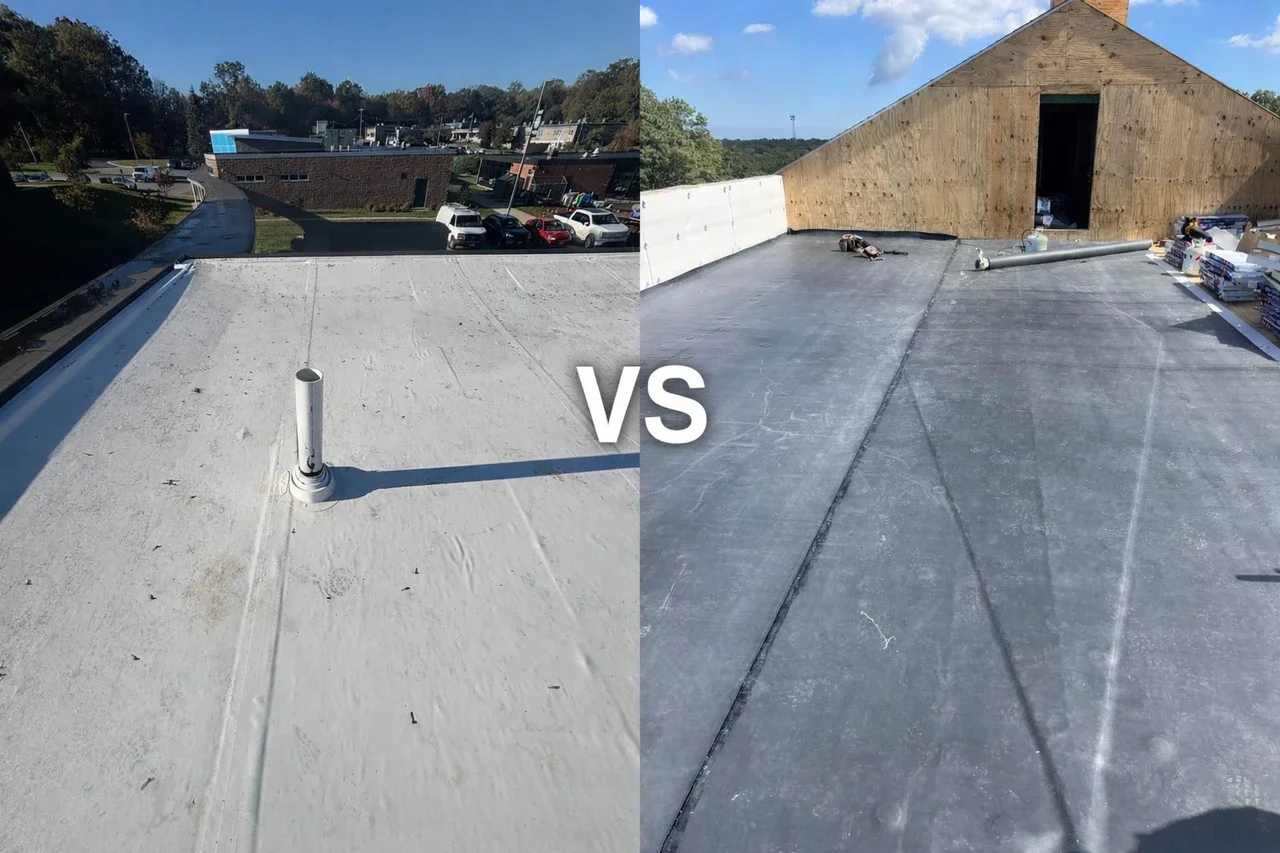
Flat roofing materials are often discussed in broad, generic terms. But when it comes to real buildings in New Jersey, theory quickly gives way to practical realities. Roofs here are exposed to heavy snow loads, repeated freeze–thaw cycles, summer humidity, and long periods of direct sunlight. Under these conditions, the differences between EPDM and TPO become very clear.
This is not a comparison based on brochures or manufacturer claims. It is a practical breakdown of how both systems behave over time – on actual flat and low-slope roofs in Central New Jersey.
Yukor Construction is a trusted flat roof company that installs and services flat roofing systems throughout Princeton, Hamilton Township, Ewing Township, West Windsor, Plainsboro, Robbinsville, Hopewell, Belle Mead, Pennington, Trenton, Monroe, and nearby areas. Our recommendations are shaped by what works in the field, not by trends.
Why Flat Roof Material Choice Matters More Than Most Owners Expect
With flat roofs, failure rarely comes from the membrane itself. It comes from seams, transitions, drainage points, and how the material reacts to temperature movement. That is why choosing between EPDM and TPO is less about brand preference and more about understanding how each system handles stress.
Both materials are classified as single-ply membranes, but they solve the same problems in very different ways.
TPO Roofing: Engineered for Reflectivity and Seam Strength
TPO roofing was developed as a modern response to rising energy costs and stricter efficiency standards. Its defining feature is not the membrane itself, but how the seams are joined.
How TPO Performs on NJ Flat Roofs
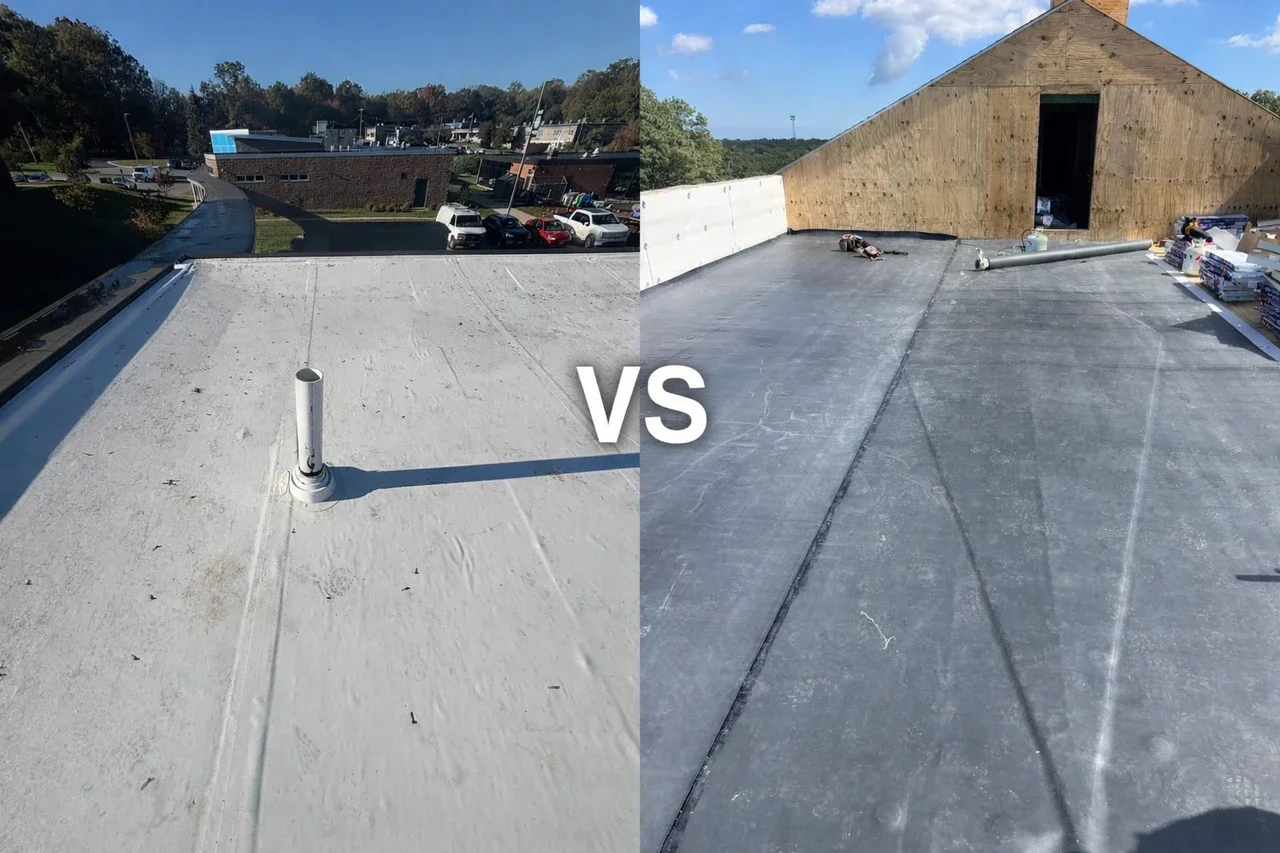
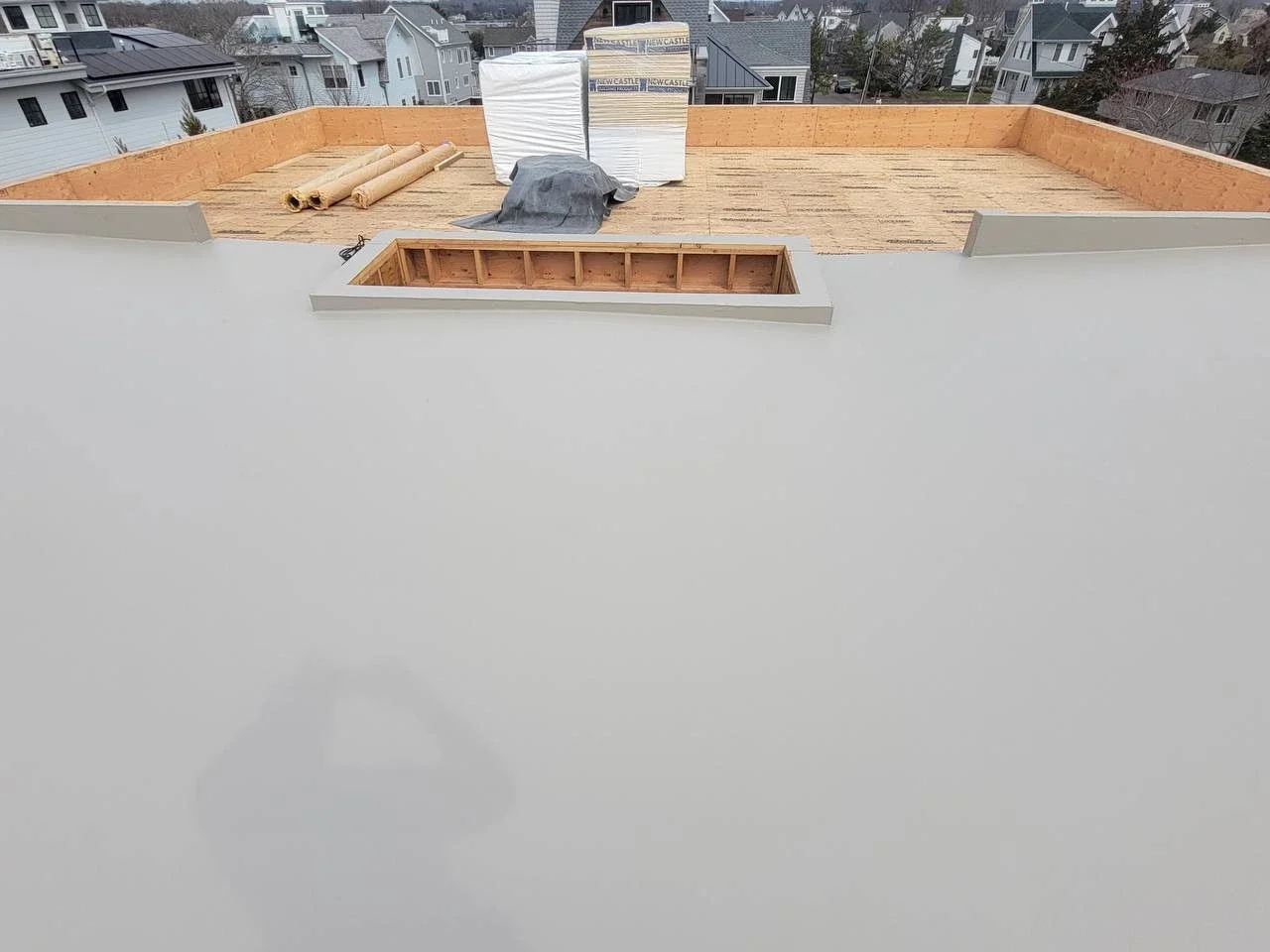
TPO membranes are typically installed in white, which significantly reduces heat absorption. On large flat roofs – especially commercial buildings – this can lead to noticeable reductions in interior temperatures and cooling demand during summer months.
The seams are heat-welded, not glued. When done correctly, welding creates a unified surface rather than multiple bonded sections. This reduces the likelihood of seam separation, which is one of the most common causes of flat roof leaks.
TPO also holds up well against surface contaminants, rooftop foot traffic, and prolonged UV exposure, provided the membrane is of sufficient thickness and properly installed.
Where TPO Requires Careful Execution
TPO is less forgiving than EPDM when installation quality is inconsistent. Poor welding technique, low-grade membranes, or rushed detailing can shorten the roof’s lifespan. This is why contractor experience matters more with TPO than many owners realize.
EPDM Roofing: A Material Built Around Flexibility and Longevity
EPDM has been used on flat roofs for decades, long before energy efficiency became a primary selling point. Its strength lies in simplicity.

Why EPDM Continues to Be Installed in NJ
EPDM remains flexible in extreme cold, which is critical during New Jersey winters. The membrane stretches and contracts with the building rather than resisting movement. This reduces stress around penetrations, parapet walls, and structural transitions.
Another advantage is repairability. EPDM does not require specialized welding equipment. Small issues can be addressed quickly and cost-effectively, which appeals to owners focused on long-term maintenance control.
Limitations That Should Not Be Ignored
EPDM seams rely on adhesive systems rather than fusion. While reliable, they require periodic inspection as the roof ages. Additionally, standard EPDM absorbs heat due to its black surface, which can increase rooftop temperatures in summer unless insulation is properly designed.
EPDM vs TPO: What Actually Separates Them in Practice
Installation Cost and Predictability
EPDM often has a lower initial material cost. TPO may reduce labor time due to wider rolls and welded seams. However, roof complexity – penetrations, curbs, HVAC units – often plays a larger role in final pricing than the membrane itself.
Leak Risk Over Time
TPO’s welded seams reduce seam-related leaks when installed correctly. EPDM relies on adhesives, which remain effective but require long-term monitoring. Neither system is “leak-proof” without professional detailing.
Energy Performance
For buildings where cooling efficiency is a priority, TPO generally provides better thermal performance due to its reflective surface. EPDM can still perform well when paired with proper insulation, but it does not offer the same surface-level heat reflection.
Adaptability to Complex Roof Layouts
EPDM’s flexibility makes it easier to install around irregular shapes and numerous penetrations. TPO performs best on cleaner roof layouts where welding access is unobstructed.
Which System Makes Sense for Your New Jersey Property?
There is no universally “better” membrane – only a better match.
TPO is typically the stronger option when energy efficiency, seam strength, and surface reflectivity are top priorities.
EPDM is often the better choice when flexibility, repair simplicity, and long-term reliability under temperature movement are more important.
The correct decision depends on how the roof is built, how the building is used, and what risks matter most to the owner.
Get a Professional Flat Roof Evaluation in New Jersey
Choosing a flat roofing system should never be based on comparison charts alone. Roof slope, drainage design, insulation, and structural movement all influence performance.
Yukor Construction provides professional flat roofing services across:
Princeton and Ewing Township
Hamilton Township and West Windsor
Plainsboro and Robbinsville
Hopewell, Belle Mead, and Pennington
Trenton, Allentown, and Monroe
Contact us today to schedule a FREE on-site measurement and FREE estimate. We will walk you through the real advantages and limitations of both EPDM and TPO based on your specific building. Our work is completed with strict attention to cleanliness, safety, and long-term reliability – because flat roofing leaves no room for shortcuts.
Stay up to date with our latest ideas!