Understanding the differences between flagstone and pavers can help you make a decision that aligns with your project goals, maintenance preferences, and long-term vision.
When it comes to designing outdoor living spaces, choosing the right hardscaping material is one of the most important decisions a homeowner or landscaper can make. Patios, walkways, garden paths, and seating areas all rely on durable, attractive surfaces that can withstand the elements while enhancing the look of the property. Two of the most popular materials for these projects are flagstone and pavers—each offering distinct benefits and visual styles. Understanding the differences between them can help you make a decision that aligns with your project goals, maintenance preferences, and long-term vision.
The Natural Beauty of Flagstone
Flagstone is a naturally occurring sedimentary rock often chosen for its organic, earthy appearance. Each piece features its own color variation, veining, and texture, which makes every installation unique. Flagstone’s irregular edges and organic shapes naturally lend themselves to rustic or naturalistic landscapes, blending effortlessly into the surrounding environment.
Because flagstone is formed by nature rather than manufactured, it often becomes a focal point of outdoor spaces. Its natural texture also provides an inherently slip-resistant surface, making it a practical choice for patios, pool decks, and walkways. Depending on the type of stone and its thickness, flagstone can be laid on a sand base or mortared onto a concrete surface, offering flexibility for different design approaches.
What to Know About Pavers
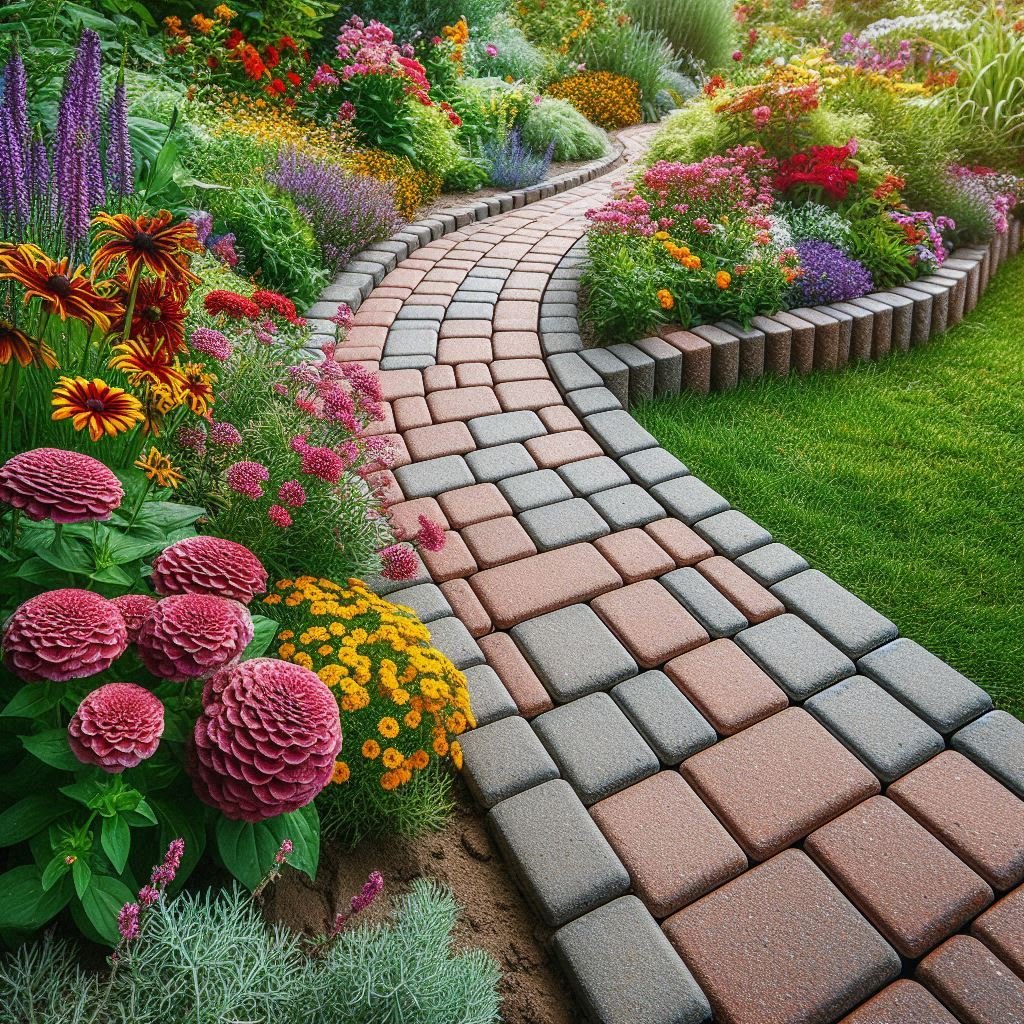
Pavers, by contrast, are manufactured concrete or stone pieces created with consistent dimensions and uniform edges. Their precise shapes make installation straightforward and allow for patterns such as herringbone, basketweave, and running bond. Because of this uniformity, pavers are often chosen for projects that require a highly structured or contemporary aesthetic.
In addition to design versatility, pavers are known for their durability and load-bearing strength. Many paver systems are engineered for interlocking stability, making them suitable for driveways, high-traffic areas, and spaces where shifting or settling may occur. Pavers also come in a wide variety of colors and finishes, allowing homeowners to match them with existing architectural styles.
Flagstone vs. Pavers: Key Differences
While both materials can create stunning outdoor features, comparing flagstone and pavers across several categories can help clarify which is better suited for your needs.
1. Appearance
Flagstone offers a natural, organic look with unique patterns and irregular shapes.
Pavers provide a more uniform and engineered appearance, ideal for contemporary or symmetrical designs.
2. Installation
Flagstone may require more custom fitting due to its irregular edges.
Pavers are faster to install because of their consistency in size and shape.
3. Durability
Flagstone is naturally durable and can last for decades with proper care.
Pavers are also highly durable, particularly when installed as an interlocking system.
4. Maintenance
Flagstone typically needs occasional joint replenishment or leveling.
Pavers may require periodic sealing to preserve color and prevent staining.
5. Cost
Flagstone can be more expensive due to quarrying and variations in size and thickness.
Pavers often cost less upfront but may require sealing or color maintenance over time.
6. Aesthetic Flexibility
Flagstone is ideal for natural, rustic, or organic designs.
Pavers are better suited for structured, geometric, or modern layouts.
Which Material Should You Choose?
The best choice ultimately depends on the overall style and function you envision for your outdoor space. If you’re looking for a one-of-a-kind, nature-inspired surface with rich character, flagstone is a timeless option that complements gardens, wooded properties, and relaxed outdoor settings. If precision, uniformity, and pattern-based design are priorities, pavers may be the better fit.
For many homeowners and landscapers, both materials serve valuable purposes in different areas of the property. A landscape might feature flagstone pathways that weave through gardens, while pavers define a structured patio or driveway. Understanding the strengths of each material allows you to mix and match thoughtfully, creating outdoor spaces that are both functional and visually appealing.
Stay up to date with our latest ideas!