15 Farm Driveway Ideas to Improve Access and Appeal
Explore 15 farm driveway ideas to improve access and appeal. From gravel lanes to concrete aprons, build a driveway that works hard.
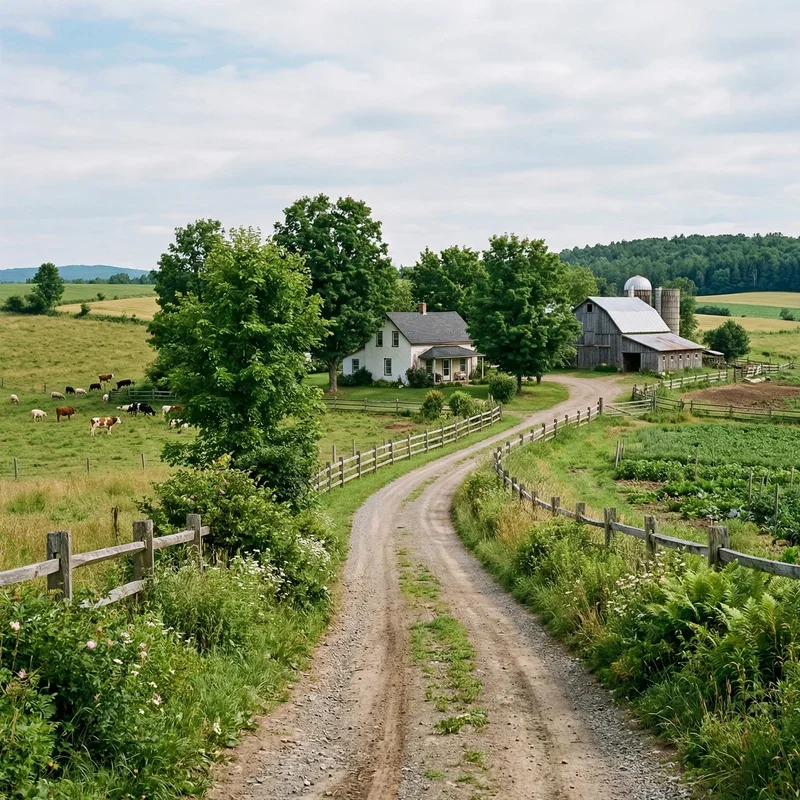
A farm driveway takes more punishment before breakfast than most suburban driveways face in a year. Tractors, grain trucks, livestock trailers, and muddy boots all demand a surface that refuses to quit when conditions get rough. But just because your driveway needs to be tough does not mean it has to look like a neglected dirt road. The right design balances durability with genuine visual appeal, creating a welcoming entrance that handles real agricultural traffic without falling apart every spring. Whether you manage fifty acres or five hundred, your driveway is the first thing visitors see and the last thing you cross before reaching home. These 15 ideas will help you build a farm driveway that works as hard as you do while looking good the entire time.
1. Compacted Gravel Driveway With Proper Crown
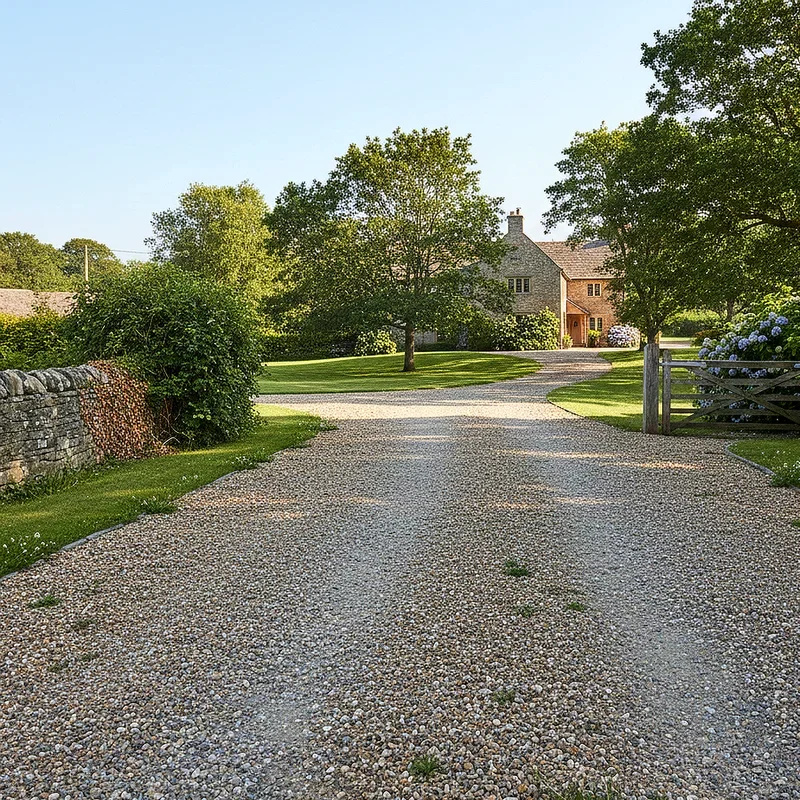
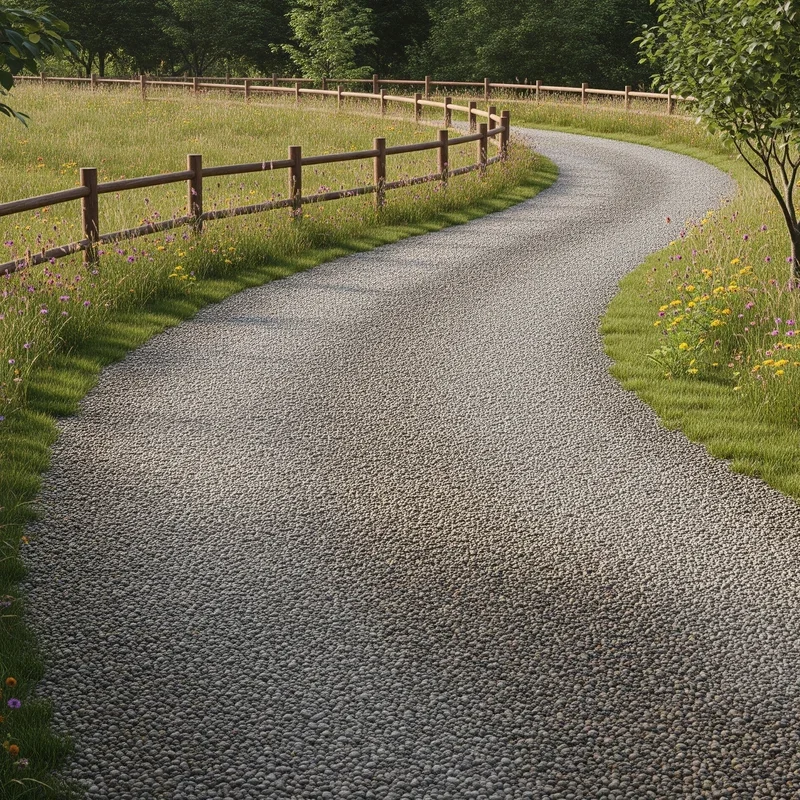
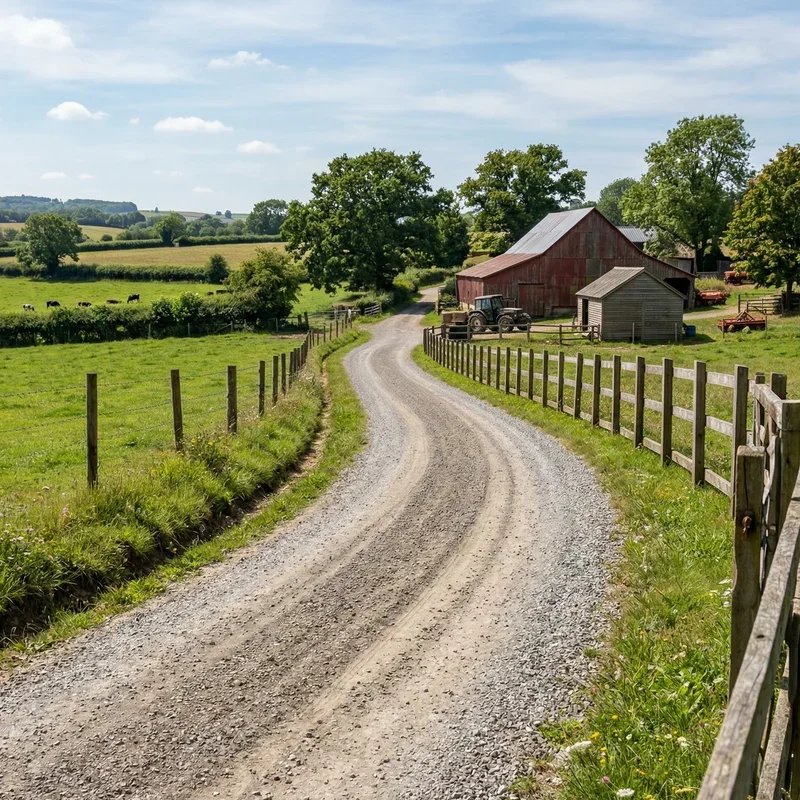
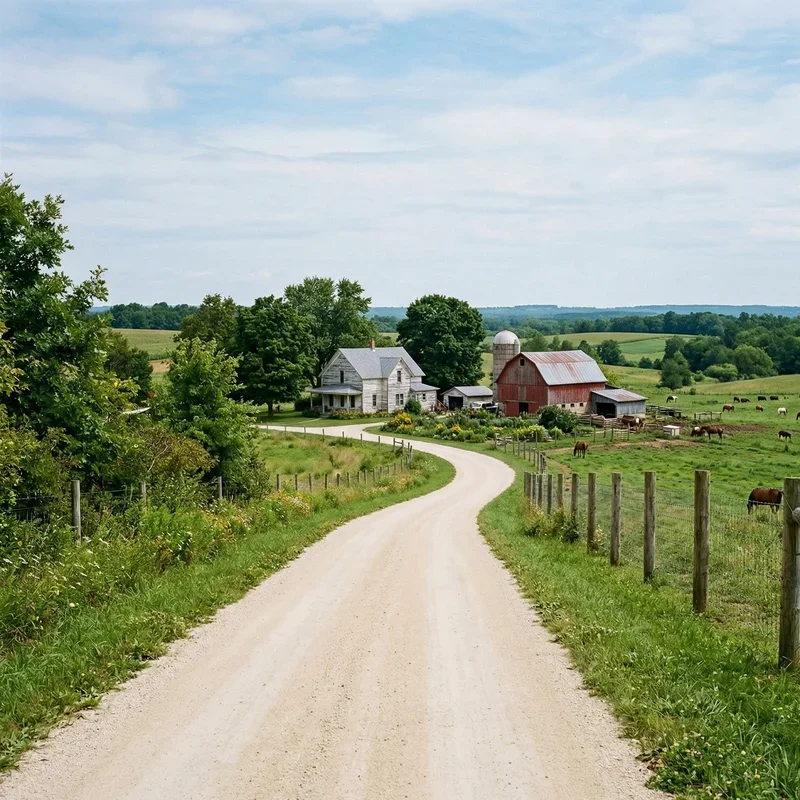
A well-built gravel driveway is the backbone of rural properties, and the secret to making one last lies in two words: proper crown. Crowning means shaping the driveway surface higher in the center and sloping it gently toward both edges so water runs off instead of pooling in ruts. Without a crown, every rainstorm turns your driveway into a creek bed that erodes the gravel and creates potholes faster than you can fill them. Start with a compacted subbase of larger crushed stone, then layer smaller aggregate on top, finishing with a fine surface gravel like three-quarter-inch minus. A motor grader or skid steer shapes the crown during installation. Think of the crown as your driveway's immune system, quietly fighting water damage around the clock so you never have to.
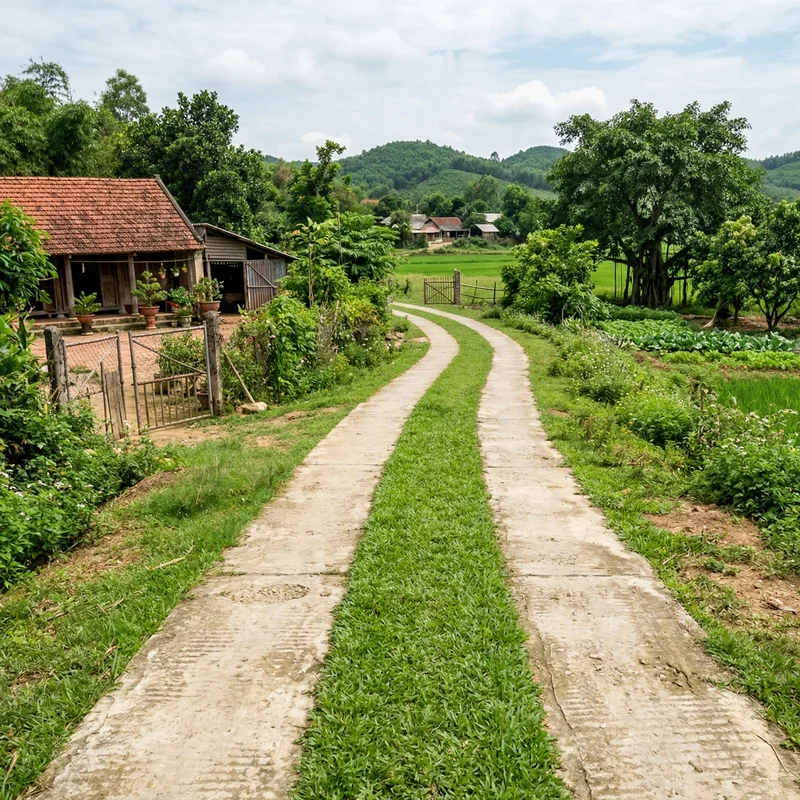
2. Concrete Ribbon Driveway With Grass Center
Concrete ribbon driveways lay two parallel strips of concrete exactly where your vehicle tires track, leaving a grass strip growing between them. This design uses far less concrete than a fully paved driveway, which saves you serious money on a long farm lane. The grass center adds a charming rural aesthetic that blends with pastures and fields on either side. Your tires ride on smooth, solid concrete while the center strip stays green and soft. Rainwater absorbs naturally through the grass rather than running off a fully paved surface, which helps with drainage on flat farmland. The ribbons need to be at least two feet wide each to accommodate trucks and equipment. This design works best on driveways under a quarter mile where the visual effect stays cohesive and intentional.
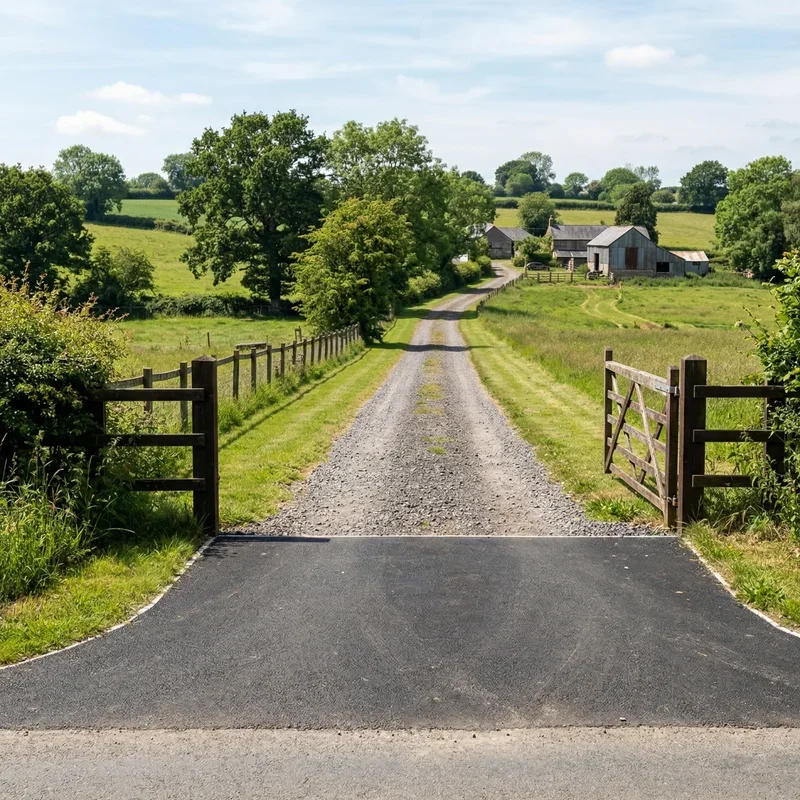
3. Asphalt Entrance Apron With Gravel Extension
Here is a strategy that gives you the best of both worlds without the budget shock of paving your entire farm driveway. Pour an asphalt apron at the road entrance where traffic turns in, then extend the rest of the driveway in compacted gravel. The paved apron prevents the loose gravel from migrating onto the public road, which keeps the county road department happy and your entrance looking tidy. Asphalt handles the turning stress that chews up gravel surfaces at entry points. The gravel section beyond the apron carries the rest of the traffic load at a much lower cost per foot. Most farms need an apron of thirty to fifty feet to cover the critical transition zone. The paved start also gives visitors a strong first impression before the gravel begins.
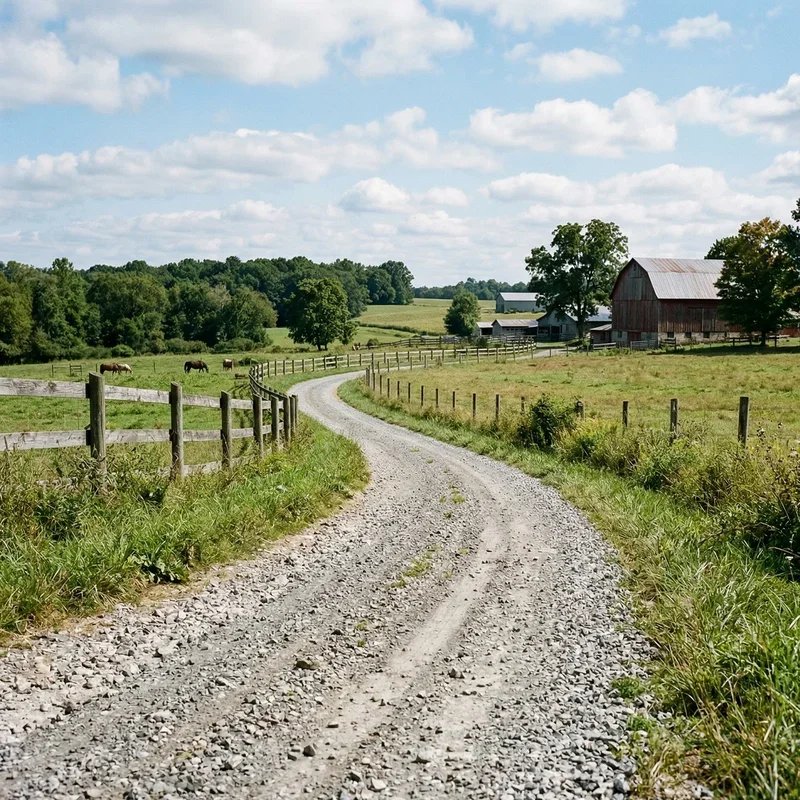
4. Recycled Crushed Concrete Surface
Recycled crushed concrete is the unsung hero of farm driveway materials. Demolition crews break up old building foundations, parking lots, and sidewalks, then crush the rubble into angular aggregate that compacts incredibly well. The cement residue on each piece acts as a natural binding agent that hardens further over time, especially after rain and traffic work together to lock the pieces into a dense, stable surface. The result handles heavy equipment better than most natural gravel options while costing significantly less per ton. You get a durable driveway surface and keep thousands of pounds of concrete waste out of landfills, which feels pretty good too. The grayish-white color brightens your driveway compared to dark crushed stone and shows up well at night for safer driving.
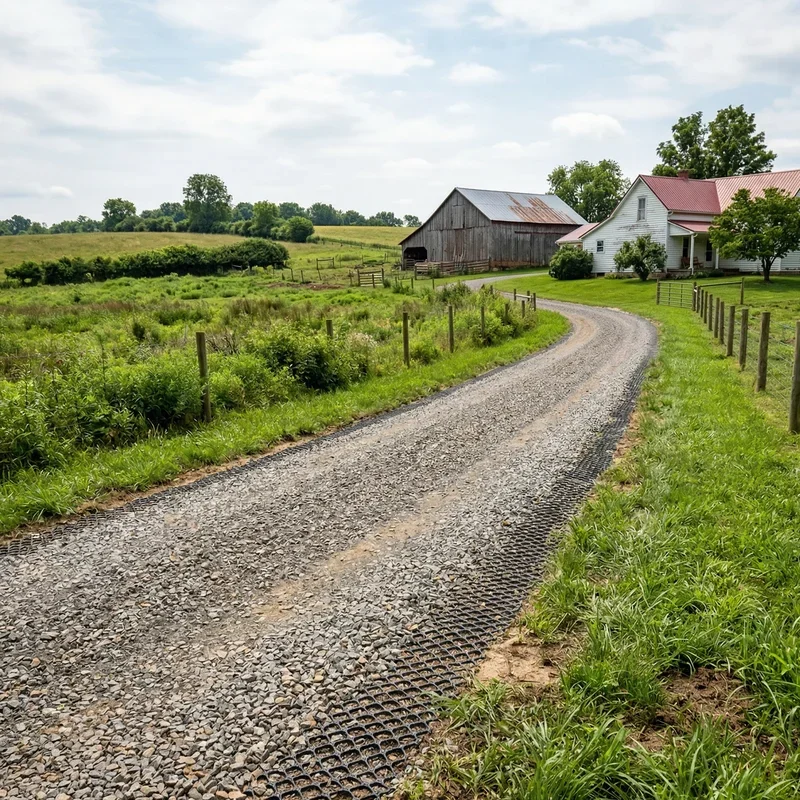
5. Geogrid Stabilized Gravel for Soft Ground
Farms with clay soils, high water tables, or low-lying areas know the frustration of watching perfectly good gravel disappear into mud like it was swallowed by quicksand. Geogrid panels solve this nightmare by creating a rigid cellular structure that locks gravel in place and distributes weight across a wider surface area. You lay the grid panels on prepared subgrade, fill each cell with compacted gravel, and suddenly your driveway holds firm where it used to sink. Think of geogrids as a skeleton beneath the skin of your driveway, providing invisible support that keeps everything structurally sound. These panels work on slopes, flat ground, and even areas with seasonal flooding. The initial investment exceeds standard gravel-only installations, but the reduced maintenance and gravel replacement costs pay you back within a few seasons.
6. Tree Lined Gravel Lane for Country Charm
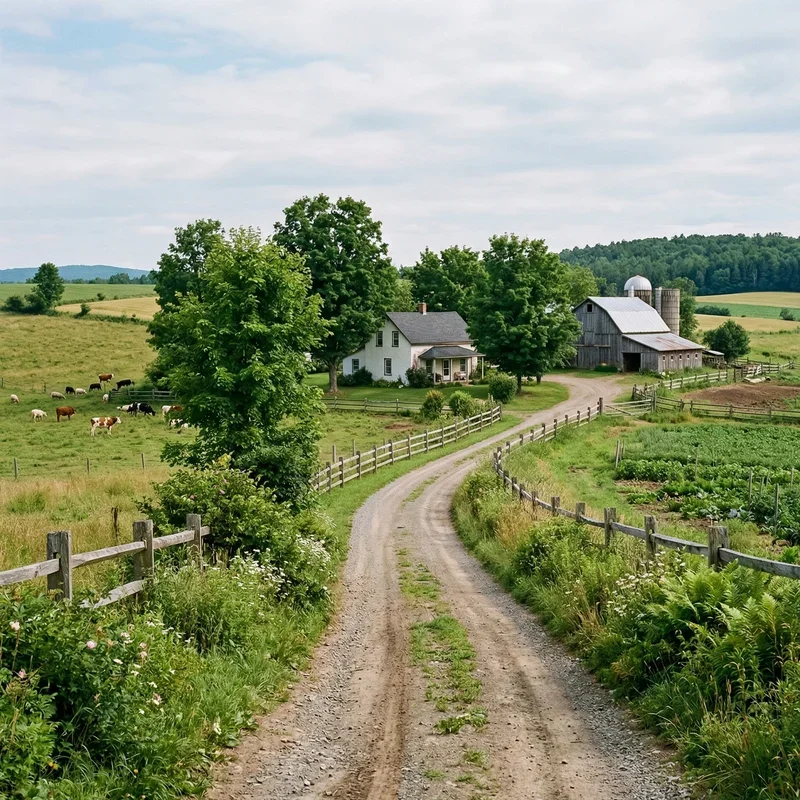
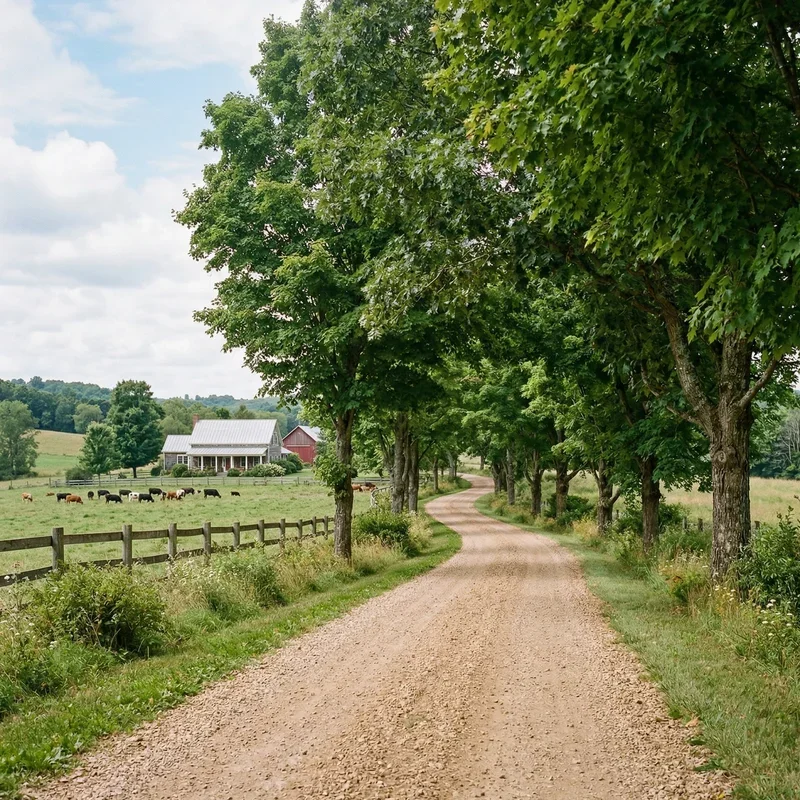
Few images capture the romance of country living better than a long driveway flanked by rows of mature trees arching overhead. Planting trees along both sides of your farm driveway creates a living canopy that provides shade, wind protection, and undeniable visual drama. Oaks, maples, elms, and crepe myrtles all make excellent driveway companions depending on your climate zone. Space them twenty to thirty feet apart to allow canopy spread without crowding, and keep them at least ten feet from the driveway edge so roots do not undermine the surface. The trees frame your approach like a natural hallway leading home, turning an ordinary gravel lane into a storybook entrance. Young trees take patience, but in five to ten years, the canopy begins forming. In twenty years, you have got something truly magnificent.
7. Culvert and Ditch Drainage System Design
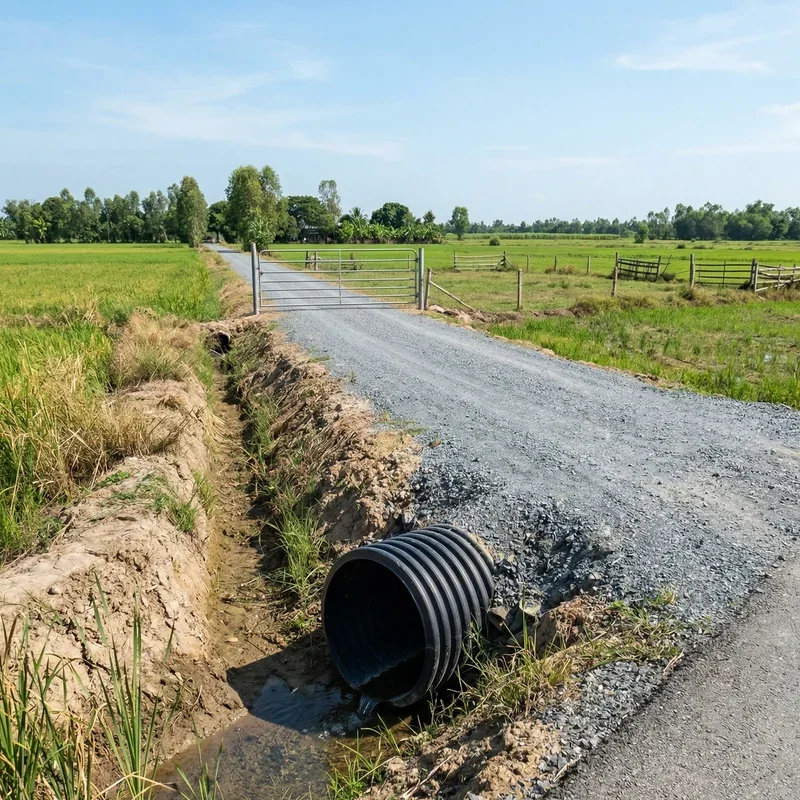
Water is a farm driveway's worst enemy, and proper drainage is the weapon you use to fight it. Culvert pipes carry water under the driveway at low points where ditches and natural drainage paths cross your lane. Without culverts, water pools against the driveway edge, saturates the subgrade, and eventually washes out sections during heavy rain. Corrugated metal pipe and high-density polyethylene are the two most common culvert materials, with sizes ranging from twelve to thirty-six inches depending on your watershed volume. Roadside ditches running parallel to the driveway collect runoff and channel it toward the culvert crossings. Grade the ditches with a consistent slope so water moves rather than sitting stagnant. A well-drained driveway survives storms that destroy poorly planned ones. Invest in drainage first and everything else lasts longer.
8. Farm Gate Entrance With Stone Pillars
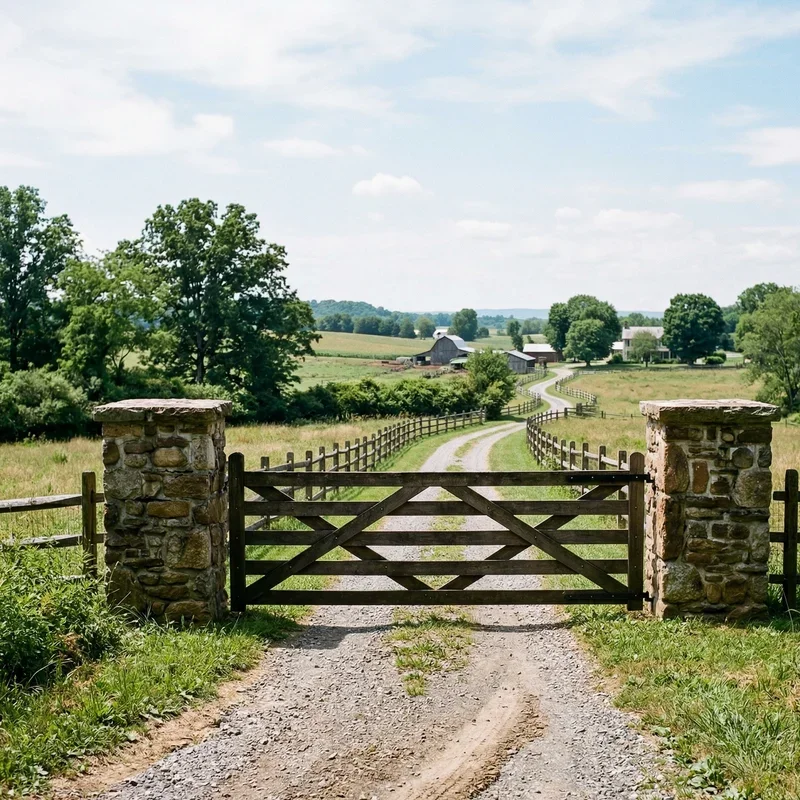
Your farm entrance sets the tone for the entire property, and stone pillars flanking the gate create an arrival experience that announces quality before anyone drives a single foot down the lane. Build pillars from stacked fieldstone, limestone blocks, or manufactured stone veneer over concrete block cores. Top them with flat capstones, copper caps, or mounted lanterns for a finished look. The pillars frame your gate, whether it swings, slides, or stays open, and provide solid mounting points for hinges, latches, and address signs. Height matters here because pillars between four and six feet tall command attention without overwhelming the landscape. The stone material visually connects your entrance to the natural surroundings while communicating permanence and pride of ownership that simple metal posts simply cannot convey.
9. Chip Seal Surface for Affordable Paving
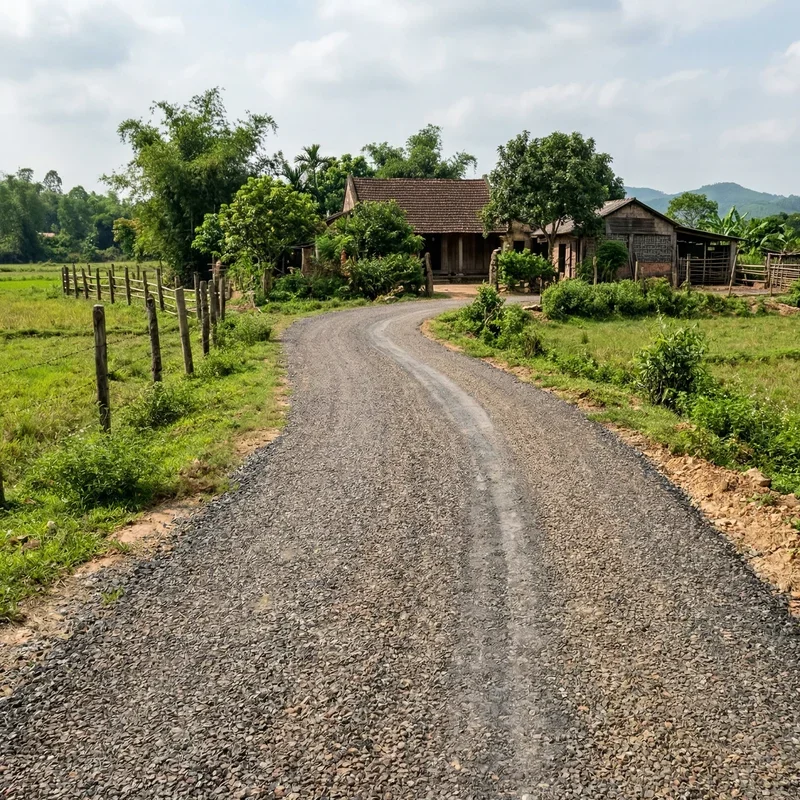
Chip seal gives you a paved-looking surface at roughly one-third the cost of traditional asphalt, making it a smart choice for long farm driveways where full paving would break the budget. The process sprays hot liquid asphalt onto a prepared base, then immediately spreads a layer of crushed stone chips across the sticky surface. A roller presses the chips into the asphalt, and traffic further embeds them over the following days. The finished surface looks similar to rough asphalt and handles farm equipment, trucks, and daily car traffic without problems. Chip seal requires a solid compacted base to perform well, so do not skip the subgrade preparation. County road departments use this technique on rural roads everywhere because it delivers reliable performance at a price that stretches limited budgets further.
10. Permeable Paver Grid With Gravel Fill
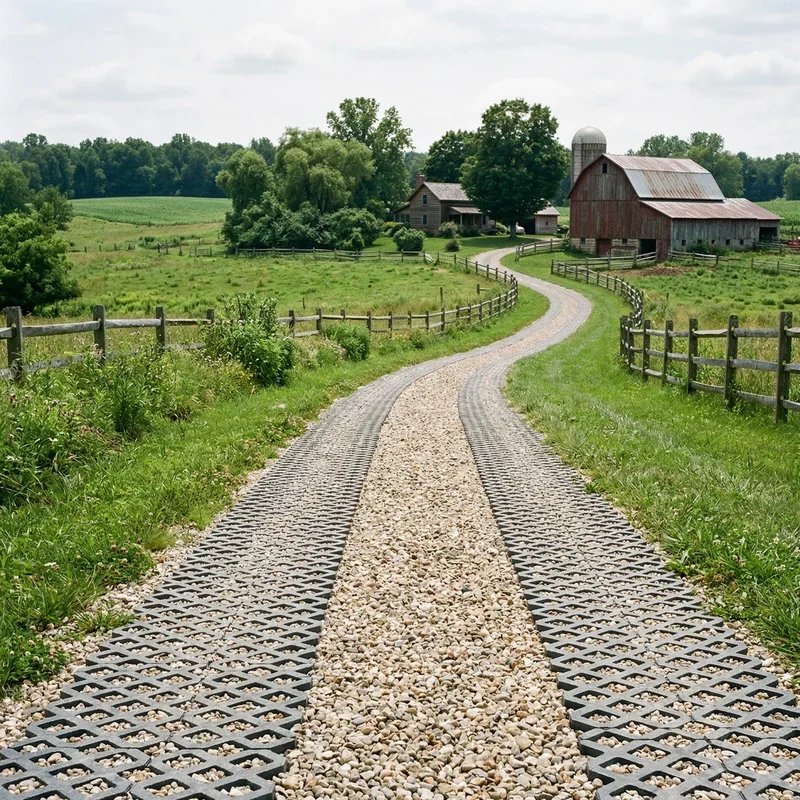
Permeable paver grids combine structural support with natural drainage in a system that works beautifully for farm driveways near barns, equipment sheds, and livestock areas where runoff management matters. Interlocking plastic or concrete grid units sit on a prepared aggregate base, and you fill each open cell with gravel, grass, or a combination of both. The grid distributes vehicle weight across its entire surface, preventing the ruts and tire tracks that plague standard gravel driveways. Water passes straight through the surface into the ground below rather than running off into fields or flooding low spots. These systems handle surprisingly heavy loads, with some commercial-grade grids rated for fire truck weight. Installation runs faster than poured concrete and requires no curing time, so you drive on the surface immediately after filling.
11. Widened Turnout Areas for Passing Vehicles
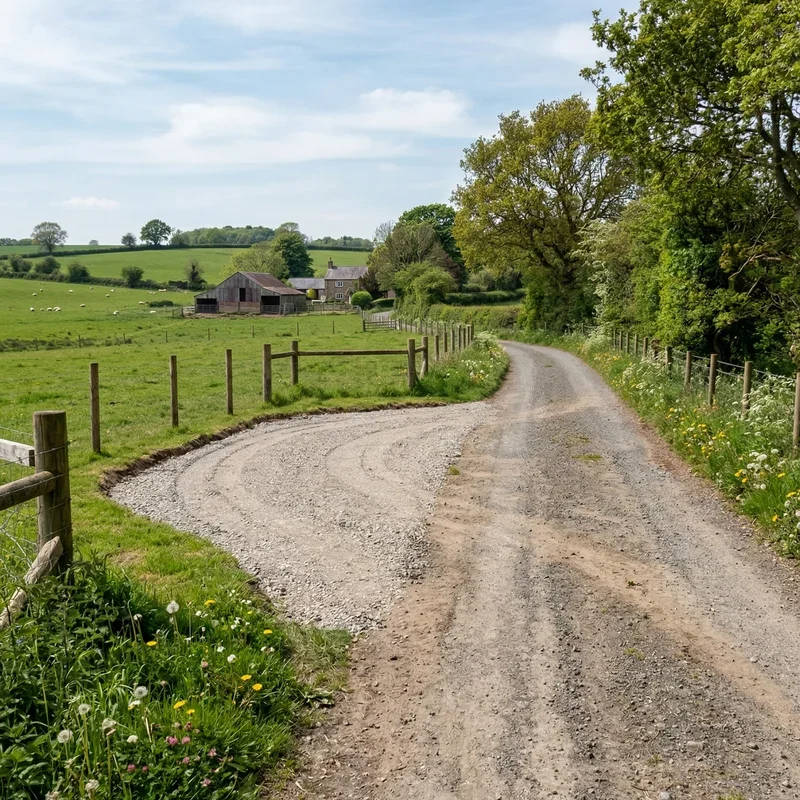
Single-lane farm driveways work fine until two vehicles meet head-on halfway down the lane and nobody has room to pass. Widened turnout areas solve this problem by creating short pullover zones where one vehicle can wait while the other passes safely. Place turnouts at visible points along the driveway, ideally every few hundred feet on longer lanes, and always within sight of the next one. Each turnout needs to be wide enough for a full-sized truck to pull completely off the main travel lane. Gravel turnouts require the same crown and drainage treatment as the main driveway to prevent them from becoming mud pits. These simple widenings prevent the frustrating back-up dance that happens when a delivery truck meets a tractor on a narrow farm lane.
12. Solar Powered Driveway Marker Lights
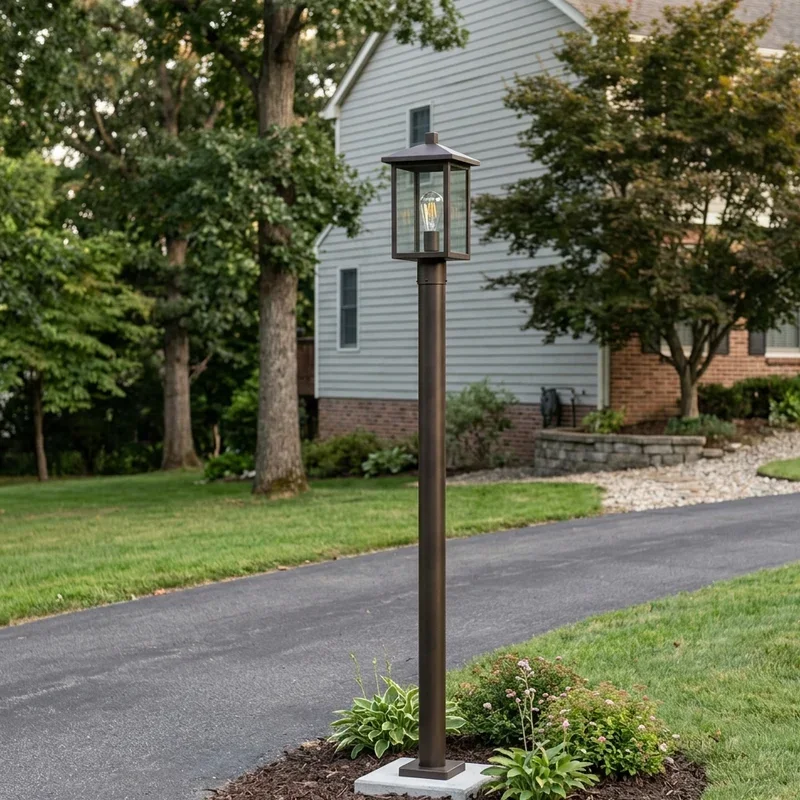
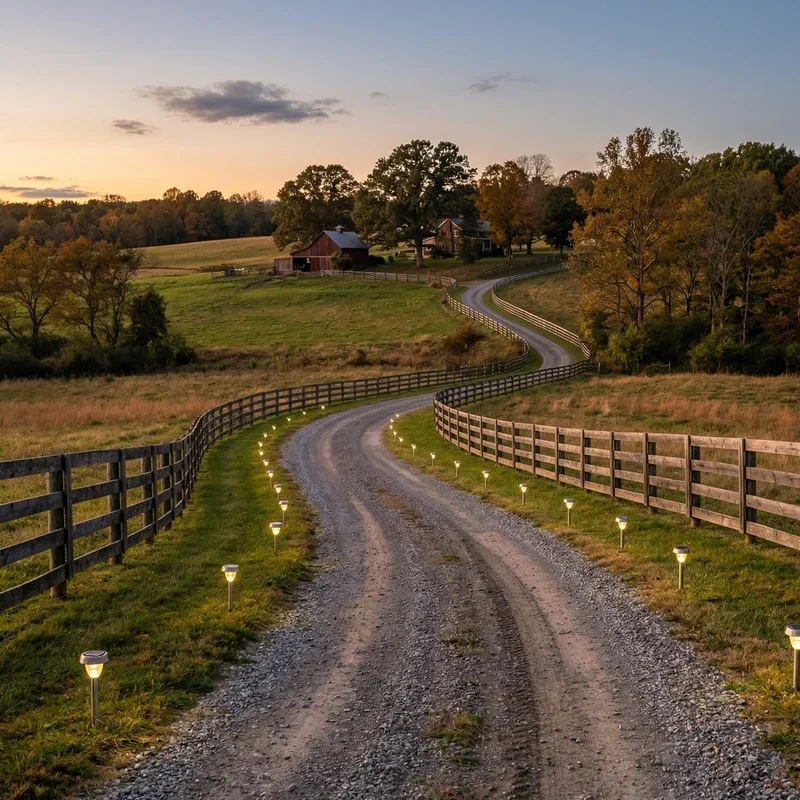
Farm driveways stretch longer than suburban ones, and finding your lane entrance on a dark country road without marker lights feels like searching for a needle in a haystack. Solar-powered driveway markers solve this with zero electrical wiring and zero ongoing energy costs. Stake-mounted LED markers line both sides of your driveway, charging from sunlight during the day and glowing automatically from dusk to dawn. They guide visitors safely down the lane and mark curves, intersections, and hazards that disappear in rural darkness. Amber markers read as warm and welcoming. White or blue markers provide sharper visibility. Reflective markers work passively without any power source, bouncing headlight beams back toward drivers. Combine solar-powered lights at the entrance with reflective posts along the lane for a comprehensive system that keeps everyone safe.
13. Cattle Guard Installation at Property Entry
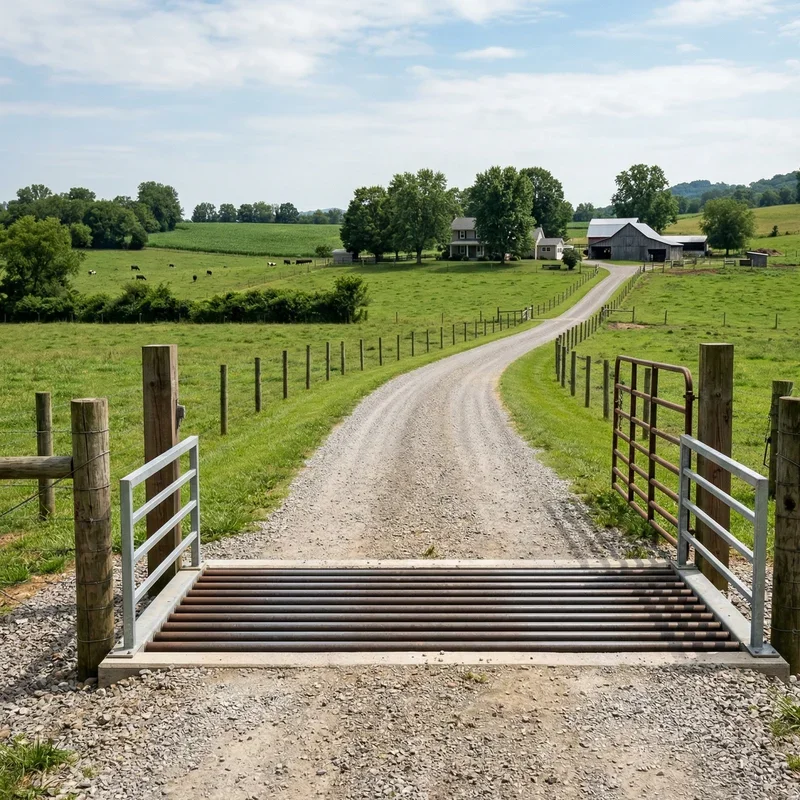
If livestock roam anywhere near your driveway, a cattle guard eliminates the daily hassle of opening and closing gates every time a vehicle comes or goes. These metal grate structures sit over a pit at the driveway entrance, creating a barrier that hooves cannot cross but tires roll over effortlessly. Cattle, horses, sheep, and goats refuse to step on the grate because their hooves slip between the bars. You drive straight through without stopping while your animals stay exactly where they belong. Proper installation requires digging a pit, pouring concrete abutments, and setting a commercially manufactured guard rated for your expected vehicle weights. County regulations often dictate minimum dimensions and load ratings. A cattle guard paired with stone pillars creates a farm entrance that balances working function with undeniable visual appeal.
14. Limestone Dust Driveway for a Smooth Finish
Limestone dust, sometimes called limestone screenings or crusher fines, creates one of the smoothest natural driveway surfaces available for rural properties. This fine-grained material packs incredibly tight when moistened and compacted, forming an almost cement-like surface that resists washouts and stays smooth under regular traffic. The light tan or cream color brightens your driveway and reflects more light at night than darker aggregates, improving visibility on unlit country lanes. Limestone dust settles quickly after installation, and each rain event actually helps re-compact the surface rather than eroding it like coarser gravels. Spread it in two-inch lifts over a crushed stone base, compact each layer, and mist with water during the process. The final surface feels remarkably solid underfoot and under tire. It is the closest thing to pavement without actually paving.
15. Automated Farm Gate With Intercom Access
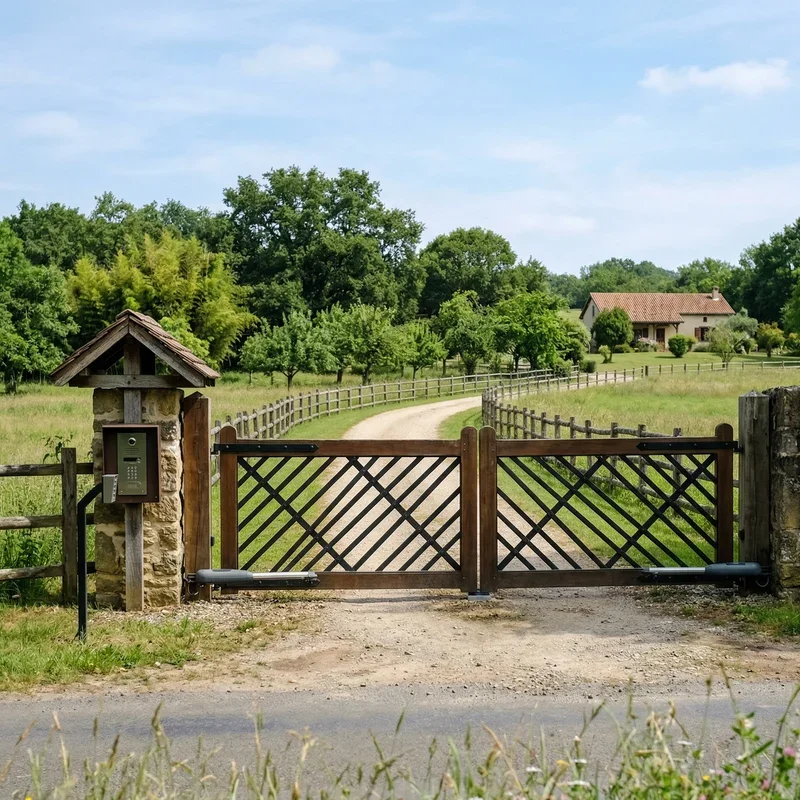
An automated gate transforms your farm entrance from a manual chore into a one-button operation that works from inside your truck cab, your tractor seat, or even your phone screen. Electric gate operators mount to swing gates or slide gates and open automatically via remote control, keypad, or smartphone app. Add an intercom system with a camera, and you can see and speak with visitors at the gate from anywhere on the property before deciding whether to grant access. Solar-powered gate operators work perfectly on remote farm entrances where running electrical service would cost thousands. The automated system also improves security by keeping the gate locked by default rather than relying on someone remembering to close it. Convenience meets security meets modern technology, all at the end of your driveway.
Conclusion
A farm driveway needs to handle real work, but it also deserves to look as good as the property it leads to. These 15 ideas prove that function and beauty coexist beautifully when you plan with intention. From proper gravel crowning and drainage systems to tree-lined lanes and automated gates, every choice shapes how your farm presents itself to the world. Start with the foundation elements like drainage and surface material, then layer in the aesthetic touches that reflect your personal style. Your driveway is the handshake your farm offers every visitor, so make it a firm one that leaves a lasting impression.
Read next: How to Build a Gravel Driveway: Step-by-Step Guide
Frequently Asked Questions
Q1: What is the best gravel size for a farm driveway surface layer?
A: Three-quarter-inch minus crushed gravel compacts tightly and creates a smooth, durable driving surface.
Q2: How wide should a farm driveway be to handle large equipment?
A: Farm driveways should measure at least twelve to sixteen feet wide for safe equipment passage.
Q3: How often does a gravel farm driveway need regrading with a motor grader?
A: Most gravel farm driveways benefit from regrading once or twice per year depending on traffic.
Q4: Can I pave just part of my farm driveway to save money?
A: Yes, paving the entrance apron and high-traffic areas while keeping the rest gravel saves significantly.
Q5: How deep should the gravel base be for a farm driveway carrying heavy loads?
A: Heavy-use farm driveways need eight to twelve inches of compacted aggregate base for proper support.
Stay up to date with our latest ideas!