15 Deck Railing Corner Ideas to Enhance Outdoor Style
Discover 15 deck railing corner ideas to enhance your outdoor style. From beveled posts to curved transitions, solve every corner challenge.
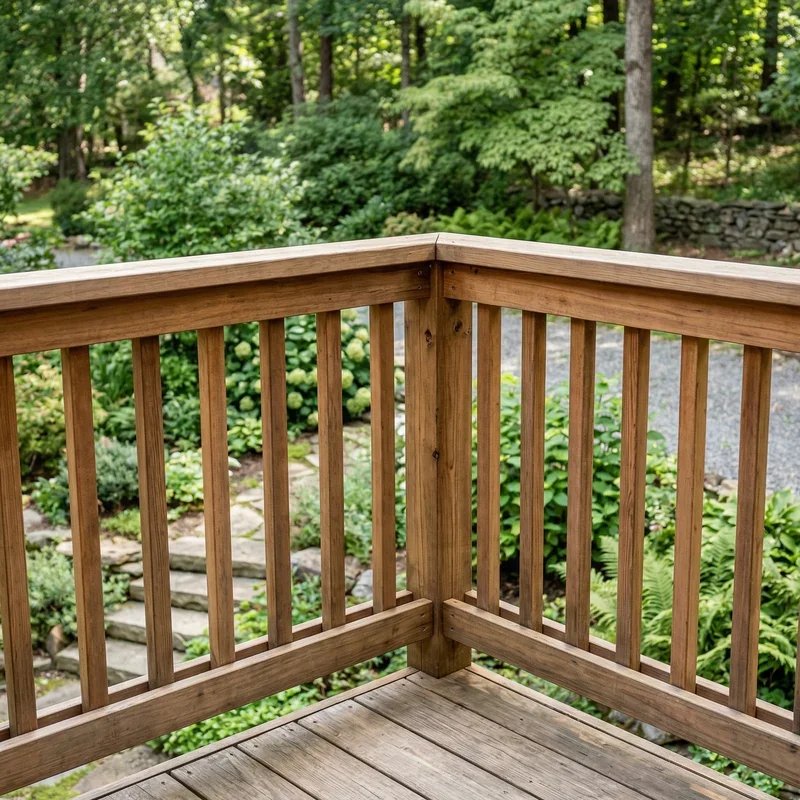
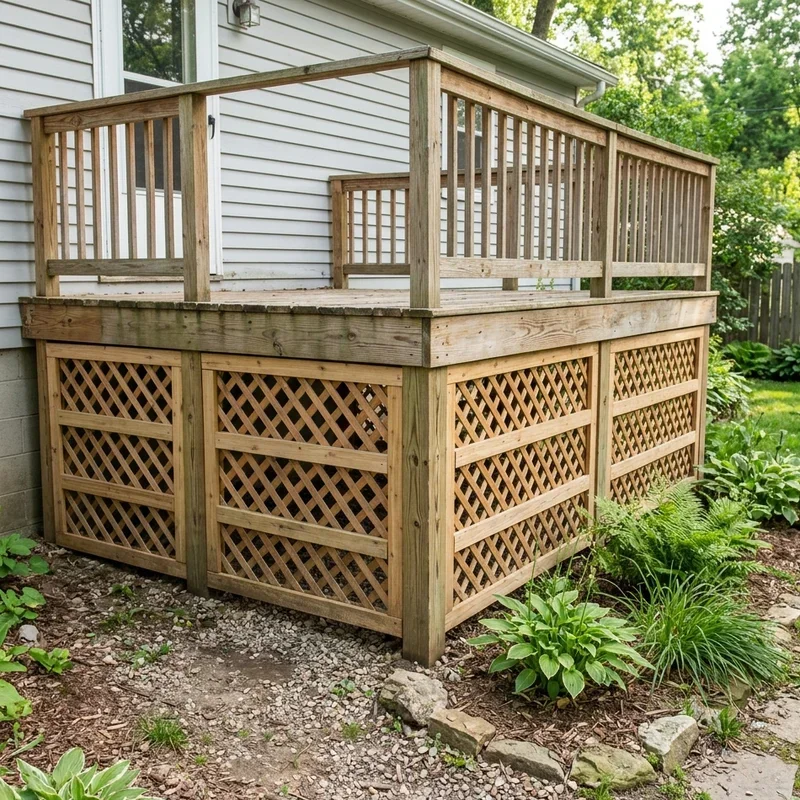
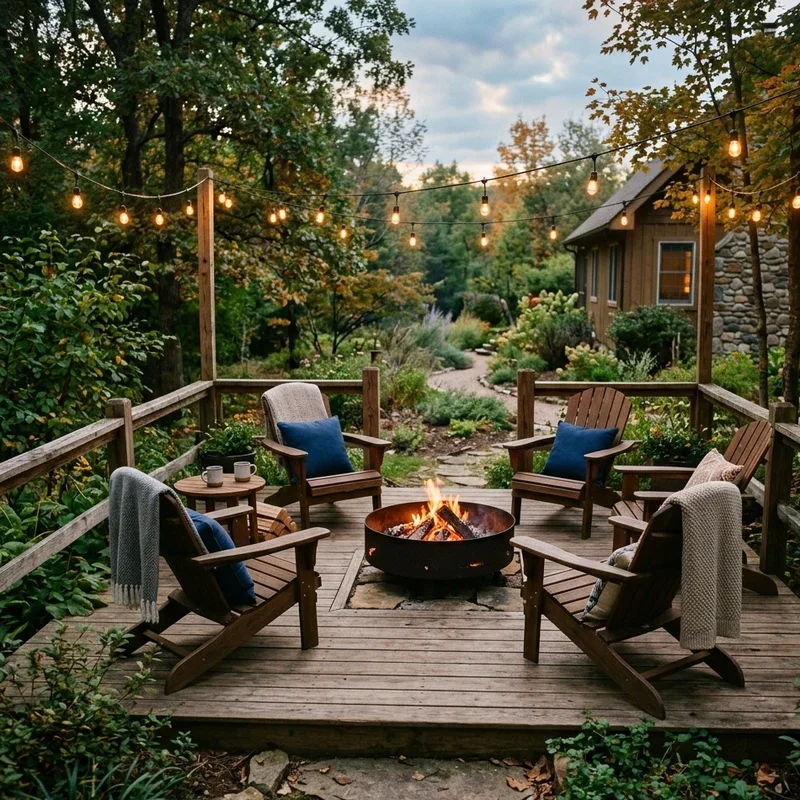
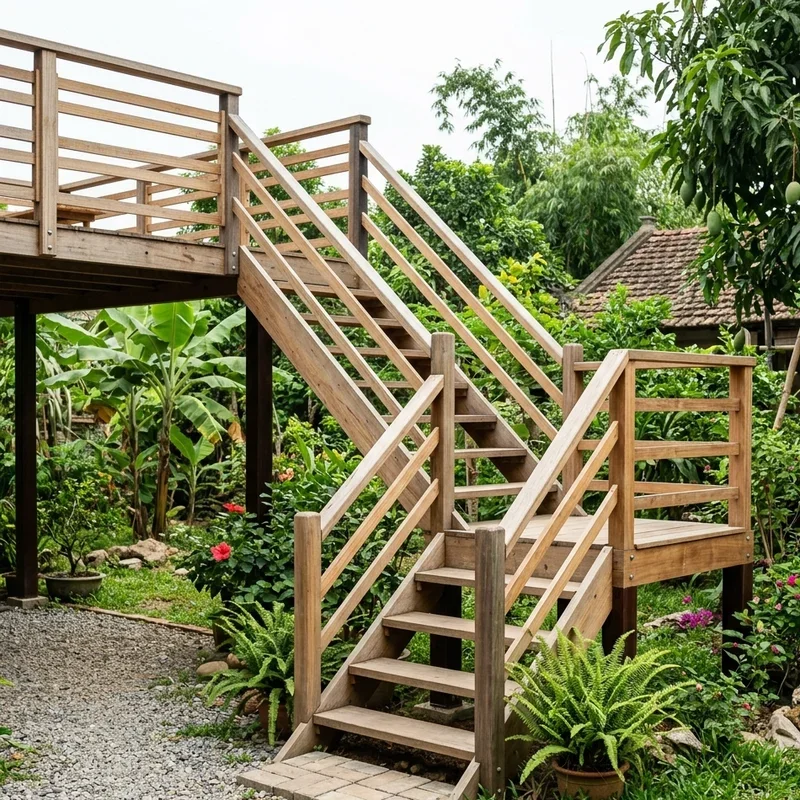
Corners are where most deck railings either shine or fall apart. You know the spot: where two railing sections meet at an angle and suddenly everything looks clunky, misaligned, or just plain lazy. Most builders treat corners as an afterthought, slapping two posts together and calling it done. But what if those awkward junctions became the most eye-catching parts of your entire deck? The right corner treatment transforms a structural necessity into a genuine design feature that elevates your whole outdoor space. Whether your deck wraps around the house, features multiple levels, or simply has standard ninety-degree turns, each corner presents an opportunity to show off your style. These 15 ideas will help you nail every angle with confidence and creativity.
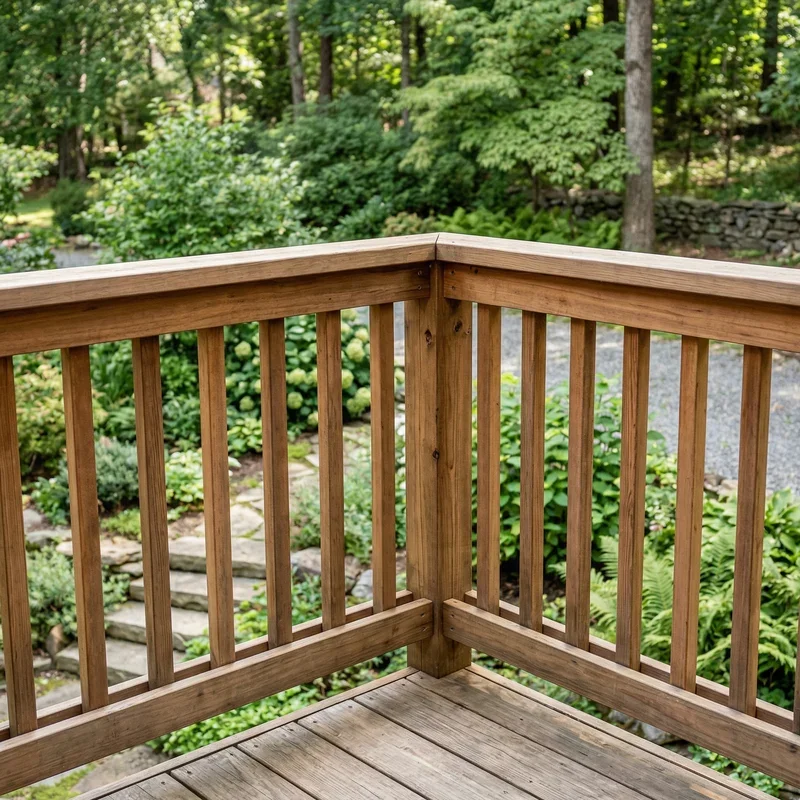
1. Beveled Corner Post With Chamfered Edges
A standard square corner post works fine, but a beveled post with chamfered edges tells the world you actually care about the details. Chamfering means cutting the sharp ninety-degree edges of the post at a forty-five degree angle, creating a subtle faceted look that catches light and shadow differently throughout the day. Think of it as giving your corner post a tailored suit instead of leaving it in a plain t-shirt. The beveled faces soften the visual weight of a thick post while adding architectural interest that flat surfaces cannot deliver. Cedar and redwood accept chamfering beautifully because the angled cuts reveal the wood grain from fresh perspectives. A router or table saw handles this cut easily, making it one of the simplest upgrades with one of the highest visual returns on your deck.
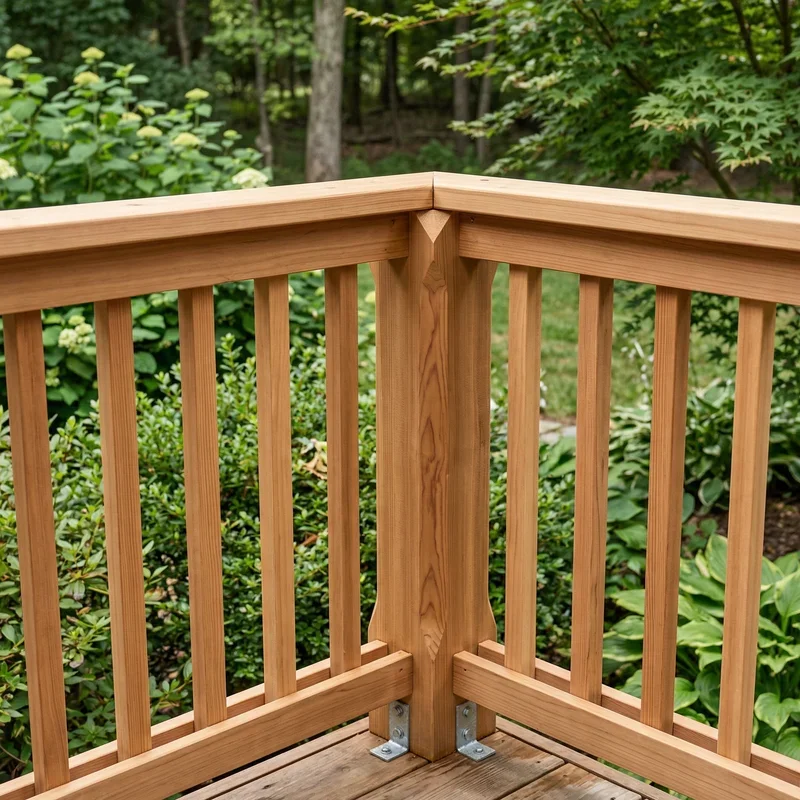
2. Continuous Top Rail With Mitered Corner Joint
Nothing breaks the flow of a beautiful deck railing faster than a clunky corner where two top rails just butt against a post with no finesse. A mitered corner joint solves that problem by cutting both rail ends at matching angles so they meet seamlessly, creating one unbroken line that flows around the corner like a river bending around a rock. The continuous rail draws your eye smoothly along the entire perimeter without any visual interruptions. Precision matters here because gaps in a miter joint scream amateur from across the yard. Use a quality miter saw, dry-fit before gluing, and reinforce the joint from below with a metal bracket or biscuits. When done right, guests run their hands along the rail and never feel the seam at all.
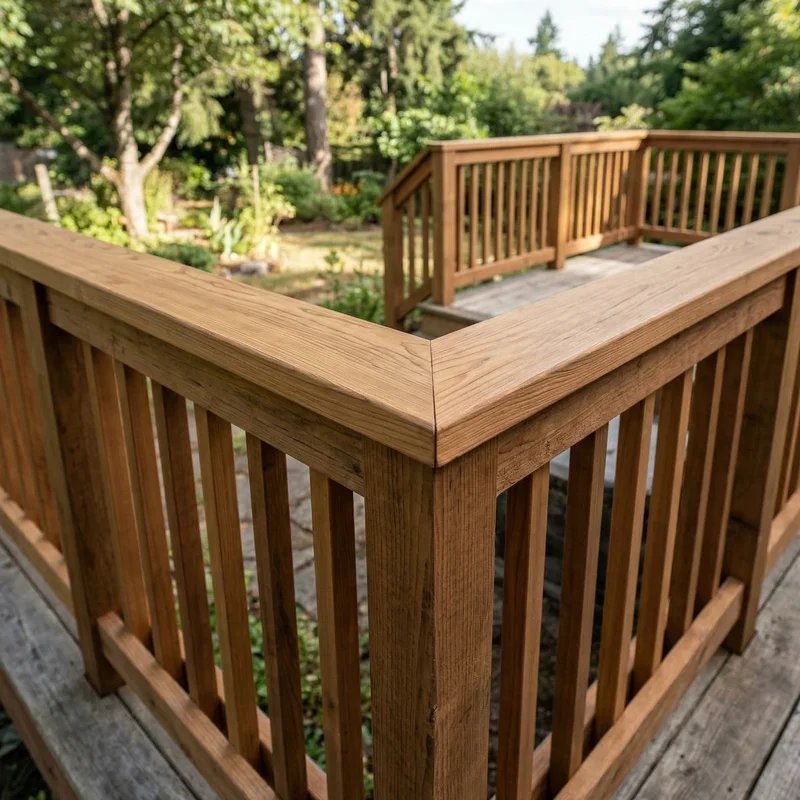
3. Oversized Corner Post as a Design Anchor
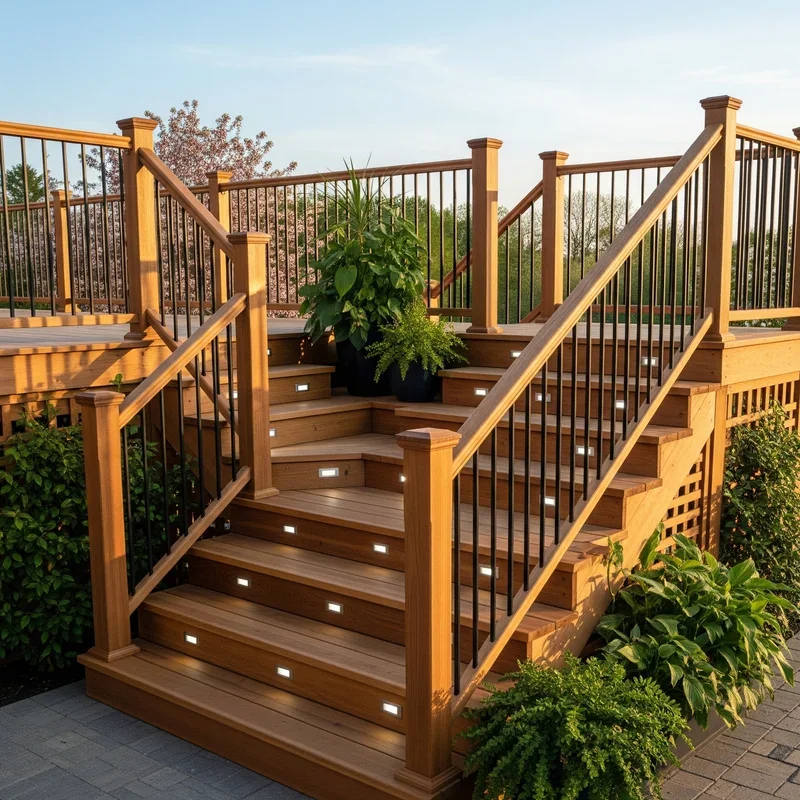
While standard railing posts typically measure four by four inches, bumping your corner posts up to six by six or even eight by eight creates intentional visual anchors that ground the entire railing system. These larger posts announce the corners with authority, like bookends holding a shelf of books in place. The extra mass communicates permanence and quality that thinner posts simply cannot match. You can cap oversized corner posts with decorative finials, pyramid tops, copper caps, or flat platforms for small lanterns and potted plants. The size difference between corner posts and intermediate posts creates a satisfying visual hierarchy that makes the railing composition feel designed rather than assembled. This approach works especially well on large decks where standard posts can look undersized and lost.
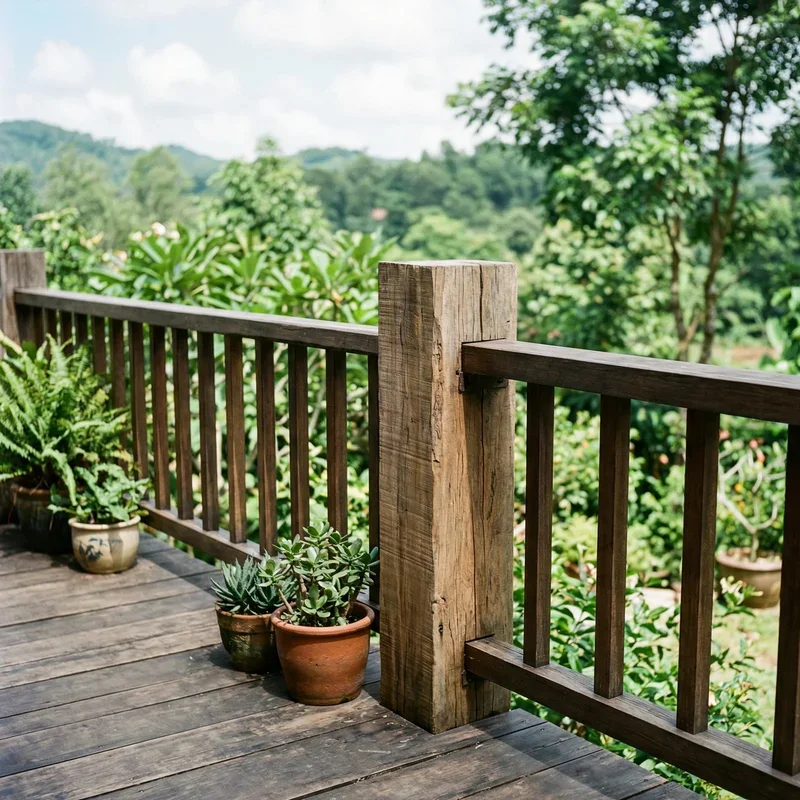
4. Curved Radius Corner Railing Transition
Why force a hard angle when you can sweep through the corner with a graceful curve? Radius corners replace the sharp turn with a smooth arc that guides the railing around the junction like a highway on-ramp. This treatment works particularly well on decks with obtuse angles where a standard corner post feels abrupt and awkward. Curved top rails require either steam-bending natural wood or using flexible composite materials that accept bending without cracking. Metal railings achieve curves through custom fabrication at a welding shop. The radius transition eliminates the corner post entirely in some designs, which opens up the view and reduces visual clutter at that junction point. It costs more than a standard corner, but the fluid elegance it brings elevates your entire deck from ordinary to remarkable.
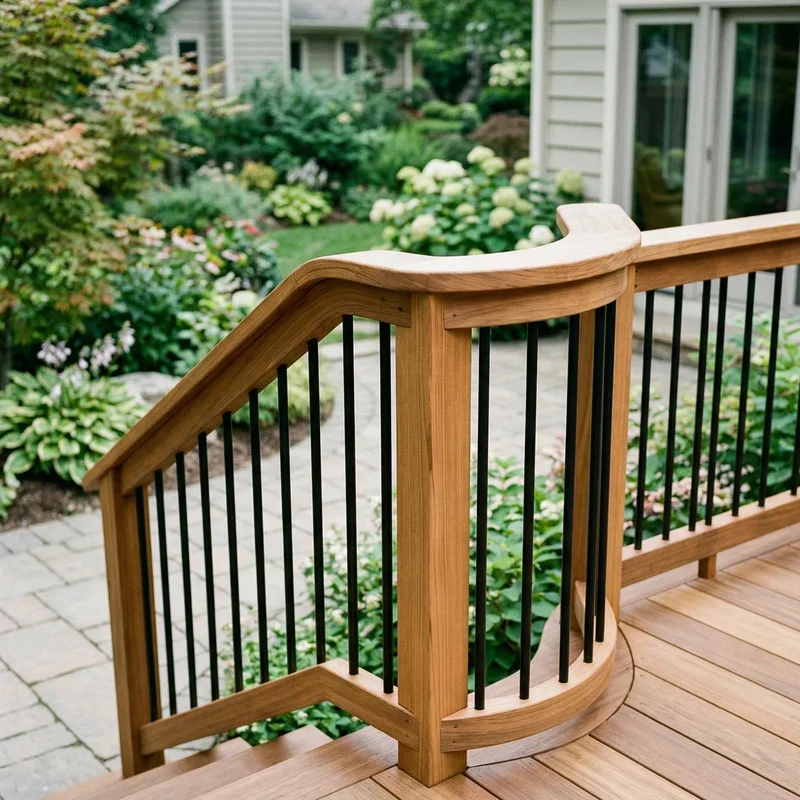
5. Corner Post With Built In Planter Cap
Turn your corner posts into tiny gardens by topping them with built-in planter caps. These hollow caps sit atop the post and hold enough soil for small trailing plants, succulents, herbs, or seasonal flowers. Every corner of your deck suddenly blooms with life rather than just standing there as a structural necessity. Trailing ivy or creeping jenny spilling over the edges softens the hard geometry of the railing and connects your deck to the surrounding landscape. Most planter caps include drainage holes to prevent root rot and water damage to the post below. Copper, composite, and vinyl planter caps resist weather damage across multiple seasons. Swap out plantings with the seasons and your deck corners become an ever-changing gallery of natural color and texture year round.
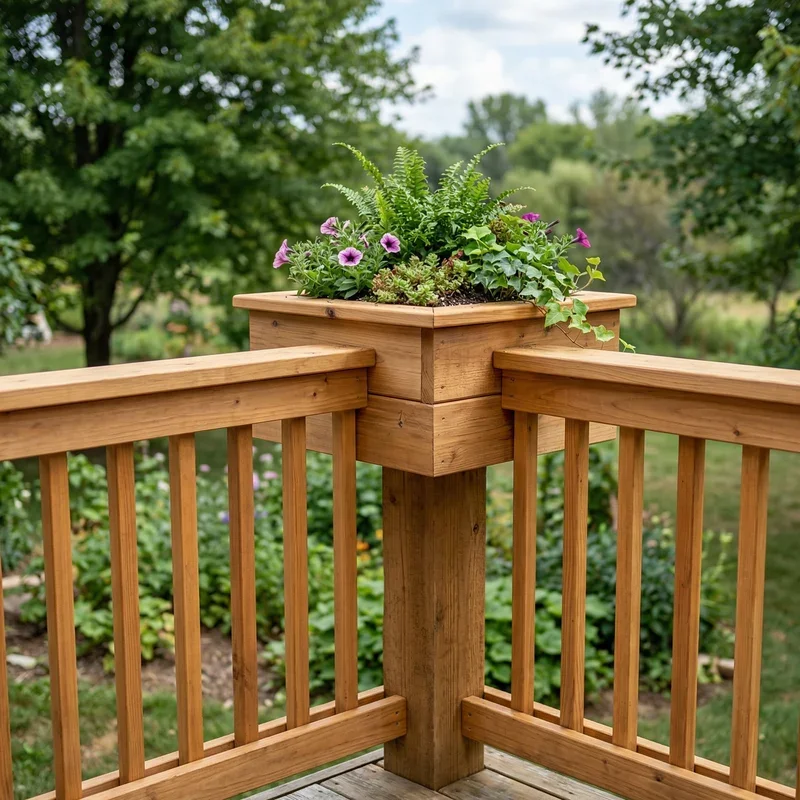
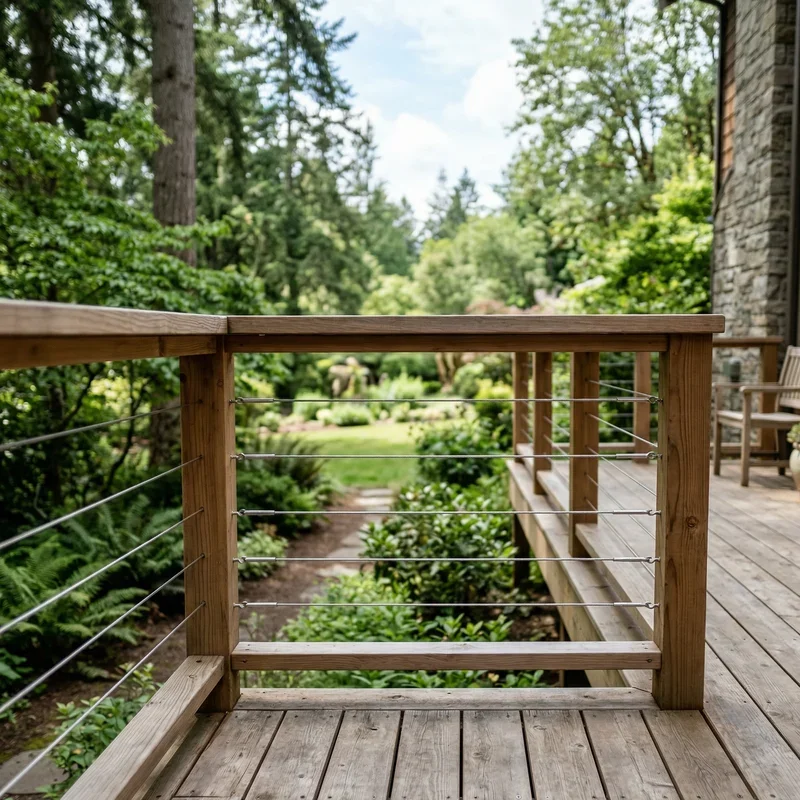
6. Metal Elbow Connector for Cable Railing Corners
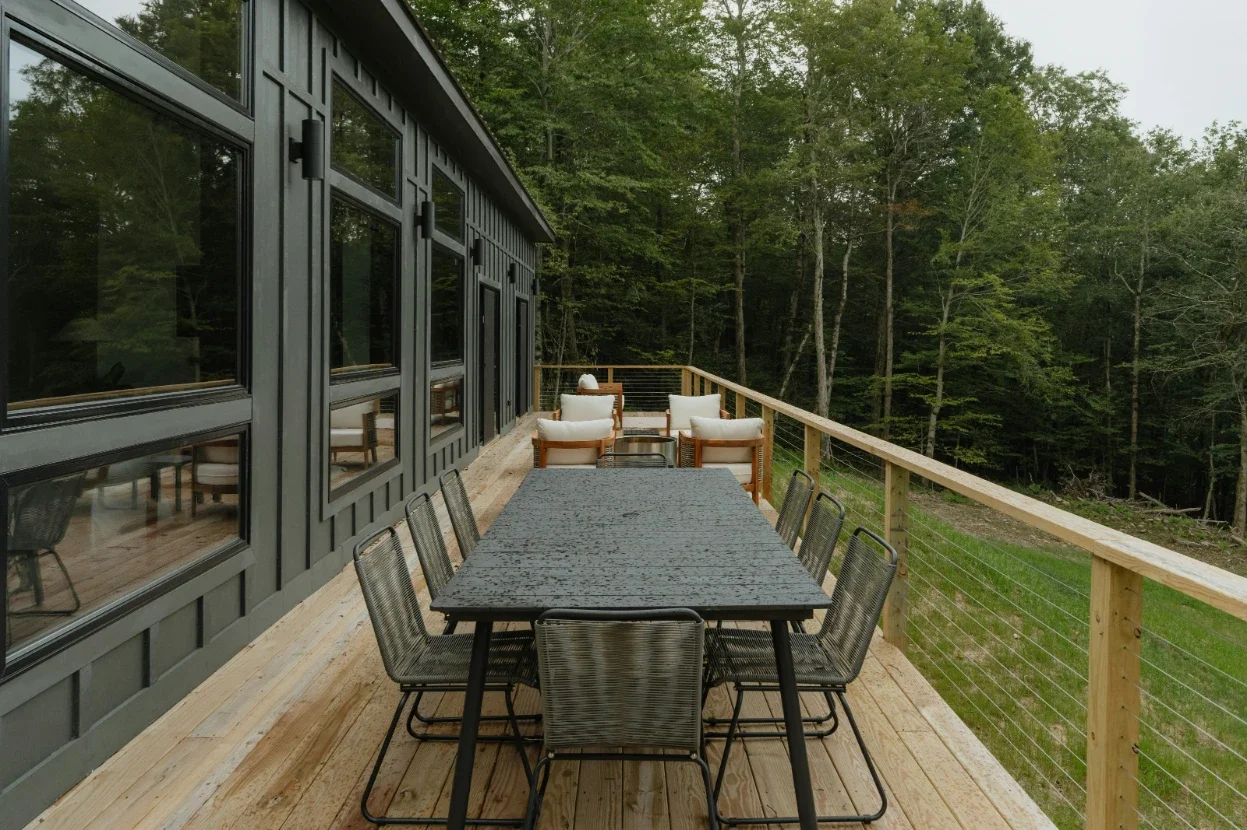
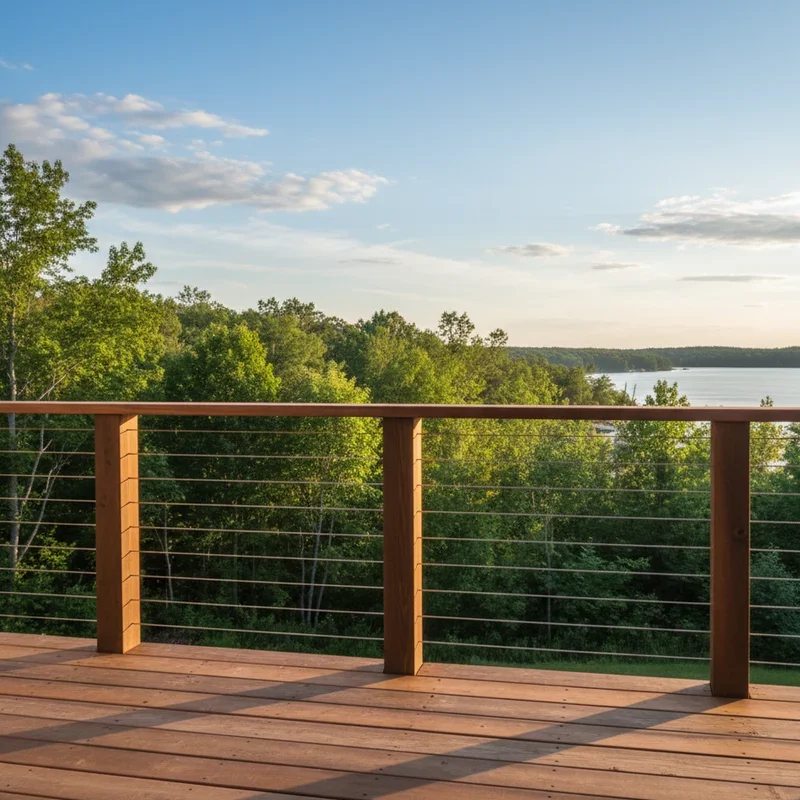
Cable railing systems face a unique challenge at corners because tensioned cables need to change direction without losing their taut, clean appearance. Metal elbow connectors solve this elegantly by routing each cable through a machined fitting that redirects the wire at the exact angle of your corner. The cables pass through the elbow smoothly, maintaining consistent tension on both sides of the turn. Stainless steel elbows match typical cable railing hardware and resist corrosion in every climate. Some systems use a single corner post with individual pass-through fittings for each cable, while others employ a curved elbow plate that handles all cables at once. Either way, the result keeps your cable lines straight and tight, which is the entire point of choosing wire railing in the first place.
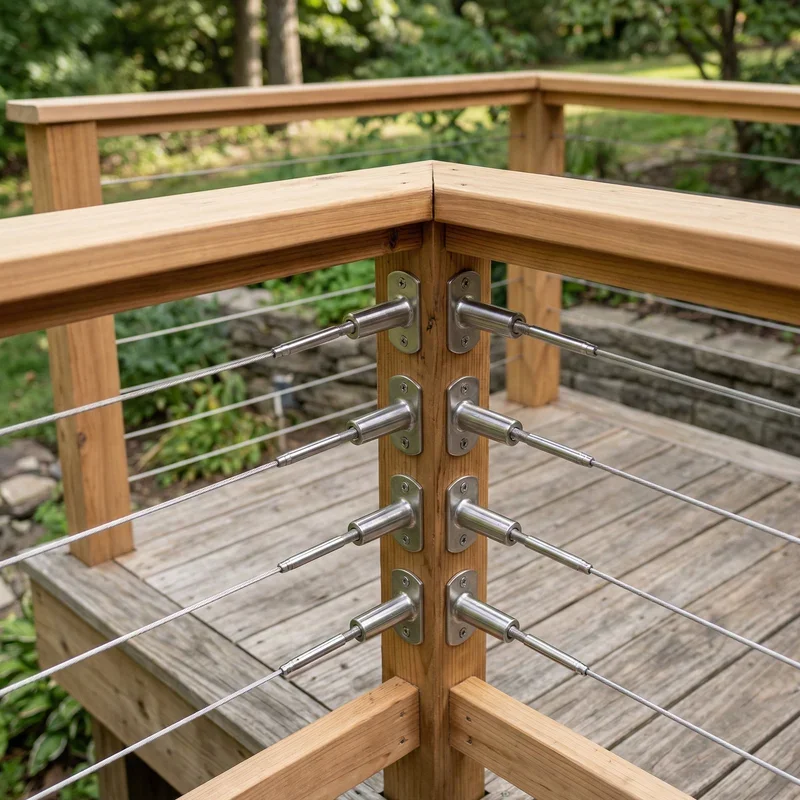
7. Glass Panel Corner With Frameless Clip System
Glass railing corners can look stunning or terrible depending on how you handle the junction between panels. Frameless clip systems use low-profile stainless steel clamps to hold tempered glass panels at the corner without bulky frames blocking the view. The two glass panels meet edge to edge with just a slim gap between them, creating a nearly invisible corner that preserves your sightlines in every direction. Think of it as the corner equivalent of a frameless shower door, clean, minimal, and elegant. Standoff clips mount directly to the deck surface or to a hidden base channel, keeping all the hardware below eye level. This approach costs more than framed alternatives, but the visual payoff is unmatched when you want maximum transparency at your deck corners.
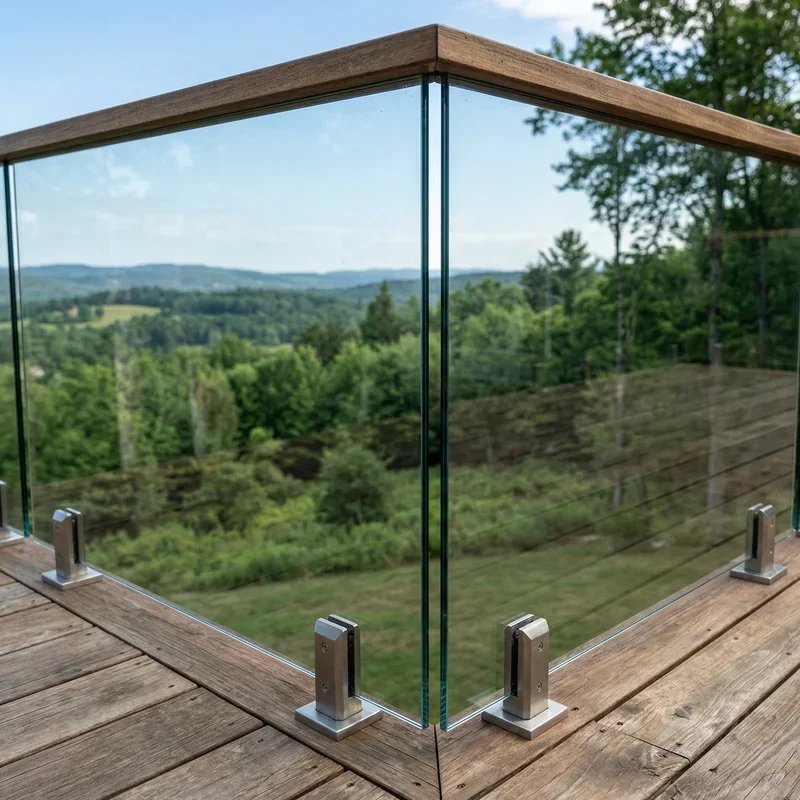
8. Diagonal Cut Corner for Wide Angle Decks
Not every deck corner sits at a neat ninety degrees. Wraparound decks, angled additions, and multi-sided designs create obtuse corners of 120, 135, or even 150 degrees that standard corner solutions handle poorly. A diagonal cut corner post addresses this by angling the post face to bisect the junction, giving each railing section a clean, square attachment surface despite the non-standard angle. The result looks intentional and precise rather than forced. Contractors cut the post on a compound miter to match your specific deck angle, then route the railing sections into the angled faces. This technique also works for inside corners on L-shaped decks where walls meet railing runs. Custom angles demand careful measurement, but the clean outcome makes your unusual deck geometry feel like a deliberate design choice.
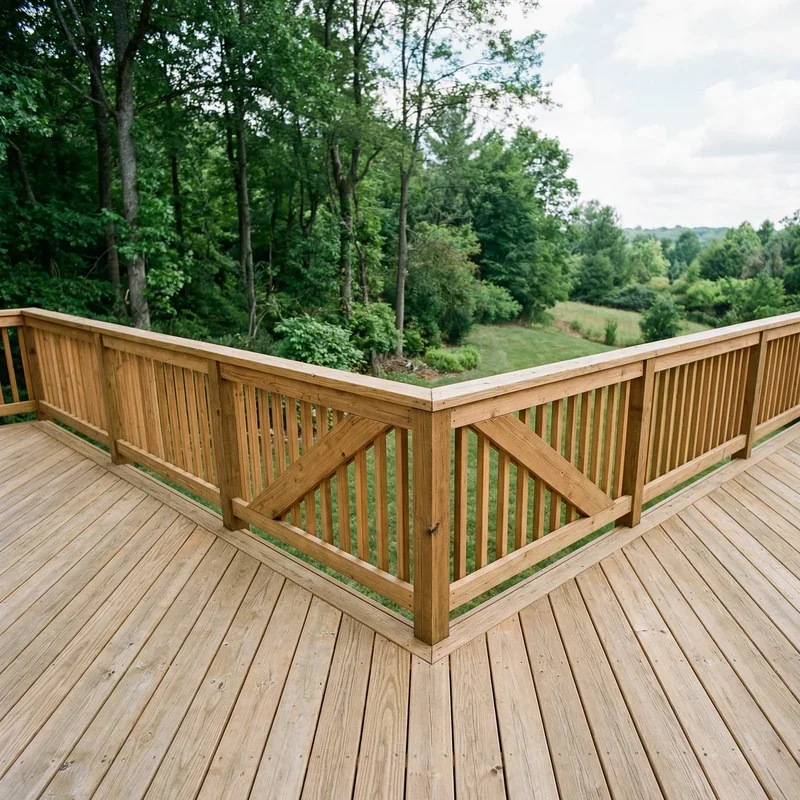
9. Corner Post With Integrated LED Light Cap
Your deck corners sit at the most visible junctions of the entire railing perimeter, making them prime real estate for lighting. LED light caps fit directly onto corner posts and cast a warm downward glow that illuminates the deck surface below. They serve as both functional pathway lighting and decorative accents that highlight the railing architecture after dark. Solar-powered caps charge throughout the day and turn on automatically at dusk, requiring no wiring or electrical work whatsoever. Hardwired low-voltage options run brighter and more consistently if you prefer that reliability. Some caps project light through four sides equally, while others focus the beam in two directions along the railing runs. Either way, lit corner posts transform your deck from a daytime space into an inviting evening retreat.
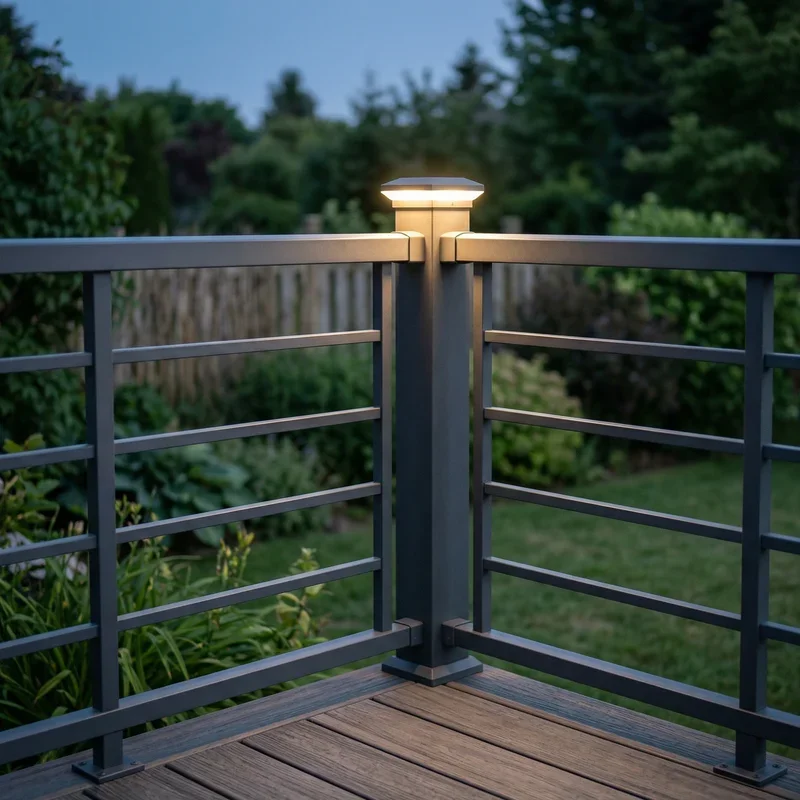
10. Wrapped Composite Sleeve Corner Post
Composite post sleeves wrap around a structural wood or metal core, giving you the durability of engineered materials with the strength of traditional framing hidden inside. At corners, these sleeves create a clean, uniform appearance that matches your composite deck boards and railing sections perfectly. The sleeve hides the rough structural post completely, presenting a smooth, finished surface on all four visible faces. Colors and textures match popular composite decking brands, so your corner posts blend seamlessly into the overall design instead of standing out as mismatched elements. Installation involves sliding the sleeve over the structural post and securing it with adhesive or mechanical fasteners. The composite material never rots, warps, or requires staining, meaning your corners look freshly installed for decades without any touch-up work.
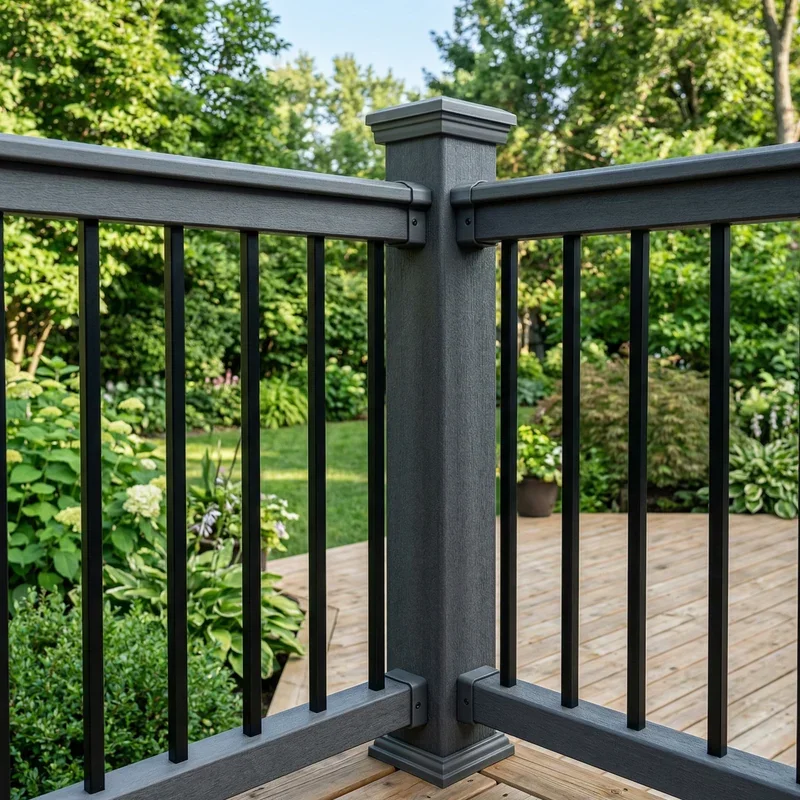
11. Nautical Rope Loop Corner Detail
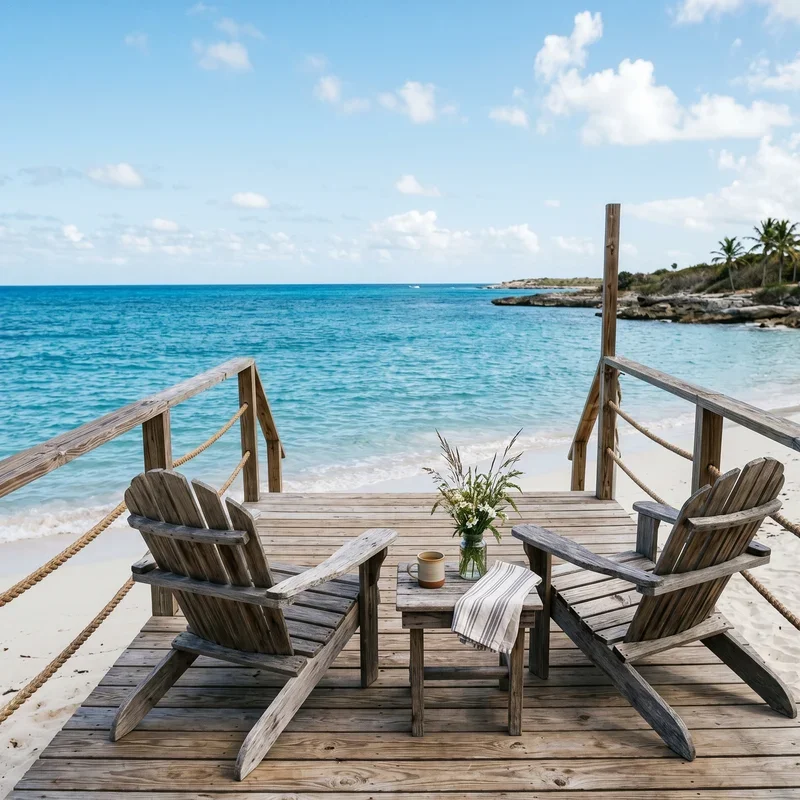
Coastal and lakeside homes deserve railing corners that speak the same design language as their waterfront settings. A nautical rope loop wraps decorative marine rope around the corner post in a series of knots, coils, or spiral patterns that evoke dock pilings, ship rigging, and seaside boardwalks. Thick manila, sisal, or synthetic marine rope adds texture and warmth that metal and wood cannot replicate on their own. The rope wrapping also provides a comfortable grip surface at corners where people naturally pause and lean. You can combine rope details with cable railing infill or traditional wood balusters for a hybrid look that balances maritime charm with structural function. A few well-placed rope loops at each corner post are sometimes all you need to anchor the whole nautical theme.
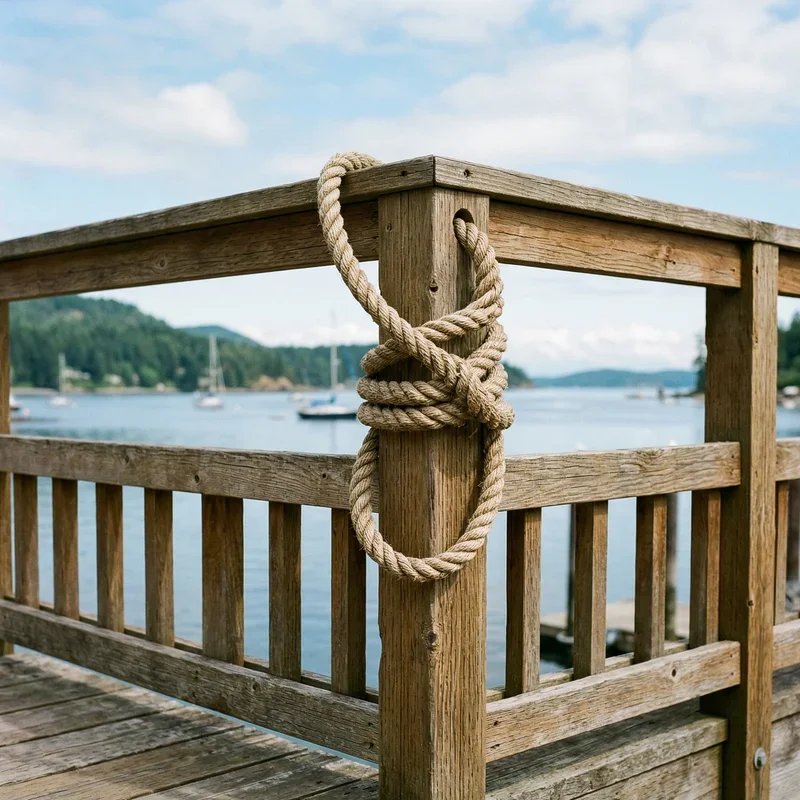
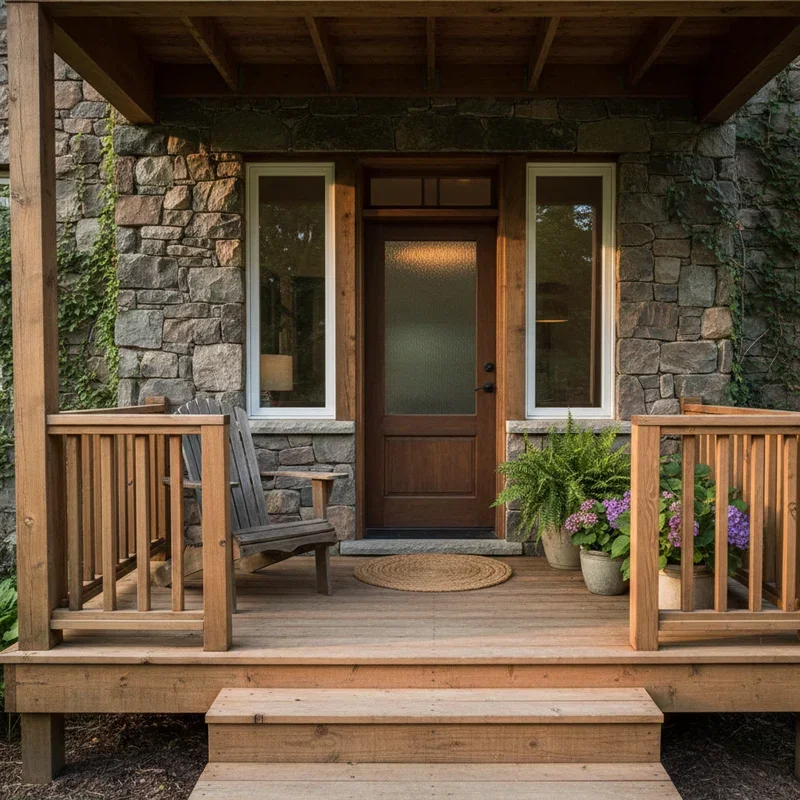
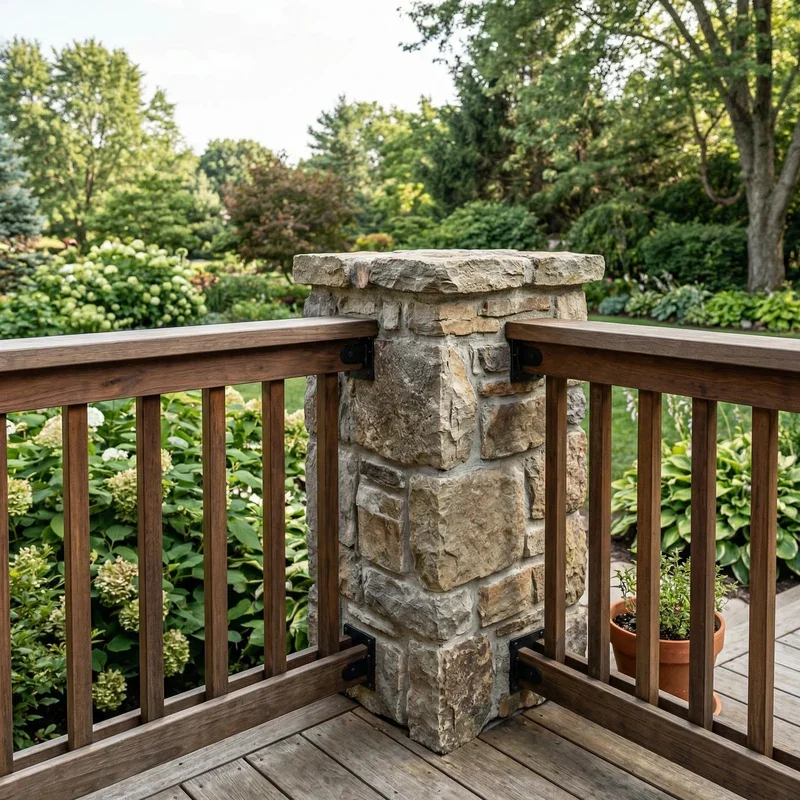
12. Stone or Brick Pillar Corner Anchors
For decks that connect to stone patios, brick homes, or masonry landscape walls, stone or brick pillar corners create a visual bridge between the deck railing and the surrounding hardscape. Build short pillars at each corner using matching stone veneer, thin brick, or cultured stone over a concrete block core. The railing sections attach to the pillar faces with hidden brackets, making the transition from masonry to railing feel organic. These pillars add serious visual weight and permanence to your deck corners, grounding the lighter railing structure with earthy mass. Think of them as the foundation stones that everything else builds upon. Flat pillar caps provide surfaces for lanterns, flower pots, or decorative objects. This approach transforms a simple deck railing into something that feels architecturally significant.
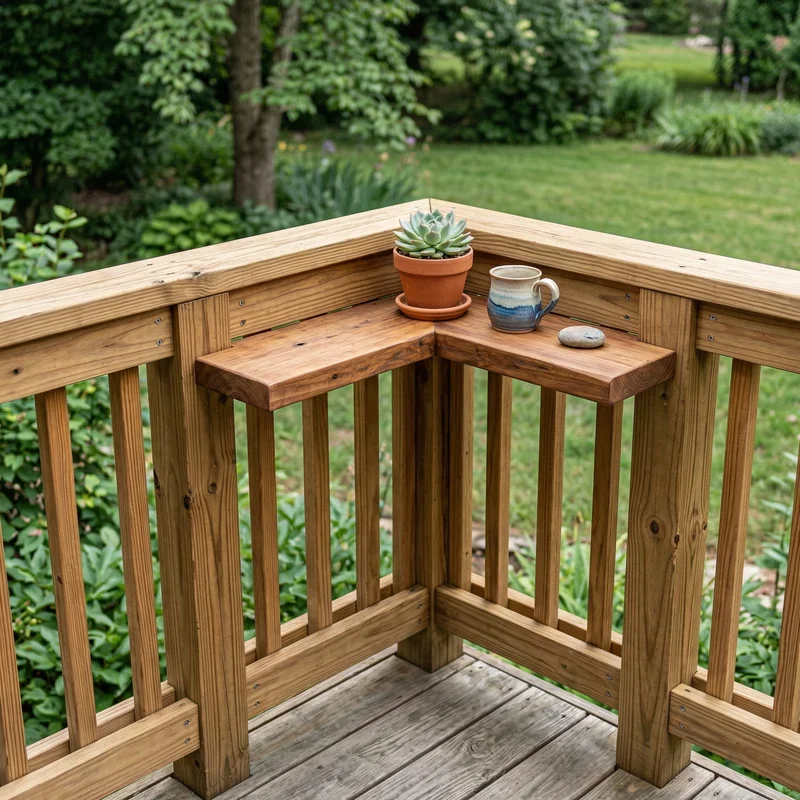
13. Floating Corner Shelf Built Into the Railing
Why waste perfectly good corner space when you can turn it into a functional surface? A floating corner shelf integrates a small triangular or curved platform right into the corner junction of your railing. It creates a convenient spot for drinks, phones, small plants, candles, or anything you want within arm's reach while standing at the rail. The shelf mounts securely between the two converging railing sections and uses the corner post as its primary support. Build it from the same material as your top rail for visual consistency, or choose a contrasting wood species for accent interest. The shelf sits at railing height, so it does not interfere with the infill below. It is a small addition that guests notice immediately and use constantly during every single gathering on your deck.
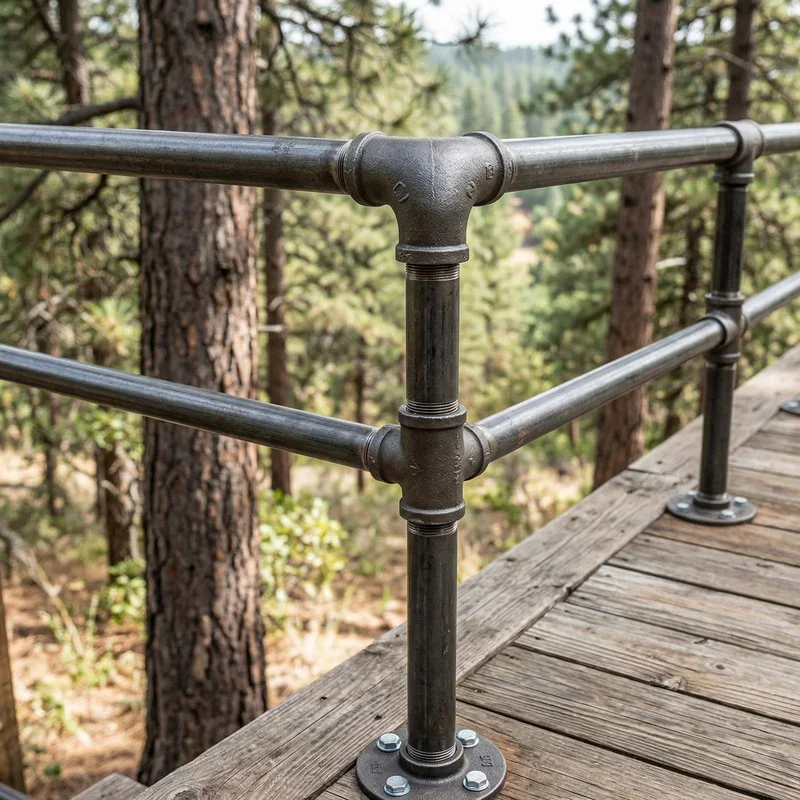
14. Industrial Pipe Fitting Corner Connectors
Industrial style decks thrive on exposed hardware and raw metallic textures, and pipe fitting corner connectors deliver exactly that aesthetic. Standard plumbing elbows, tees, and flanges in galvanized or black iron create corner junctions that celebrate their mechanical function rather than hiding it. The fittings thread onto pipe posts at precise angles, handling ninety-degree corners and custom angles with equal ease. This exposed-joint approach feels honest and unpretentious, like a workshop where every tool hangs in plain sight. Pair pipe corner fittings with tensioned cable infill for a modern industrial hybrid, or use additional pipe as horizontal balusters for a fully committed industrial statement. The raw metal develops character over time as galvanized finishes weather and black iron develops subtle surface patina in outdoor environments.
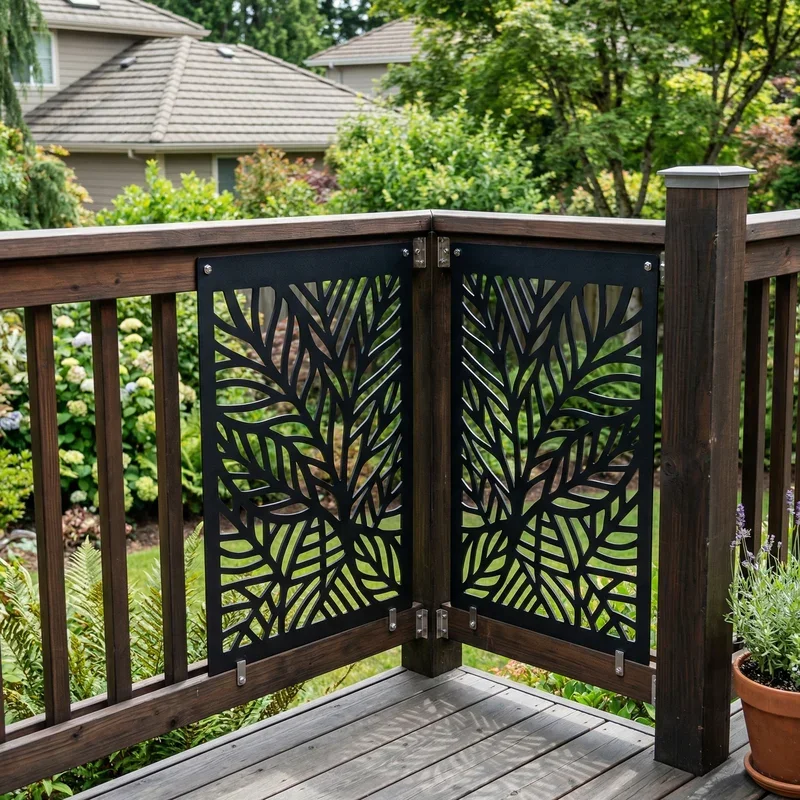
15. Laser Cut Decorative Metal Corner Panels
Save the best for last, right? Laser cut metal corner panels replace standard infill at corner junctions with intricate decorative patterns cut from aluminum or steel sheets. Geometric designs, botanical motifs, abstract art, or custom monograms transform your deck corners into gallery-worthy focal points that stop people mid-conversation. The laser cutting process handles detail levels that traditional fabrication methods cannot touch. During the day, these panels cast fascinating shadow patterns onto the deck surface as sunlight passes through the cutouts. At night, backlight them with LED strips for a truly dramatic effect. Powder-coated finishes in matte black, bronze, or white ensure the panels withstand weather without rusting or fading. They cost more than standard infill, but as conversation starters and design statements, they earn their investment at every gathering.
Conclusion
Deck railing corners deserve far more attention than most homeowners give them. These 15 ideas prove that every angle on your deck holds creative potential waiting to be unlocked. From simple beveled posts and mitered joints to dramatic laser-cut panels and stone pillar anchors, the right corner treatment ties your entire railing design together. Choose ideas that match your home's architecture and your personal taste, then commit to the details. Great outdoor spaces reveal themselves in the small moments where craftsmanship meets intention. Your deck corners are exactly those moments, so make them count every single time.
Read next: 15 Gray Deck Ideas for a Modern Outdoor Living Space
Frequently Asked Questions
Q1: What is the standard angle for most residential deck railing corners?
A: Most residential deck railing corners meet at ninety degrees, though wraparound decks often feature obtuse angles.
Q2: Can I mix different corner styles on the same deck railing system?
A: Yes, mixing two complementary corner styles adds visual interest while maintaining a cohesive overall design.
Q3: Do deck railing corners need extra structural reinforcement beyond standard posts?
A: Corner posts typically require deeper footings or additional blocking to handle forces from two directions.
Q4: How do I handle inside corners where my deck meets the house wall?
A: Use wall-mount brackets that attach the railing directly to the house framing at inside corners.
Q5: Are curved radius corners significantly more expensive than standard angle corners?
A: Curved corners typically cost two to three times more than standard corners due to custom fabrication.
Stay up to date with our latest ideas!