15 Deck Wire Railing Ideas for a Sleek Modern Look
Explore 15 deck wire railing ideas for a sleek modern look. From stainless steel cables to black wire designs, upgrade your deck today.
What if your deck railing could disappear and still keep everyone safe? That is exactly what wire railings do. They replace bulky wooden balusters and heavy metal pickets with slim cables that preserve your view while delivering a clean, contemporary edge. Wire railings have become the go-to choice for homeowners who refuse to sacrifice scenery for safety. They work on waterfront decks, mountain retreats, rooftop terraces, and suburban backyards alike. The beauty lies in their simplicity because thin cables almost vanish against the landscape behind them. Yet they meet building codes and handle serious load requirements without flinching. Whether you are building a new deck or upgrading an existing one, these 15 wire railing ideas will help you find the perfect style for your outdoor space.
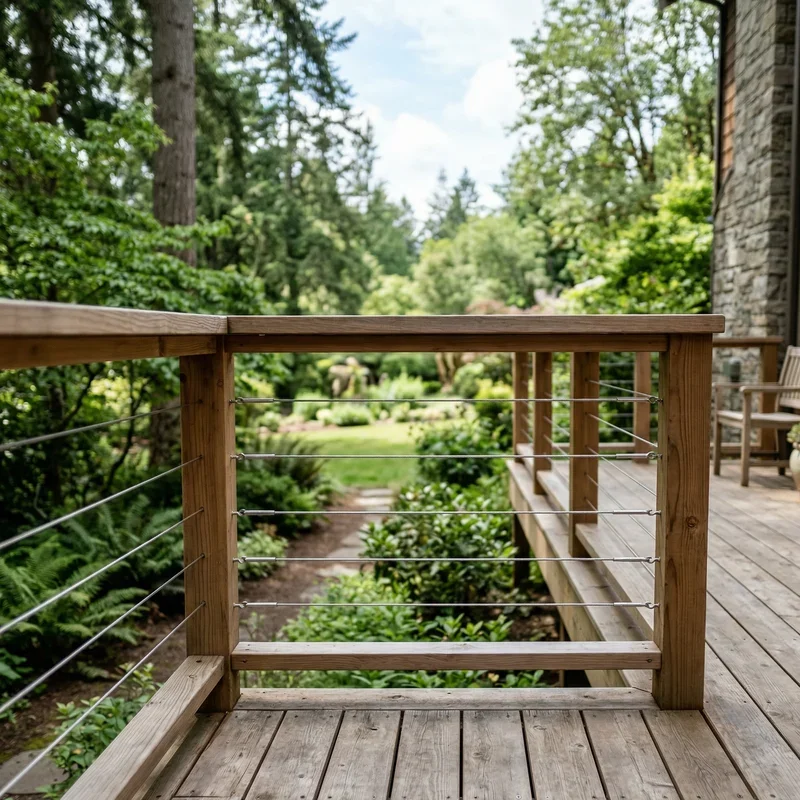
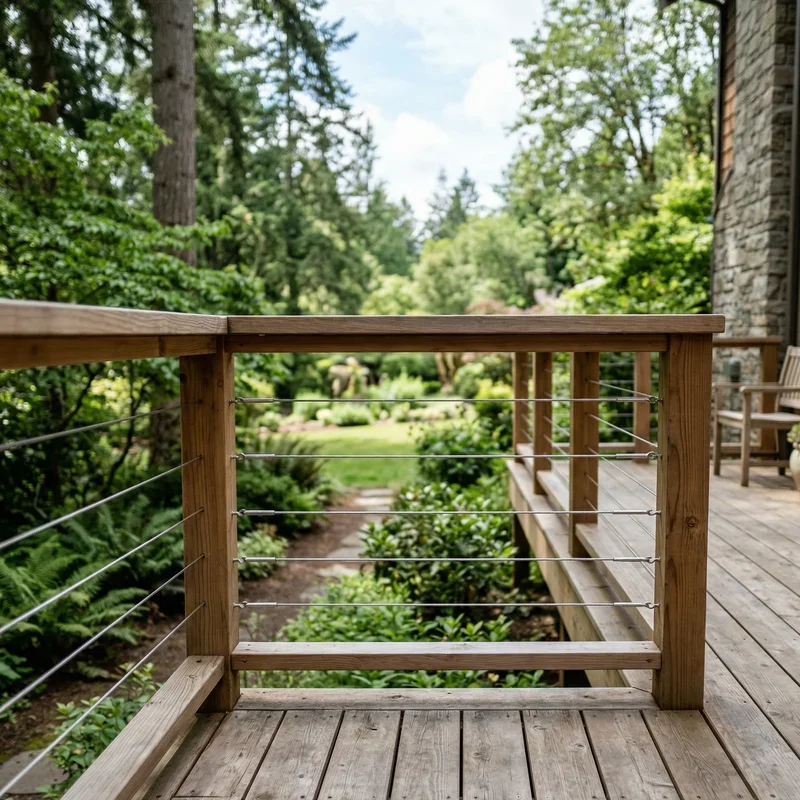
1. Horizontal Stainless Steel Cable With Wood Posts
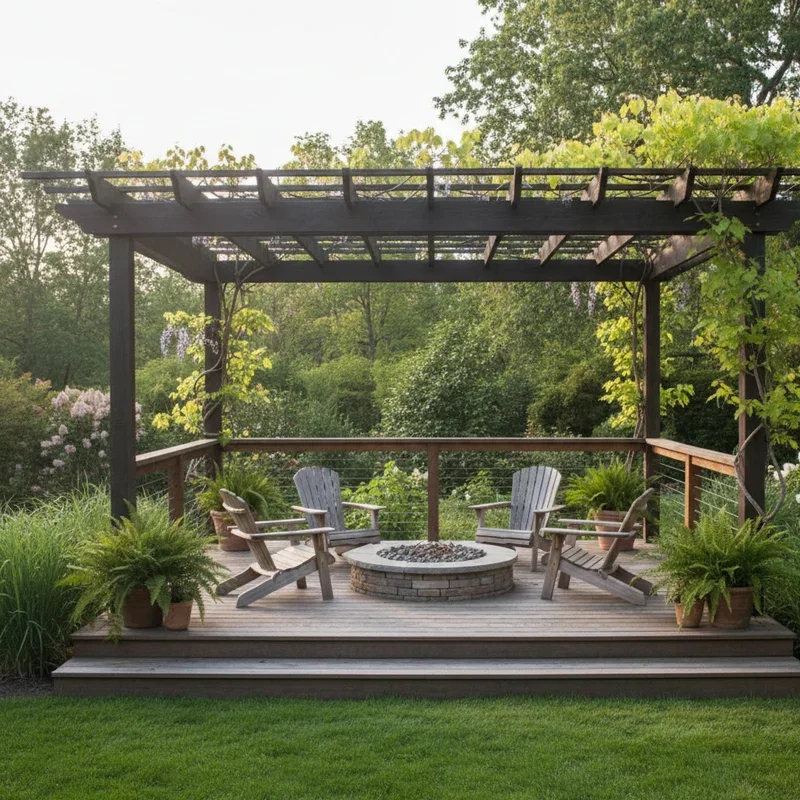
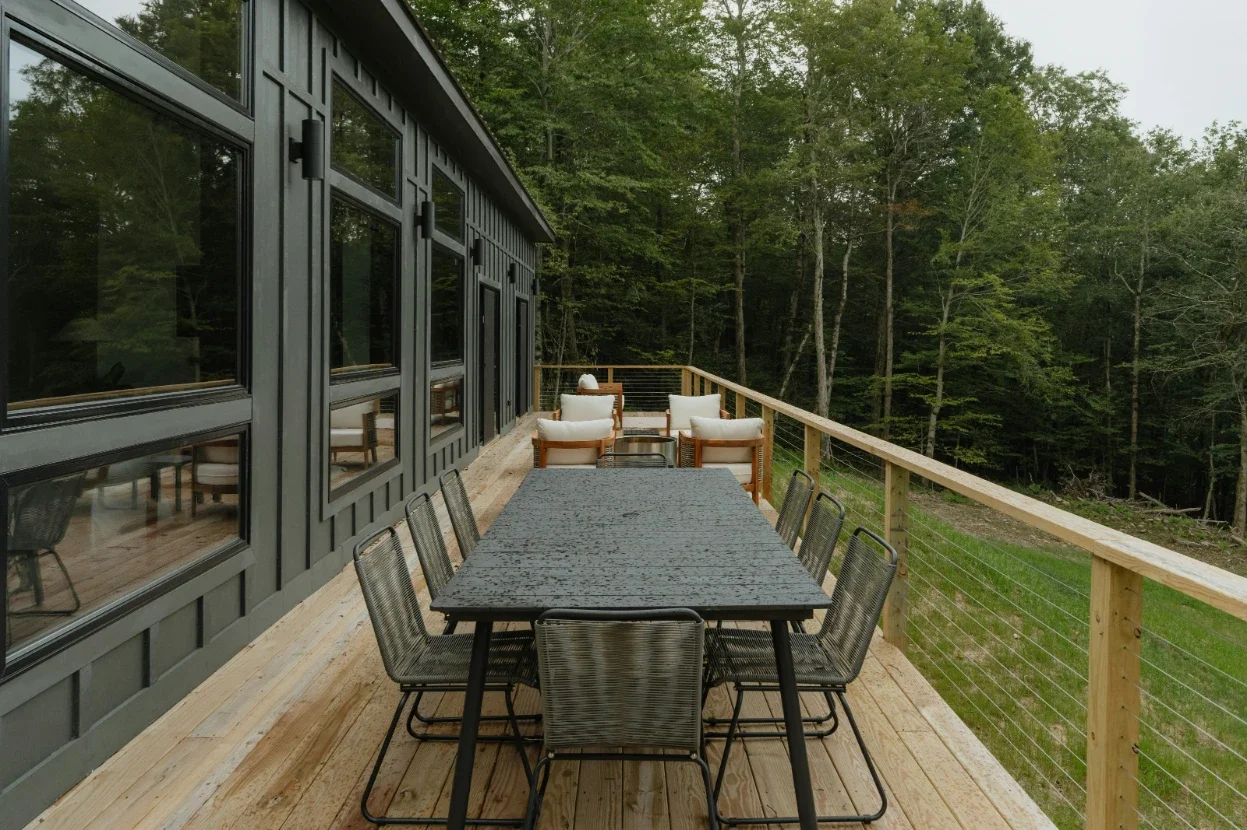
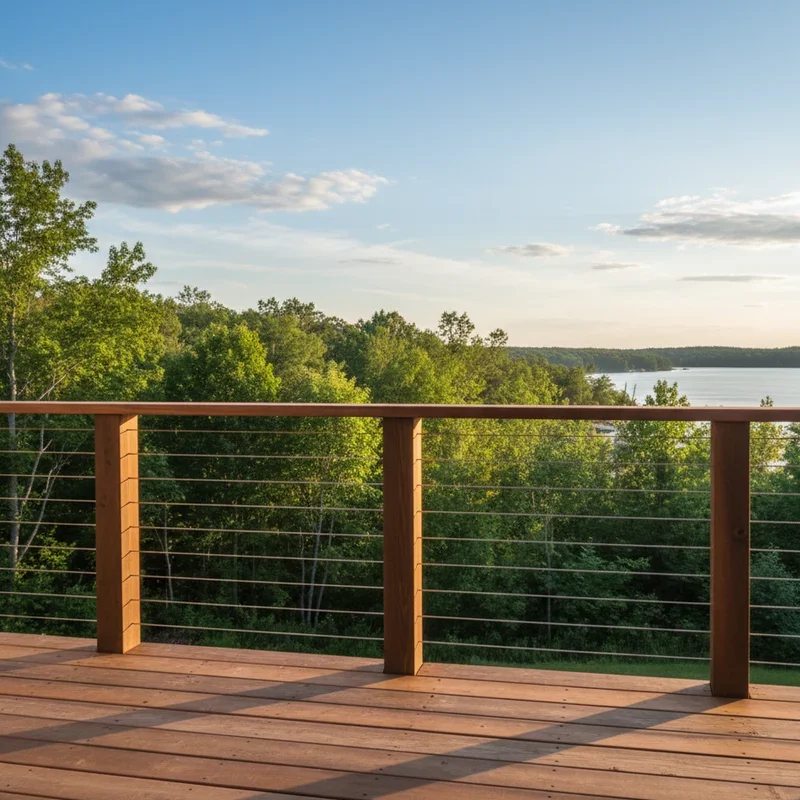
This combination is the peanut butter and jelly of wire railing design because it just works every single time. Warm wood posts provide the structural anchor while horizontal stainless steel cables run between them, creating clean sight lines that frame your view like a widescreen television. Cedar, redwood, and pressure-treated pine are popular post choices because they handle weather exposure and complement the metallic cables beautifully. The horizontal orientation draws the eye outward toward your yard or landscape rather than up and down. Most systems space cables about three inches apart to meet residential building codes. You can stain the wood posts to match your deck boards or paint them for contrast. This pairing suits craftsman homes, coastal cottages, and modern farmhouses with equal ease.
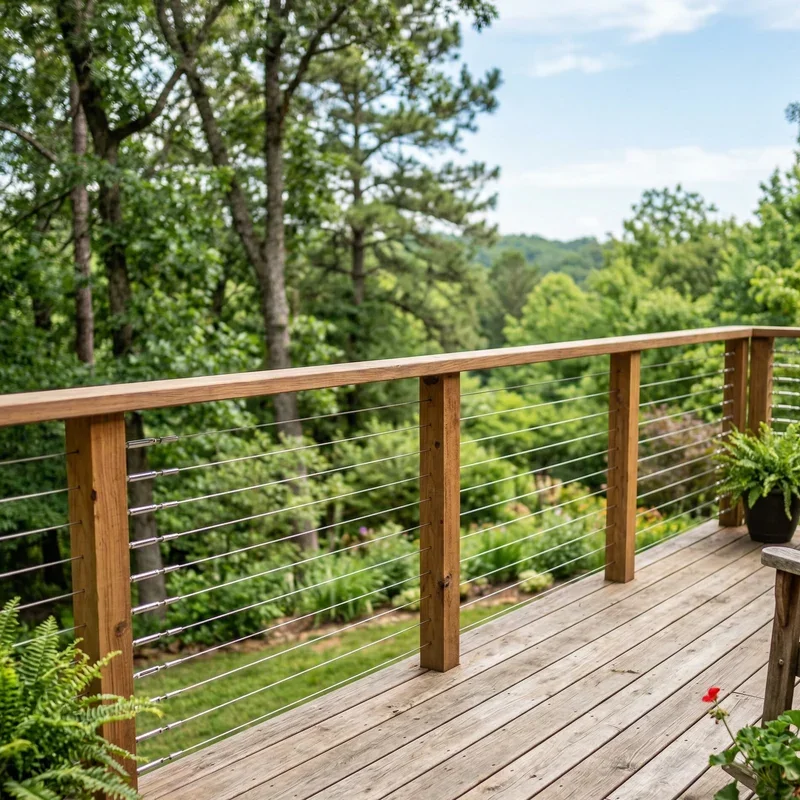
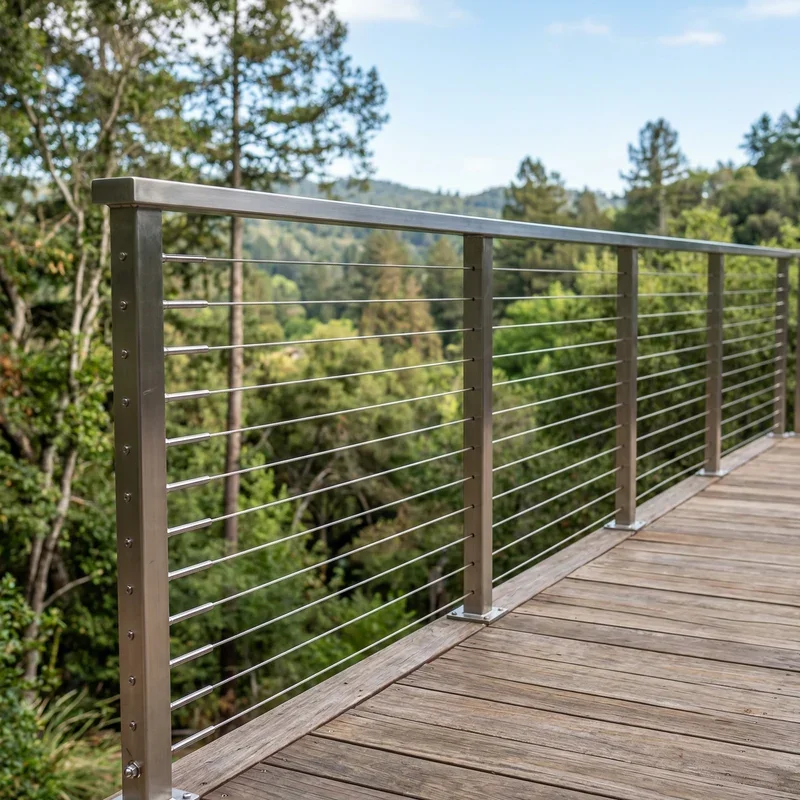
2. All Metal Stainless Steel Cable Railing System
If you want the cleanest possible look with virtually zero maintenance, an all-stainless system delivers on both counts. Stainless steel posts, top rail, and cables create a monochromatic metal composition that feels architectural and refined. Marine-grade 316 stainless resists rust and corrosion even in coastal environments where salt air destroys lesser materials within a few seasons. The uniform metallic finish reflects light throughout the day, shifting from cool silver in the morning to warm gold at sunset. Square posts offer a sharper, more geometric feel, while round posts soften the overall appearance. This system costs more upfront than wood-and-cable combinations, but it pays you back through decades of maintenance-free performance. Think of it as buying quality once instead of replacing cheap twice.
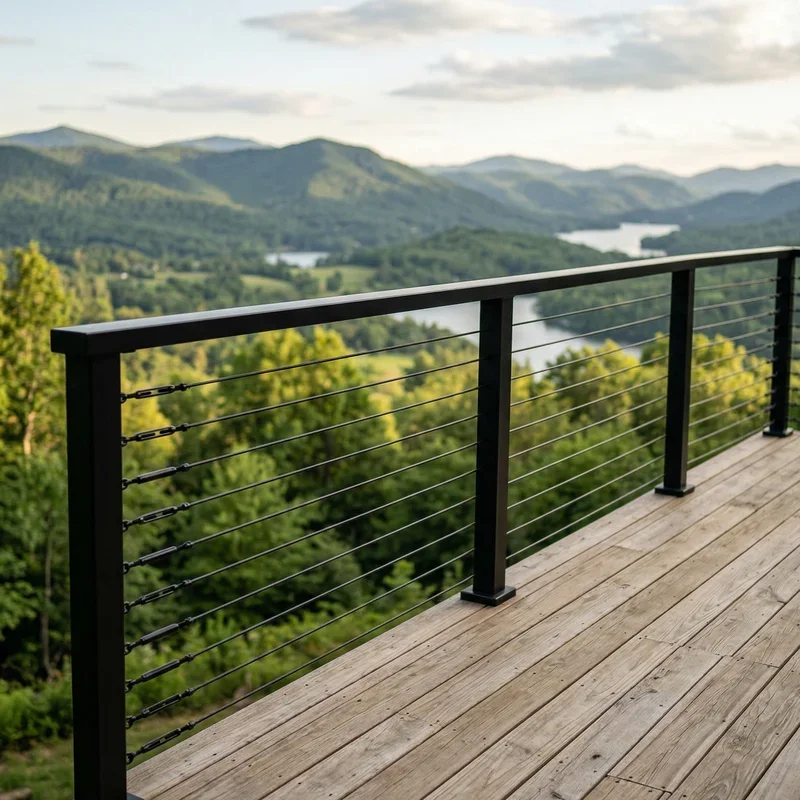
3. Black Oxide Cable With Matte Black Posts
Black wire railing is having a serious moment in outdoor design right now. Black oxide coated cables paired with matte black aluminum or steel posts create a bold, graphic look that pops against light-colored deck boards and siding. The dark finish adds definition and contrast that standard silver cables cannot match. It feels a bit like drawing with ink instead of pencil because every line stands out with more intention and confidence. Black systems work especially well with white or gray homes, creating that striking monochrome palette designers obsess over. The oxide coating protects the cable from corrosion while maintaining its dark appearance for years. If your design vision leans toward dramatic contrast and strong visual statements, this is your railing.
4. Vertical Wire Railing for a Unique Twist
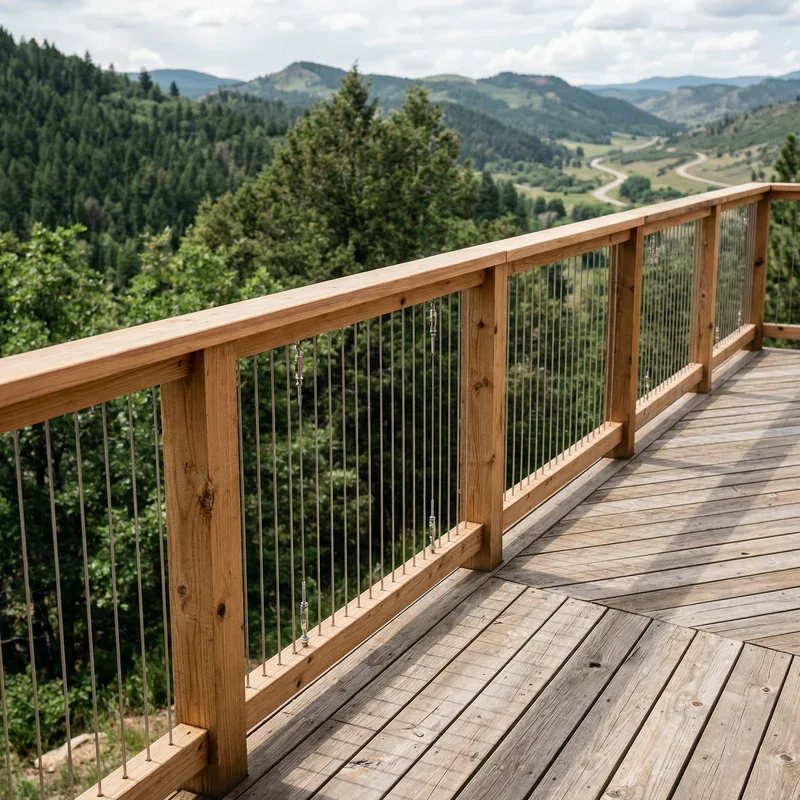
Most wire railings run horizontally, so going vertical immediately sets your deck apart from the crowd. Vertical cables stretch from the top rail down to the bottom rail or deck frame, creating a look that resembles harp strings frozen in place. This orientation carries a practical advantage too. Vertical cables eliminate the horizontal ladder effect that some building inspectors flag as a climbing hazard for young children. Kids cannot use vertical cables as footholds the way they can with horizontal runs. The visual effect draws the eye upward, making low decks feel taller and more substantial. Vertical wire railings pair beautifully with both wood and metal post systems and work particularly well on front porches where curb appeal matters most.
5. Cable Railing With Composite Deck Posts
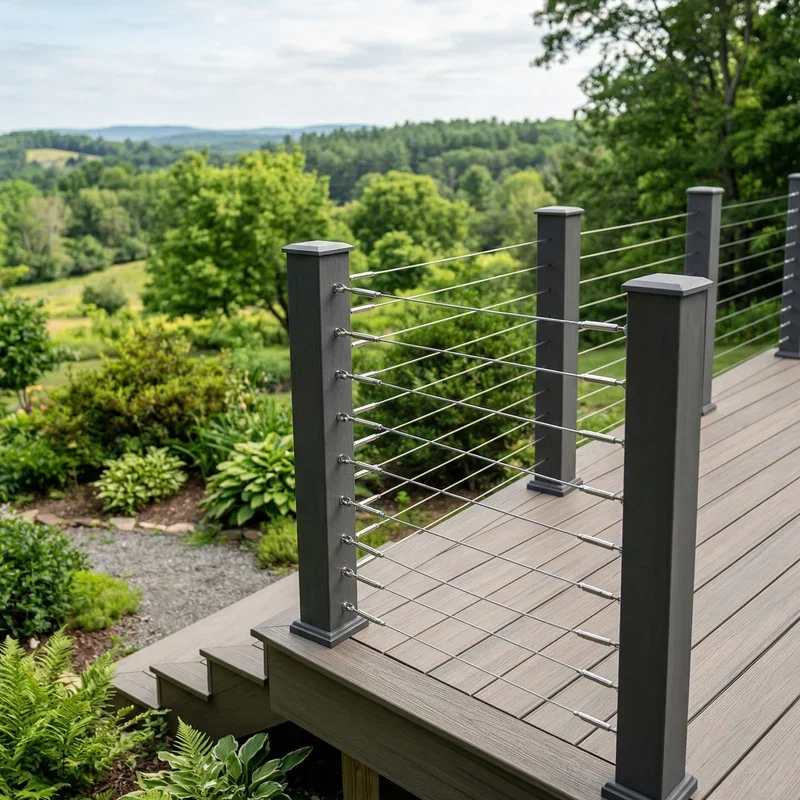
Composite materials have conquered the decking world, and now they are taking on railing posts too. Composite posts wrapped around internal steel or aluminum cores give you the warmth of wood-like textures with the longevity of engineered materials that never rot, warp, or need staining. Brands like Trex, TimberTech, and Fiberon offer post sleeves in dozens of colors and grain patterns. Run stainless cables between these posts, and you get a system that matches your composite deck boards seamlessly from floor to railing. The visual continuity makes your entire deck feel like a single cohesive design rather than a collection of mismatched parts. Composite posts also stay cool to the touch in direct sunlight, which metal posts definitely cannot claim during peak summer months.
6. Frameless Glass Top Rail With Wire Infill
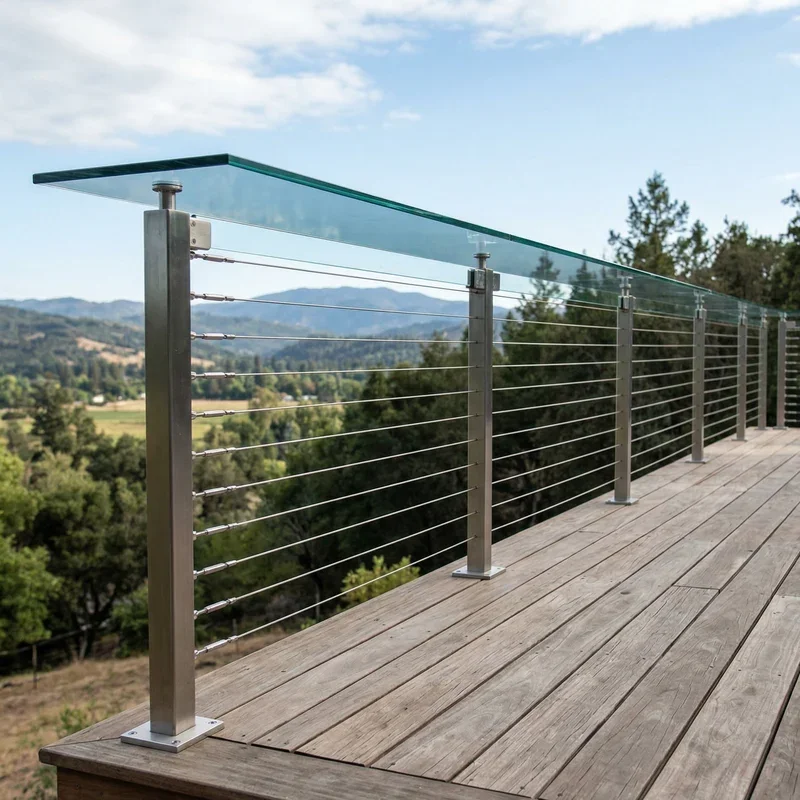
This hybrid approach combines the transparency of glass with the structural efficiency of wire cables for a railing that almost disappears entirely. A frameless glass panel serves as the top rail, sitting above horizontal or vertical wire infill below. The glass catches reflections and light while the cables handle the structural heavy lifting between posts. Together they create a railing system that maximizes your view from every angle. You feel like nothing stands between you and the landscape beyond your deck. This design works spectacularly on elevated decks with panoramic views where you want absolutely minimal visual obstruction. Tempered safety glass handles wind, rain, and impact without issues. The combination screams luxury without being flashy about it.
7. Industrial Pipe Posts With Tensioned Cables
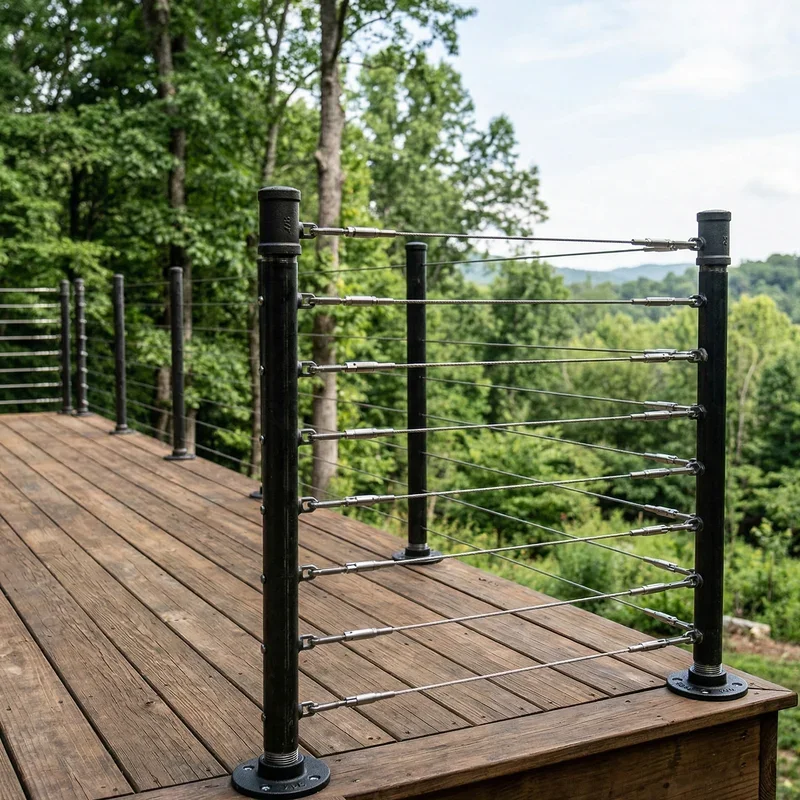
Exposed pipe fittings and raw metal surfaces bring an industrial edge to your deck that channels warehouse lofts and urban rooftop bars. Use galvanized or black iron pipe as your railing posts and thread stainless steel cables through drilled holes or welded attachment points. The thick, utilitarian character of the pipe contrasts beautifully with the delicate cables strung between them. Floor flanges bolt the posts securely to the deck surface, and pipe fittings create corners and angles without custom fabrication. This style pairs naturally with concrete patios, steel-framed decks, and urban backyard spaces where polish takes a backseat to raw character. The best part? Most pipe components come from standard plumbing supply stores, keeping material costs lower than specialty railing suppliers charge.
8. Curved Deck Wire Railing for Round Decks
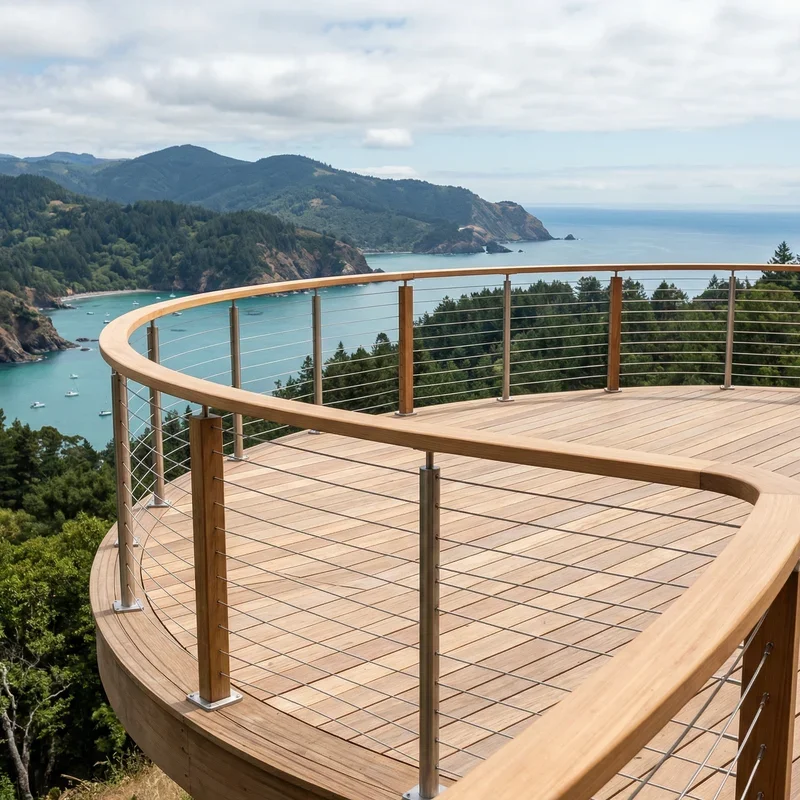
Round and curved decks demand railings that follow their flowing lines without awkward straight segments and sharp angle breaks. Wire cables excel here because they naturally bend around curved top rails without kinking or resisting. Custom bent metal top rails guide the cables in smooth arcs that mirror the deck edge perfectly. The result looks fluid and organic, like the railing grew naturally from the deck rather than being bolted on afterward. Curved wire railings work particularly well on wraparound porches, circular observation decks, and pool surrounds where soft shapes create a welcoming atmosphere. The cable tension stays consistent around curves when you use intermediate posts at regular intervals. It takes skilled fabrication, but the visual reward makes every extra effort worthwhile.
9. Wire Railing With Built In LED Post Lights
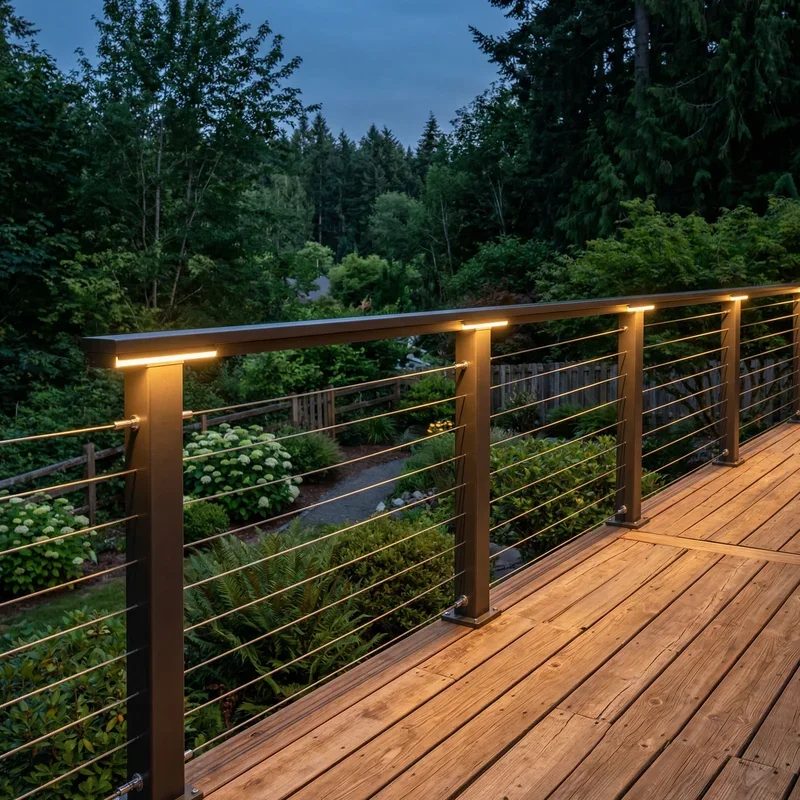
Why stop at a beautiful railing when you can make it glow? Posts with integrated LED lights transform your wire railing into a nighttime lighting feature that serves double duty. Downward-facing cap lights wash the deck surface with soft pools of illumination, while side-mounted accent lights highlight the cable lines themselves. Solar-powered options charge during the day and activate automatically at dusk, eliminating any wiring requirements. Low-voltage hardwired systems offer brighter, more consistent output if you prefer that reliability. The combination of slim wire cables and warm LED glow creates a floating, ethereal quality after dark. Your deck becomes an evening destination rather than just a daytime space. Choose warm white for cozy ambience or cool white for a more contemporary nighttime atmosphere.
10. Minimalist Thin Profile Wire Railing
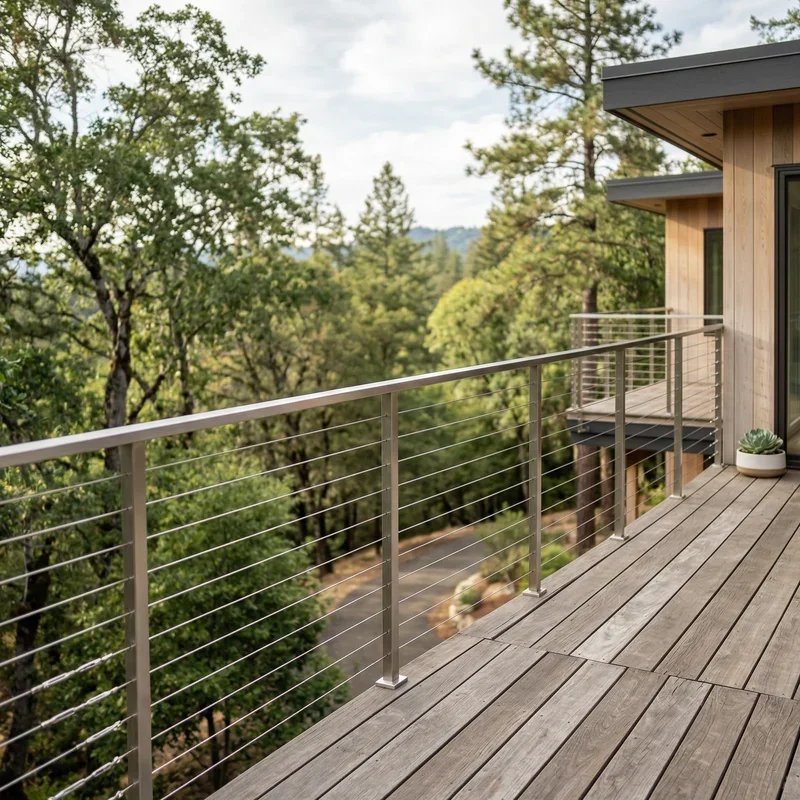
Minimalism is not about having less. It is about making everything that remains count for more. Thin profile wire railing systems use the slimmest possible posts, the narrowest top rails, and the finest gauge cables that still meet code requirements. Every component shrinks to its absolute minimum, leaving maximum negative space and maximum view. Square tube posts as thin as one and a half inches wide and cables at one-eighth inch diameter create a railing that barely registers visually from a distance. This approach suits modern and contemporary architecture where clean lines and open space define the entire aesthetic. The key lies in precision engineering because thin components demand perfect alignment and exact tensioning. When executed well, the railing practically evaporates into thin air.
11. Cable Railing With Thick Timber Top Rail
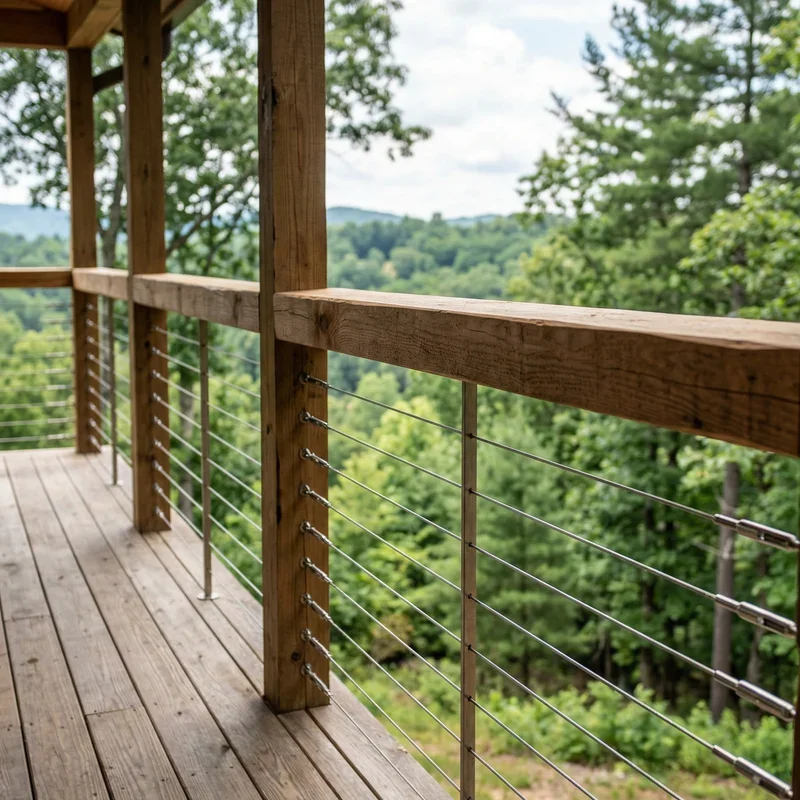
Contrast drives great design, and pairing delicate wire cables with a chunky, oversized timber top rail creates one of the most satisfying contrasts in railing design. Think of a four-by-six or even a six-by-six hardwood cap rail sitting atop slim cable infill. The heavy timber gives you something substantial to lean on, rest your drink on, or grip when climbing stairs. Meanwhile the cables below keep sightlines completely open. This combination works beautifully on rustic decks, lodge-style homes, and mountain retreats where heavy timber feels right at home. Douglas fir, white oak, and ipe all make excellent thick rail choices. The wood grain adds warmth and natural texture that softens the precision of the tensioned stainless cables below.
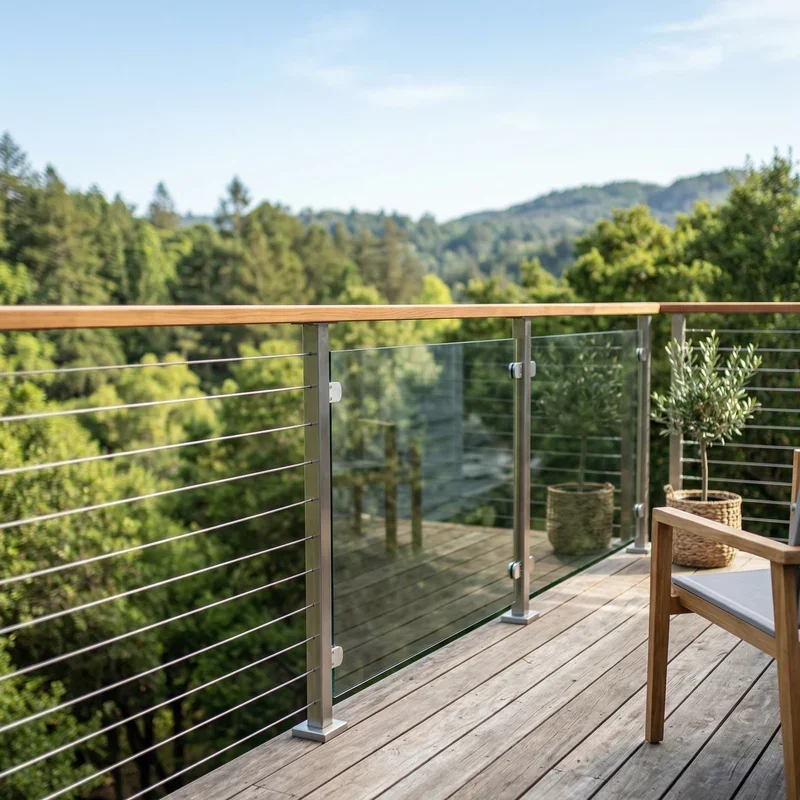
12. Mixed Material Wire and Glass Panel Railing
Who says you have to choose just one infill material? Alternating between wire cable sections and glass panel sections along your deck railing creates visual rhythm and variety that keeps the eye moving. Use glass panels in the primary viewing directions where you want maximum clarity, and wire cables on the sides where transparency matters less. This mixed approach also lets you control wind exposure. Glass panels block breezes in seating areas while cable sections allow airflow where you want ventilation. The combination looks intentional and designed rather than indecisive because each material serves a clear purpose in its location. Stainless steel posts and a continuous top rail tie the alternating sections together into one unified railing system that feels curated.
13. Wire Railing With Planter Box Integration
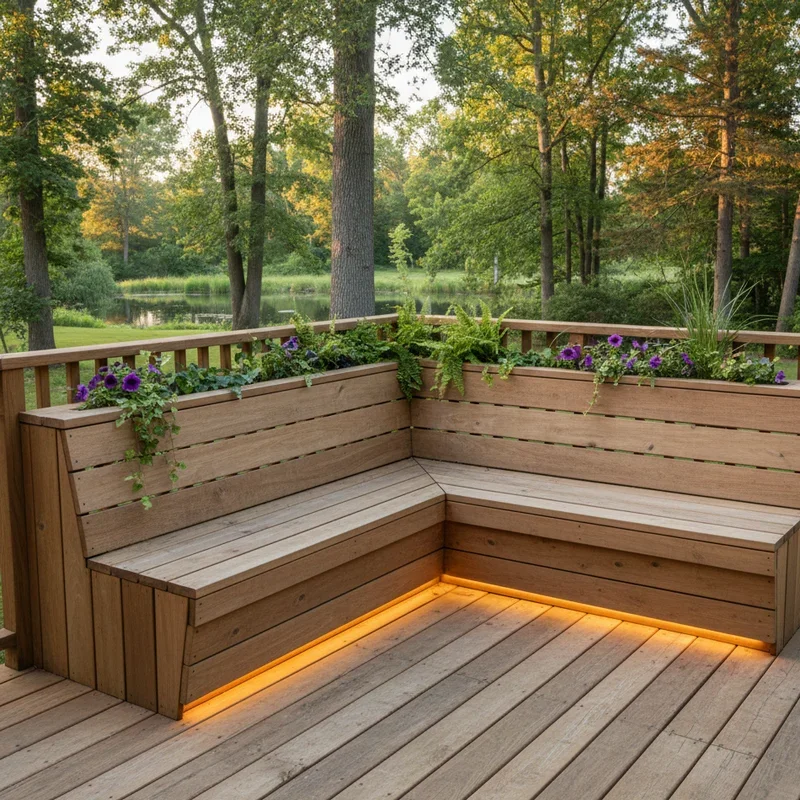
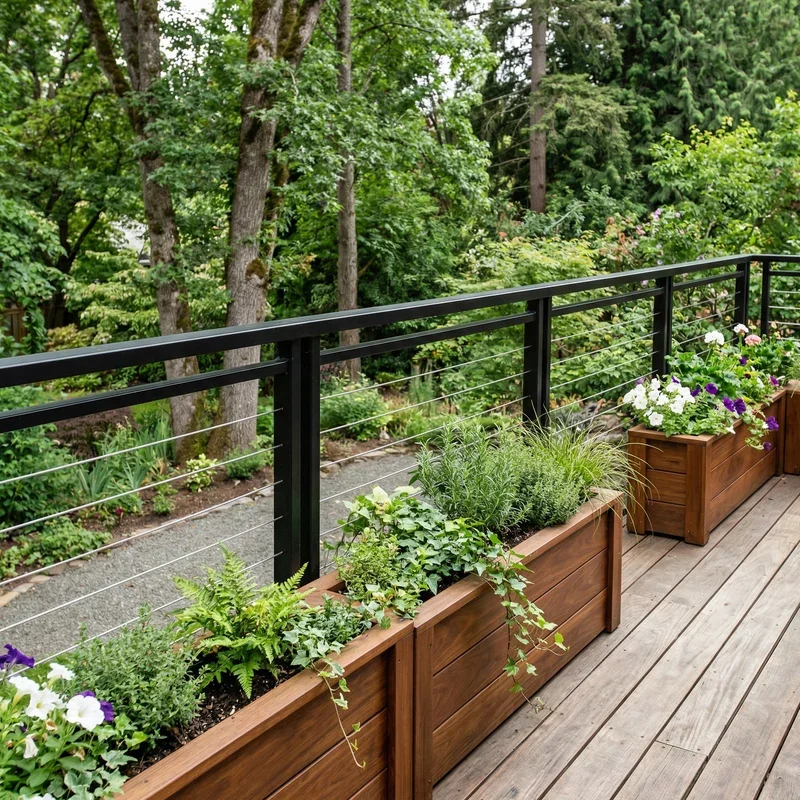
Bringing greenery into your railing design softens the hard lines of metal and cable with living, breathing texture. Planter boxes mounted on the outside of railing posts or integrated into the top rail structure let you grow trailing vines, flowers, herbs, or ornamental grasses right along your deck perimeter. The wire cables peek through the foliage, creating a garden fence effect that blends architecture with nature seamlessly. Trailing plants like ivy, jasmine, and sweet potato vine cascade down between the cables, adding color and movement throughout the growing season. Self-watering planter inserts reduce maintenance dramatically and keep your plants happy even during hot stretches. This idea transforms a simple deck railing into a vertical garden that changes character with every season.
14. Nautical Rope and Wire Hybrid Railing
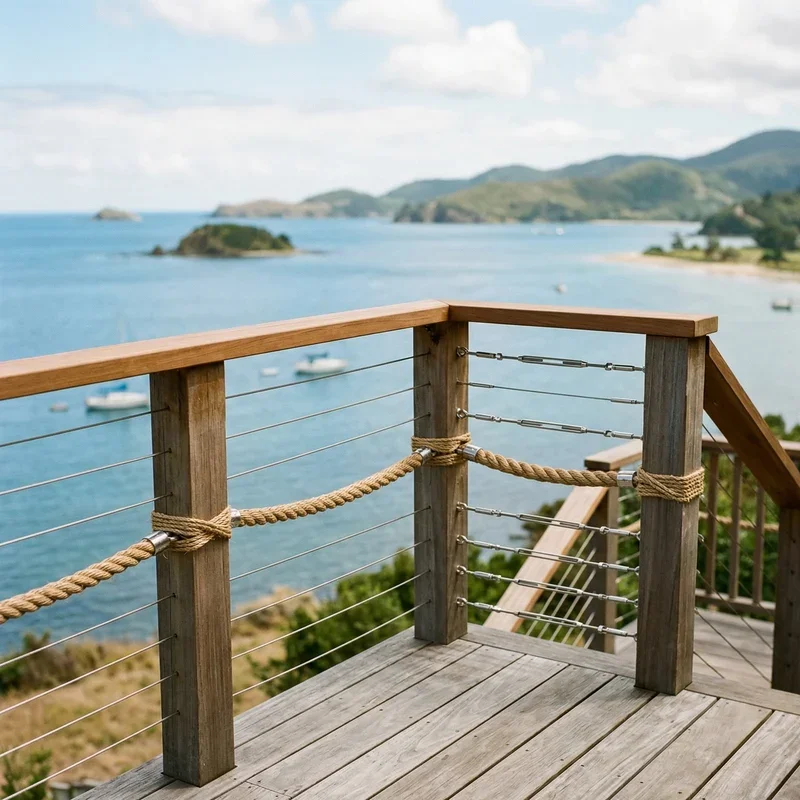
Coastal homes deserve railings that speak their language, and a nautical rope and wire hybrid does exactly that. Combine stainless steel cables with thick marine rope accents for a railing that feels like it belongs on a yacht club dock or a seaside boardwalk. You can alternate rows of cable and rope, use rope as the top rail with cables below, or wrap rope around the posts while cables fill the infill space. Manila, sisal, and synthetic marine rope all bring different textures and tones to the design. White rope against stainless cables reads crisp and classic. Natural tan rope adds warmth and casual beach house character. This hybrid approach works inland too, anywhere you want that relaxed waterside atmosphere.
15. DIY Turnbuckle Cable Railing on a Budget
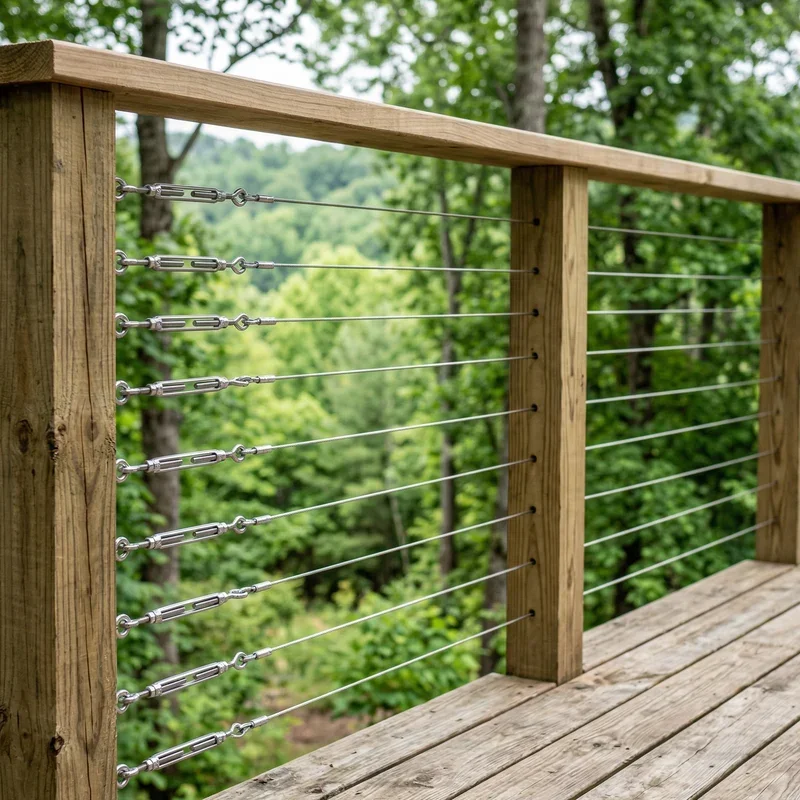
Not every great railing idea demands a contractor and a hefty budget. DIY turnbuckle cable railing kits put modern wire railing within reach of handy homeowners who own basic tools and enjoy weekend projects. Turnbuckles thread onto cable ends and tighten the runs to proper tension without expensive hydraulic swaging equipment. Pre-cut cable kits come with everything you need, including cables, turnbuckles, eye bolts, and installation hardware. You drill holes through your existing wood posts, thread the cables through, attach the turnbuckle hardware, and tension each run. The whole process takes a weekend for a standard deck. Online tutorials walk you through every step with clear instructions. You save thousands on labor costs and earn serious bragging rights every time someone compliments your deck.
Conclusion
Wire railings prove that safety features do not have to block your view or compromise your style. These 15 ideas show just how versatile cable railing systems truly are, from rustic timber combinations to sleek all-metal setups that belong in design magazines. The right wire railing enhances your deck's appearance while preserving the landscape beyond it. Pick the style that matches your home's personality, consider your local building codes, and enjoy the transformation. Whether you hire a professional or tackle a DIY kit yourself, the result will make your deck feel more open, more modern, and more connected to the outdoors.
Read next: 15 Wood Front Porch Ideas to Elevate Your Curb Appeal
Frequently Asked Questions
Q1: How far apart should wire railing cables be spaced on a residential deck?
A: Most building codes require cable spacing of three inches or less between each run.
Q2: Do wire cable railings require regular maintenance to stay tensioned properly?
A: Yes, check cable tension annually and retighten turnbuckles as natural settling occurs over time.
Q3: Can wire cable railings meet building code requirements in all states?
A: Wire cable railings meet most residential building codes, but always verify your local jurisdiction requirements.
Q4: What is the average cost per linear foot for a cable railing system?
A: Expect to spend between sixty and two hundred dollars per linear foot depending on materials.
Q5: How long do stainless steel cable railings typically last before needing replacement?
A: Marine-grade 316 stainless steel cable railings last twenty to thirty years with basic maintenance.
Stay up to date with our latest ideas!