Why is my pool pH always high? Discover the common causes behind rising pH levels and learn proven fixes to keep your pool balanced.
You test your pool water, and there it is again. The pH is high. You add some acid, wait a day, test again, and somehow the numbers have crept right back up. It is like playing whack-a-mole with chemistry, and frankly, it is enough to make any pool owner want to pull their hair out.
If you have been scratching your head and asking "Why Is My Pool pH Always High? Common Causes" over and over, trust me, you are in very good company. High pH is one of the most common and most frustrating pool maintenance issues out there. It affects everything from water clarity to swimmer comfort, and if you do not get to the root of the problem, you will spend the entire swim season dumping chemicals into your pool without ever getting ahead of the curve.
But here is the good news. Once you understand what is actually driving your pH up, fixing it becomes a whole lot easier. And that is exactly what we are going to do in this article. We are going to dig into every possible reason your pool pH keeps climbing, explain the science behind it in plain English, and give you practical solutions that actually work. So let us roll up our sleeves and get to the bottom of this once and for all.
Understanding Pool pH A Quick Refresher
Before we jump into the causes, let us make sure we are all on the same page about what pH actually is and why it matters so much.
The pH scale runs from 0 to 14, with 7 being perfectly neutral. Anything below 7 is acidic, and anything above 7 is basic or alkaline. For swimming pools, the sweet spot sits between 7.2 and 7.6. That narrow range keeps the water comfortable for swimmers, allows your chlorine to work effectively, and prevents damage to your pool equipment and surfaces.
When your pH drifts above 7.6, things start going sideways pretty quickly. Your chlorine becomes sluggish and loses a big chunk of its sanitizing power. The water can turn cloudy and uninviting. Calcium starts falling out of solution and depositing itself on your tile, your filter, and inside your plumbing as ugly white scale. And swimmers might notice irritated skin and stinging eyes, which is never a great look when you are trying to enjoy a backyard barbecue.
So yeah, keeping your pH in check is kind of a big deal. And the first step toward doing that is figuring out why it keeps climbing in the first place.
Why Is My Pool pH Always High? Common Causes Explained
There is rarely just one single villain behind persistently high pH. More often than not, it is a combination of factors working together to push your water chemistry out of whack. Let us walk through the most common culprits one by one.
Your Total Alkalinity Is Too High
If we are being honest, this is probably the number one reason your pH keeps rising. Total alkalinity and pH are closely related, and when your alkalinity is too high, it acts like a springboard that keeps bouncing your pH upward no matter how many times you push it down.
Total alkalinity measures the concentration of alkaline substances in your water, primarily bicarbonates, carbonates, and hydroxides. These substances act as a buffer, resisting changes in pH. That sounds like a good thing, and in moderation, it absolutely is. You want some buffering capacity to prevent your pH from swinging wildly after every little change.
But when your total alkalinity climbs above the ideal range of 80 to 120 parts per million, it becomes overprotective. It fights against any attempt to lower the pH, and it creates a constant upward pull that makes your water stubbornly alkaline. Think of it like trying to push a beach ball underwater. No matter how hard you shove it down, it keeps popping right back up.
If your alkalinity is high, you need to address that before you worry too much about the pH itself. Lower the alkalinity first, and you will likely find that the pH falls into line much more easily.
Your Water Source Has a High pH
Here is one that catches a lot of pool owners off guard. The water coming out of your garden hose might already have a high pH before it even reaches your pool. Municipal water supplies in many parts of the country run on the alkaline side, sometimes as high as 8.0 or even 8.5. Well water can be even worse, depending on the mineral content of the local groundwater.
Every time you top off your pool to replace water lost to evaporation, splashing, or backwashing, you are potentially adding water that pushes your pH higher. Over the course of a summer, those small additions really add up.
The fix here is simple but often overlooked. Test your fill water separately. Grab a sample straight from the hose and check its pH and alkalinity. If the numbers are high, you will know that every time you add fresh water, you need to plan on adjusting the chemistry afterward. Some pool owners even pre-treat their fill water before adding it to the pool, though that is admittedly a bit more advanced.
Aeration and Water Features Are Adding Oxygen
This one surprises a lot of people, but it is a major factor in many pools. Any time your pool water is agitated and exposed to air, a process called outgassing occurs. Dissolved carbon dioxide escapes from the water into the atmosphere, and when that happens, the pH goes up. It is just basic chemistry.
Carbon dioxide is mildly acidic when dissolved in water. It helps keep the pH in check by counterbalancing the alkaline substances in the pool. But when you remove it through aeration, you lose that natural acidic buffer, and the pH drifts upward.
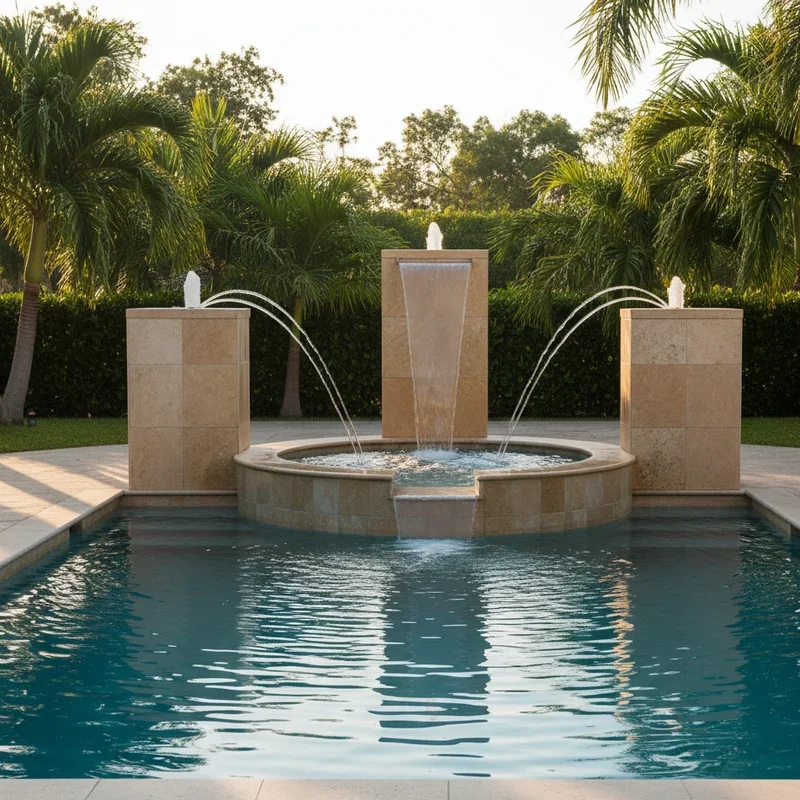
So what causes aeration? Quite a few things, actually. Waterfalls, fountains, spillovers, deck jets, and any other water features that splash or spray water through the air are all culprits. Even something as simple as kids doing cannonballs all afternoon can introduce enough aeration to nudge the pH higher.
Return jets pointed upward so they break the surface create aeration too. And if you have a spa that spills over into the main pool, that constant waterfall effect is working against your pH around the clock.
You do not necessarily have to shut off your water features entirely. But if your pH is chronically high and you have got a bunch of fountains and waterfalls running all day, it might be worth turning them off for a while to see if the situation improves. You can also point your return jets downward so they circulate water beneath the surface instead of churning it up top.
Your Pool Finish Is Leaching Alkaline Material
If you have a relatively new plaster, pebble, or quartz finish on your pool, this could be a significant contributor to your pH problems. Fresh cementitious pool finishes go through a curing process that can last anywhere from several months to over a year. During that time, the finish leaches calcium hydroxide into the water, which is highly alkaline and drives the pH up relentlessly.
Pool owners who have just had their pools resurfaced often notice that they are fighting high pH every single day for the first few months. It can feel like a losing battle, but it is actually perfectly normal. The leaching gradually slows down as the finish cures and hardens.
In the meantime, you will need to be more aggressive with your acid additions. Some pool professionals recommend a startup process called the "bicarb start" or "traditional start" that involves specific chemical treatments during the first 30 days to manage this curing chemistry. If your pool was recently resurfaced, talk to your builder or a qualified pool service technician about the best approach for your specific finish.
You Are Using Sodium Hypochlorite or Cal-Hypo
The type of chlorine you use matters more than you might think. Sodium hypochlorite, which is liquid chlorine or bleach, has a pH of around 13. Every time you add it to your pool, you are introducing a very alkaline substance that temporarily spikes the pH.
Now, in theory, the pH impact of liquid chlorine should be self-correcting over time as the hypochlorite ion does its work and breaks down. But in practice, if you are adding large amounts of liquid chlorine on a regular basis, those repeated pH spikes can keep your water consistently on the high side.
Calcium hypochlorite, commonly known as cal-hypo, is another popular chlorine product with a high pH. It sits at around 11.8 on the pH scale, and it also adds calcium to the water, which can contribute to scaling issues if your calcium hardness is already elevated.
If you are using either of these chlorine products and struggling with high pH, you might want to consider switching to a different sanitizing method. Trichlor tablets, for example, are actually acidic and will push the pH down rather than up. Of course, trichlor brings its own set of considerations, including the addition of cyanuric acid, so it is not a magic bullet. But for pools with chronic high pH, it can be part of the solution.
Saltwater Chlorine Generators Raise pH Naturally
If you have a saltwater pool, congratulations on making a popular choice for convenience and swimmer comfort. But here is the catch. Saltwater chlorine generators, also called salt cells, inherently produce a byproduct that raises pH.
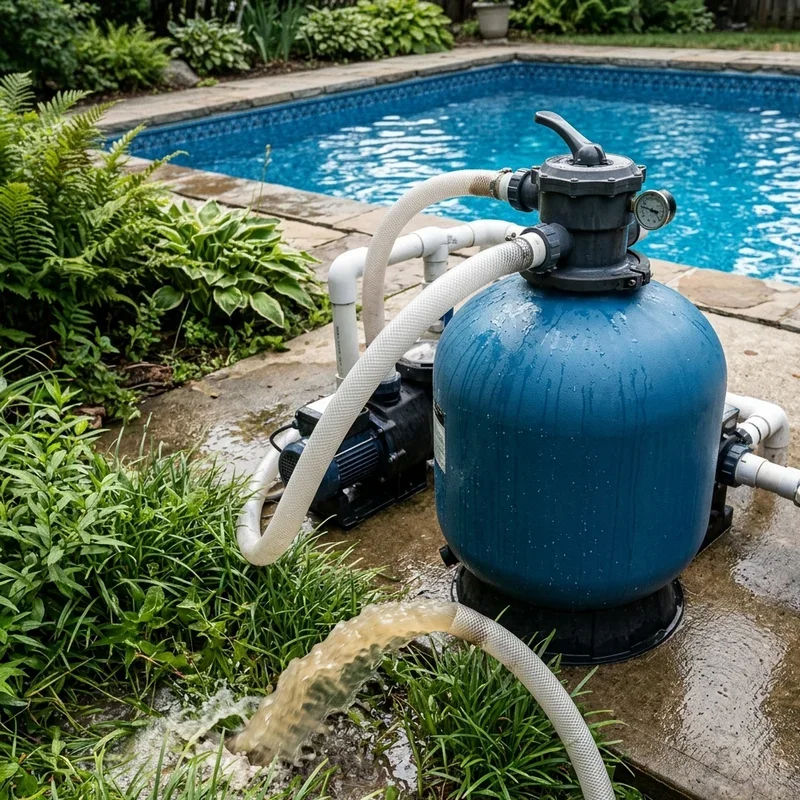
The electrolysis process that converts dissolved salt into chlorine also generates sodium hydroxide, which is extremely alkaline. This means your salt system is essentially pumping out a tiny, constant stream of pH-raising chemistry every hour it runs. It is just part of how the technology works, and there is no way to completely eliminate it.
Saltwater pool owners typically find themselves adding muriatic acid on a more regular basis than traditional chlorine pool owners. Some install automatic acid-dosing systems to handle the constant pH creep without manual intervention. If you have a salt system and your pH is always high, do not feel like you are doing something wrong. It is built into the nature of the beast.
Algaecides and Other Pool Chemicals
Some pool chemicals can contribute to high pH in ways you might not expect. Certain algaecides, clarifiers, and specialty treatments have alkaline formulations that bump the pH up when added to the water.
Shock treatments, depending on the type, can also cause temporary pH spikes. Calcium hypochlorite shock has a high pH, as we discussed earlier. Non-chlorine shock products based on potassium monopersulfate are closer to neutral but can still have a mild effect on your water chemistry.
Even pH increaser itself, which is sodium carbonate or soda ash, can cause problems if overused. It is not uncommon for pool owners to accidentally overshoot when trying to raise a low pH, ending up with the opposite problem. A little goes a long way with soda ash, and it is always better to add it gradually and retest rather than dumping in a big dose all at once.
The Role of Temperature and Sunlight
Warm water holds less dissolved carbon dioxide than cold water. So as your pool heats up during the summer months, CO2 naturally escapes from the water, and the pH tends to rise. This is the same outgassing phenomenon we talked about earlier, but driven by temperature rather than physical agitation.
If you live in a hot climate where pool temperatures routinely hit the upper 80s or even 90s, you are going to be dealing with more pH drift than someone in a cooler region. There is not much you can do about the weather, but knowing that heat is working against you helps you plan your chemical additions more effectively.
Sunlight also plays an indirect role. UV rays break down chlorine, which means you might be adding more chlorine more often to compensate, and depending on the type of chlorine you use, those frequent additions can contribute to pH fluctuations.
How to Lower and Stabilize Your Pool pH
Alright, enough about the problems. Let us talk about solutions. Bringing a high pH back down is pretty straightforward. Keeping it down is the real challenge, and it requires addressing the underlying causes we have been discussing.
Use Muriatic Acid or Dry Acid
Muriatic acid is the most common and cost-effective way to lower pool pH. It works quickly, and experienced pool owners can dial in pretty precise adjustments once they know their pool's volume and chemistry tendencies. Always add acid with the pump running, pour it slowly into the deep end, and avoid swimming for at least 30 minutes to an hour after treatment.
Dry acid, also known as sodium bisulfate, is a granular alternative that is easier and safer to handle. It does the same job as muriatic acid but without the fumes and splashing risks. It tends to be a bit more expensive, but many pool owners find the convenience worth the extra cost.
Lower Your Total Alkalinity First
If your alkalinity is driving the pH problem, focus on bringing that number down first. Adding muriatic acid will lower both alkalinity and pH simultaneously. The trick is a technique called "pooling," where you add the acid in one concentrated spot with the pump turned off. This creates a localized area of very low pH that aggressively attacks the alkalinity without proportionally lowering the overall pool pH.
After letting the acid sit for about 30 minutes, turn the pump back on and let the water circulate fully before retesting. You might need to repeat this process over several days to bring the alkalinity down to where you want it.
Reduce Aeration
Turn off water features, point return jets downward, and minimize surface agitation whenever possible. Once your pH is stable, you can gradually reintroduce aeration and monitor the effect. Some pool owners run their water features on timers, limiting them to a few hours a day rather than running them nonstop.
Consider an Automatic Chemical Controller
For pools with persistent pH issues, especially saltwater pools, an automatic chemical controller can be a game changer. These systems continuously monitor your water chemistry and dose acid automatically whenever the pH exceeds your set point. The upfront investment is significant, but the time savings and consistent water quality make it worthwhile for many pool owners.
Test and Adjust Regularly
Get into the habit of testing your water at least two to three times per week during swim season. Catching a rising pH early and making small corrections is much easier than waiting until things are way out of range and then trying to bring them back. Digital testers or quality liquid test kits give more accurate readings than the cheap test strips, so invest in decent testing equipment.
Long-Term Strategies for Keeping pH in Check
Managing pool pH is not a one-time fix. It is an ongoing commitment that gets easier with practice and consistency. Here are some long-term strategies that will help you stay ahead of the curve.
Keep a log of your water chemistry readings, chemical additions, and any changes you make to your equipment or water features. Over time, patterns will emerge that help you predict when and why your pH tends to rise. That predictive knowledge is incredibly valuable and turns you from a reactive pool owner into a proactive one.
Build relationships with local pool supply stores that offer free water testing. Their more advanced tests can measure parameters you might not check at home, like calcium hardness, cyanuric acid, and total dissolved solids. These factors all interact with pH in subtle ways, and having a complete picture of your water chemistry helps you make smarter decisions.
Consider joining online pool forums and communities where experienced owners and professionals share tips and troubleshoot problems. Websites like Trouble Free Pool have a wealth of information and a supportive community that can help you work through persistent issues.
Why Is My Pool pH Always High? Common Causes That Most People Overlook
Beyond the obvious culprits, there are a few sneaky factors that can contribute to high pH without drawing much attention to themselves.
Debris like leaves, pollen, and dust that blow into your pool can affect water chemistry. Organic matter consumes chlorine and can subtly shift pH levels. Keeping your pool clean and your skimmer baskets emptied regularly helps minimize this effect.
Swimmer load is another factor. Sweat, sunscreen, body oils, and other contaminants introduced by swimmers can influence pH in unpredictable ways. Pools with heavy swimmer traffic tend to experience more chemical fluctuation overall.
Even the time of day you test can affect your readings. pH tends to be slightly higher in the afternoon after the pool has been exposed to sunlight and warmth all day. Testing at the same time each day gives you more consistent baseline readings and helps you spot true trends rather than chasing daily fluctuations.
When to Call a Professional
If you have tried everything and your pH is still stubbornly high, it might be time to bring in a pool professional. Persistent pH issues can sometimes point to underlying problems like deteriorating pool surfaces, plumbing leaks that introduce groundwater, or equipment malfunctions that are tough to diagnose without specialized tools and experience.
A good pool technician can do a thorough analysis of your water, your equipment, and your pool surfaces to identify issues you might have missed. They can also set up maintenance protocols tailored specifically to your pool's unique characteristics.
There is no shame in asking for help. Pools are complex systems, and even experienced owners run into situations that need a professional touch. Better to get expert guidance than to keep throwing chemicals at a problem and hoping for the best.
Conclusion
Persistently high pool pH can feel like an endless battle, but once you identify the specific causes affecting your pool, the solutions become much more manageable. Whether it is high alkalinity, aeration from water features, your chlorine type, or a freshly plastered surface, every factor has a practical fix. The key is consistent testing, targeted chemical adjustments, and addressing root causes rather than just treating symptoms. With patience and the right approach, you can finally keep that pH exactly where it belongs all season long.
Read next: 15 Pool Shade Ideas for Cool and Stylish Retreats
Frequently Asked Questions
1.What is the ideal pH range for a swimming pool?
The ideal swimming pool pH range is between 7.2 and 7.6 for optimal comfort and sanitation.
2.How often should I test my pool pH levels?
Test your pool water at least two to three times per week during the active swimming season.
3.Can a saltwater pool system cause consistently high pH?
Yes, saltwater chlorine generators naturally produce sodium hydroxide as a byproduct which steadily raises pool pH.
4.Will lowering total alkalinity help bring down my pool pH?
Absolutely, reducing high total alkalinity often resolves persistent pH problems since alkalinity directly influences pH stability.
5.Is muriatic acid or dry acid better for lowering pool pH?
Both work effectively, but muriatic acid costs less while dry acid is safer and easier to handle.
Stay up to date with our latest ideas!